Representative Ezekiel John Ellis
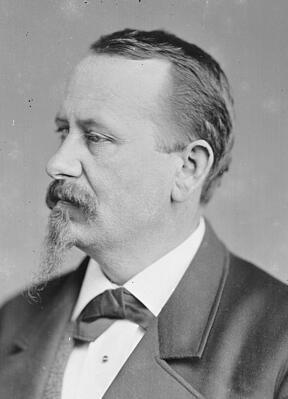
Here you will find contact information for Representative Ezekiel John Ellis, including email address, phone number, and mailing address.
| Name | Ezekiel John Ellis |
| Position | Representative |
| State | Louisiana |
| District | 2 |
| Party | Democratic |
| Status | Former Representative |
| Term Start | December 6, 1875 |
| Term End | March 3, 1885 |
| Terms Served | 5 |
| Born | October 15, 1840 |
| Gender | Male |
| Bioguide ID | E000134 |
About Representative Ezekiel John Ellis
Ezekiel John Ellis (October 15, 1840 – April 25, 1889) was a Democratic U.S. Representative from Louisiana who served five consecutive terms in the United States House of Representatives from 1875 to 1885. His decade in Congress spanned a significant period in American history, as the nation moved from Reconstruction into the post-Reconstruction era, and he participated actively in the legislative process on behalf of his Louisiana constituents.
Ellis was born in Covington, St. Tammany Parish, Louisiana, the son of Ezekiel Parke Ellis and Tabitha Emily Warner. He was educated in private schools in Covington and Clinton, Louisiana, and then attended Centenary College of Louisiana, which was located in Jackson, Louisiana, from 1855 to 1858. Pursuing a legal education, he enrolled in the law department of Louisiana State University at Pineville (now located in Baton Rouge), and he graduated in 1861, just as the Civil War was beginning.
With the outbreak of the American Civil War, Ellis joined the Confederate States Army in 1861. He was initially commissioned a first lieutenant and later promoted to captain in the Sixteenth Regiment, Louisiana Infantry. He served in the Confederate forces for approximately two years, from 1861 to 1863, until he was captured at the Battle of Missionary Ridge, Tennessee, around November 25, 1863. Following his capture, he was held as a prisoner of war on Johnson’s Island in Lake Erie, where he remained until the end of the war. During his imprisonment he kept a diary, later titled “A Retrospect,” which recorded his experiences and reflections while confined.
After the war, Ellis returned to Louisiana and completed the steps necessary to enter the legal profession. He was admitted to the bar of Louisiana in 1866 and commenced the practice of law in Covington, Louisiana. That same year he entered public life, winning election to the Louisiana State Senate. He served as a member of the State Senate from 1866 to 1870, participating in the complex politics of Reconstruction-era Louisiana and helping to reestablish civil government in the postwar South.
Ellis advanced to national office in 1874, when he was elected as a Democrat from Louisiana’s 2nd congressional district to the Forty-fourth Congress. He was subsequently reelected to the four succeeding Congresses, serving continuously from March 4, 1875, to March 3, 1885. During his ten years in the House of Representatives, he contributed to the legislative process at a time when issues of Reconstruction, federal-state relations, and regional economic recovery were central to national debate. In the Forty-fourth Congress he served as chairman of the Committee on Mississippi Levees, a position that reflected the importance of river control, flood management, and infrastructure to Louisiana and the broader Mississippi Valley. After five terms, he declined to be a candidate for renomination in 1884, thereby concluding his congressional career.
Following his departure from Congress, Ellis resumed the practice of law, this time in Washington, D.C., where his experience in national politics and legislation informed his legal work. He continued to reside and practice in the capital until his death there on April 25, 1889. His body was returned to Louisiana, and he was interred in the Ellis family cemetery at “Ingleside,” near Amite, Tangipahoa Parish, Louisiana, closing the life of a lawyer, soldier, state legislator, and five-term Member of Congress who had represented Louisiana through a transformative era in American history.