Representative Ezekiel Candler Gathings
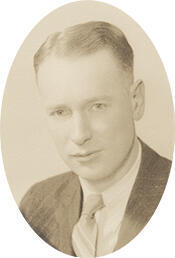
Here you will find contact information for Representative Ezekiel Candler Gathings, including email address, phone number, and mailing address.
| Name | Ezekiel Candler Gathings |
| Position | Representative |
| State | Arkansas |
| District | 1 |
| Party | Democratic |
| Status | Former Representative |
| Term Start | January 3, 1939 |
| Term End | January 3, 1969 |
| Terms Served | 15 |
| Born | November 10, 1903 |
| Gender | Male |
| Bioguide ID | G000098 |
About Representative Ezekiel Candler Gathings
Ezekiel Candler “Took” Gathings (November 10, 1903 – May 2, 1979) was a Democratic U.S. Representative from Arkansas who represented the state’s First Congressional District in the United States House of Representatives from January 3, 1939, to January 3, 1969. Over the course of 15 consecutive terms, he participated in the legislative process during a significant period in American history, spanning the New Deal era, World War II, the early Cold War, and the civil rights movement. A segregationist conservative, he was known as an ally of Senator Strom Thurmond and consistently opposed federal civil rights legislation. He also gained national attention as chair of the 1952 House Select Committee on Current Pornographic Materials, which advocated censorship of what it deemed obscene magazines, books, and comic books.
Gathings was born in Prairie, Monroe County, Mississippi, on November 10, 1903. When he was school-aged, his family moved to Earle, in Crittenden County, Arkansas, where he was raised. His lifelong nickname, “Took,” derived from a childhood mispronunciation by his younger brother of an earlier nickname, “Sugar” (“Tooker,” later shortened to “Took”). Growing up in the Arkansas Delta during the early twentieth century, he was shaped by the region’s agricultural economy and one-party Democratic political culture that characterized the Solid South.
Gathings completed his early education in Arkansas and graduated from high school in Earle. He briefly attended the University of Alabama before transferring to the University of Arkansas School of Law. He received his law degree there in 1929, the same year he was admitted to the bar. Following his admission, he commenced the practice of law in Helena, Arkansas, a Mississippi River town and regional commercial center. In 1932 he moved his law practice to West Memphis, Arkansas, in Crittenden County, where he would reside for most of his adult life and establish the local base that supported his subsequent political career.
Before entering Congress, Gathings served in state government as a member of the Arkansas Senate from 1935 to 1939, representing Crittenden and St. Francis Counties. During this period he sat in the Fiftieth and Fifty-first Arkansas General Assemblies, which, in keeping with the Solid South era, were entirely Democratic. His legislative work at the state level helped cement his reputation within Arkansas politics and positioned him to seek federal office. In 1938 he challenged and defeated incumbent Representative William J. Driver in the Democratic primary for Arkansas’s First Congressional District, a victory that, in the one-party context of the time, effectively secured his election to Congress.
Gathings entered the U.S. House of Representatives with the Seventy-sixth Congress on January 3, 1939, and was reelected to fourteen succeeding Congresses, serving continuously until January 3, 1969. Throughout his three decades in the House, he represented the interests of constituents in the First District, a largely rural and agricultural region of eastern Arkansas. As a member of the Democratic Party, he participated in debates over New Deal and post–New Deal domestic policy, wartime measures during World War II, and Cold War–era legislation. His long tenure reflected both his personal political durability and the broader stability of Democratic dominance in Arkansas during much of the mid-twentieth century.
A staunch segregationist conservative, Gathings became particularly noted for his opposition to civil rights reforms. He was a signatory of the 1956 Southern Manifesto, which denounced the Supreme Court’s decision in Brown v. Board of Education and opposed the desegregation of public schools. In Congress he voted against the Civil Rights Act of 1957, the Civil Rights Act of 1960, the Civil Rights Act of 1964, and the Civil Rights Act of 1968. He also opposed the Twenty-fourth Amendment to the United States Constitution, which abolished the poll tax in federal elections, and voted against the Voting Rights Act of 1965. These positions placed him firmly in the camp of Southern Democrats resisting federal intervention in matters of race and voting rights.
In addition to his civil rights record, Gathings was prominently associated with efforts to regulate and censor printed materials. In 1952 he chaired the House Select Committee on Current Pornographic Materials, sometimes referred to as the Gathings Committee. The committee investigated what it described as obscene magazines, books, and comic books, and its work reflected contemporary anxieties about popular culture, morality, and juvenile delinquency. Under his leadership, the committee issued recommendations advocating stricter controls and censorship of such materials, contributing to broader national debates over freedom of expression and the role of government in regulating content.
After choosing not to seek reelection in 1968, Gathings left Congress at the conclusion of his fifteenth term in January 1969 and returned to private life in West Memphis, Arkansas. He continued to reside there until his death on May 2, 1979. Ezekiel Candler “Took” Gathings died in West Memphis and was interred in Crittenden Memorial Park in Marion, Arkansas, closing a long career in public life that had spanned from the Arkansas Senate in the 1930s through three decades in the U.S. House of Representatives.