Representative Ezra Wheeler
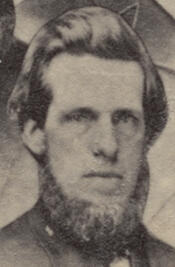
Here you will find contact information for Representative Ezra Wheeler, including email address, phone number, and mailing address.
| Name | Ezra Wheeler |
| Position | Representative |
| State | Wisconsin |
| District | 5 |
| Party | Democratic |
| Status | Former Representative |
| Term Start | December 7, 1863 |
| Term End | March 3, 1865 |
| Terms Served | 1 |
| Born | December 23, 1820 |
| Gender | Male |
| Bioguide ID | W000332 |
About Representative Ezra Wheeler
Ezra Wheeler (December 23, 1820 – September 19, 1871) was an American politician, lawyer, and judge who served a single term in the United States House of Representatives, representing the 5th congressional district of Wisconsin from 1863 to 1865 as a Democrat in the 38th United States Congress. A member of the Democratic Party, he contributed to the legislative process during one term in office, participating in the democratic process and representing the interests of his Wisconsin constituents during a critical period in American history.
Wheeler was born in Chenango County, New York, on December 23, 1820. He received a liberal preparatory education before attending Union College in Schenectady, New York. He graduated from Union College in 1842, a period in which the institution was known for its classical curriculum and training in the liberal arts, which helped prepare him for a career in law and public service.
After completing his education, Wheeler moved west as part of the broader mid-19th-century migration to the developing states of the Old Northwest. In 1849 he settled in Berlin, in what was then Marquette County and later became part of Green Lake County, Wisconsin. There he began the study of law, was admitted to the bar, and commenced legal practice in Berlin. His work as an attorney quickly led him into local public affairs and laid the foundation for his subsequent judicial and legislative roles.
Wheeler entered state politics as a member of the Wisconsin State Assembly, serving in the 1853 legislative session. His service in the Assembly coincided with a period of rapid growth and political realignment in Wisconsin, as the state addressed issues of infrastructure, land policy, and the emerging national debate over slavery and sectionalism. Building on his legislative experience, Wheeler was elected judge of Green Lake County, a position he held from 1854 to 1862. As a county judge for eight years, he presided over local judicial matters and gained a reputation that helped elevate him to national office.
In 1862, amid the American Civil War, Wheeler was elected as a Democrat to the United States House of Representatives from Wisconsin’s newly created 5th congressional district. He defeated Republican state senator Edward L. Browne in the general election. Wheeler served from March 4, 1863, to March 3, 1865, in the 38th United States Congress. His term in Congress coincided with some of the most consequential years of the Civil War, during which the federal government grappled with military strategy, wartime finance, civil liberties, and the future of slavery in the United States. As a Representative from Wisconsin, he participated in the legislative process during this significant period in American history and represented the interests of his district within the broader national debate.
Following the completion of his single term in Congress, Wheeler did not seek or did not secure reelection and returned to Wisconsin. He resumed the practice of law in Berlin, continuing his professional career in the community where he had first established himself two decades earlier. In private life he remained a figure of local prominence, drawing on his experience as a lawyer, judge, and former member of Congress.
Wheeler was married to Martha J. Ayers, with whom he had two children. In 1870, suffering from ill health, he moved to Pueblo, Colorado, a destination that, like many Western locales at the time, was often sought by those hoping that a different climate would improve their condition. On June 27, 1871, he was appointed register of the land office in Pueblo, a federal position that involved oversight of public land transactions in the region. He served in that office until his death in Pueblo on September 19, 1871, at the age of 50. His remains were returned to Wisconsin, where he was interred in Oakwood Cemetery in Berlin, reflecting his long-standing ties to the community that had been the center of his legal and political life.