Representative Federico Degetau
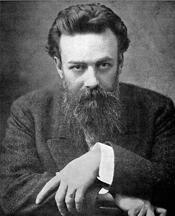
Here you will find contact information for Representative Federico Degetau, including email address, phone number, and mailing address.
| Name | Federico Degetau |
| Position | Representative |
| State | Puerto Rico |
| District | At-Large |
| Party | Republican |
| Status | Former Representative |
| Term Start | December 2, 1901 |
| Term End | March 3, 1905 |
| Terms Served | 2 |
| Born | December 5, 1862 |
| Gender | Male |
| Bioguide ID | D000196 |
About Representative Federico Degetau
Federico Degetau y González (December 5, 1862 – February 20, 1914) was a Puerto Rican politician, lawyer, writer, and the first Resident Commissioner of Puerto Rico to the United States House of Representatives. A member of the Republican Party, he served as a Representative from Puerto Rico in the United States Congress from 1901 to 1905, contributing to the legislative process during two terms in office. His service in Congress occurred during a significant period in American history, as the United States was defining its relationship with newly acquired overseas territories, and he became a central figure in articulating Puerto Rico’s aspirations within the American political system.
Degetau was born on December 5, 1862, in the city of Ponce, Puerto Rico. He attended the common schools and the Central College of Ponce. His father, Mathias Degetau, was the son of a wealthy Hamburg family and in Ponce managed the banks of the Overman and Dede House, in which his own father, Otto Georg Christian Degetau, was a partner. His mother, María Consolación González, came from a respected family in San Juan. His parents married in 1851, and Federico grew up at the intersection of Puerto Rican and European influences, an upbringing that would later shape his outlook on law, politics, and Puerto Rico’s place in the wider world.
For his higher education, Degetau went to Spain, where he completed an academic course in Barcelona and then studied law at the Universidad Complutense de Madrid. He was graduated from the law department and admitted to the bar, commencing the practice of law in Madrid. While in Spain, he became active in intellectual and political circles and founded the newspaper La Isla de Puerto Rico, which he used to communicate the island’s plight and political aspirations to the colonial authorities. Parallel to his legal and political work, he developed a literary career, publishing several works of fiction: El secreto de la domadora in 1885, El fondo del aljibe in 1886, La Injuria in 1893, ¡Qué Quijote! and Cuentos para el camino in 1894, and Juventud in 1895, which reflected his interest in social issues and the cultural life of Puerto Rico.
After returning to Puerto Rico, Degetau quickly emerged as a leading political figure. In 1895 he was one of four commissioners sent by Puerto Rico under the leadership of Luis Muñoz Rivera to petition Spain for greater autonomy, a request that was eventually accepted by the government of Práxedes Mateo Sagasta. He settled in San Juan and continued to practice law. In local government he served as a member of the municipal council of San Juan in 1897 and became mayor of San Juan in 1898. That same year he was elected a deputy to the Spanish Cortes Generales, representing Puerto Rican interests in the Spanish legislature on the eve of the Spanish–American War.
The change of sovereignty following the Spanish–American War brought Degetau into the first civil administration under United States rule. In 1899 the American military governor, General Guy Vernor Henry, appointed him Secretary of the Interior in the first cabinet formed under American rule in Puerto Rico. He was subsequently appointed by Henry’s successor, General George W. Davis, as a member of the Insular Board of Charities, reflecting his involvement in the organization of social and governmental institutions in the new territorial framework. In the same period, he became a founding member of the Insular Republican Party, established in 1899, and served as first vice president of the municipal council of San Juan in 1899 and 1900. He also held the post of president of the Board of Education of San Juan in 1900 and 1901, underscoring his interest in public instruction and civic development.
Degetau’s prominence in local and insular politics led to his election as the first Resident Commissioner of Puerto Rico to the United States House of Representatives. Elected as a Puerto Rican Republican to the Resident Commissioner post in 1900 and reelected in 1902, he served from March 4, 1901, until March 3, 1905, in the Fifty-sixth, Fifty-seventh, and Fifty-eighth Congresses. As a member of the House of Representatives, he participated in the democratic process and represented the interests of his constituents at a time when the legal and political status of Puerto Rico was still unsettled. While serving in Congress, he sat on the Committee on Insular Affairs and submitted a bill to grant United States citizenship to residents of Puerto Rico, a measure that ultimately failed but foreshadowed later developments in the island’s political status. In a lecture delivered in 1902 at Columbian University (now George Washington University), he summarized his political ideals on Puerto Rico’s status, asserting that by geography and history the island was “in fact, an integral part of the American Union” and expressing the aspiration that Puerto Rico become an organized territory with the prospect of eventual statehood. He also declared that while the American flag might one day be lowered in distant territories such as the Philippines, it “must be maintained in the neighboring Island, with the institutions of liberty and justice that it represents.”
During his congressional service, Degetau became deeply involved in the legal and political debates over the status of Puerto Ricans under United States law, particularly in the context of immigration and citizenship. In 1902 the United States Treasury Department issued new immigration guidelines that changed the immigration status of all Puerto Ricans, leading to the detention at Ellis Island of Isabel González, a young, pregnant, single Puerto Rican woman traveling aboard the S.S. Philadelphia, who was classified as an “alien” and a potential “public charge.” Unaware at first of her case, Degetau wrote on August 30, 1902, to the U.S. Secretary of State protesting the new rules that subjected Puerto Ricans to federal immigration laws; his protest was forwarded to the Treasury Department. Upon learning of González’s situation, he contacted her attorneys, including Charles E. LeBarbier and Paul Fuller, who planned to appeal her case to the U.S. Supreme Court. Recognizing the broader implications, Degetau saw in the González matter a test case to challenge the new immigration guidelines and to clarify the status of all native Puerto Ricans living on the island at the time of annexation. By February 16, 1903, Frederic René Coudert Jr., known for his role in Downes v. Bidwell, joined Fuller, LeBarbier, and Degetau as collaborators in what became Gonzales v. Williams. Argued before the Supreme Court on December 4 and 7, 1903, and presided over by Chief Justice Melville Weston Fuller, the case sparked extensive administrative, legal, and media discussion about the status of Puerto Ricans, as well as broader issues of immigration, race, gender, and the treatment of territorial inhabitants. Although González, who had married and thereby acquired the right to remain in the United States, could have abandoned the appeal, she continued in order to press the claim that all Puerto Ricans were U.S. citizens. On January 4, 1904, the Court held that under the immigration laws she was not an alien and thus could not be denied entry, but it declined to declare her a U.S. citizen, leaving Puerto Ricans in an ambiguous category later described as “noncitizen nationals.”
As his congressional tenure drew to a close, Degetau continued to argue forcefully for the extension of full constitutional rights and citizenship to Puerto Ricans. Before leaving office as Resident Commissioner, he delivered a speech to the House of Representatives in which he again pleaded for United States citizenship for Puerto Ricans, a question he believed would ultimately be resolved by the courts. In that address he emphasized his loyalty to the American constitutional system, stating, “I do not know, Mr. Chairman, I do not know, my friends, in this patriotic relation anything superior, anything higher than the American Constitution. I do not conceive anything more sacred than the oath to support it.” He was not a candidate for renomination in 1904 and, upon the expiration of his term in 1905, he resumed the practice of law.
In his later years, Degetau divided his time between legal work, cultural pursuits, and agricultural interests. In 1905, after traveling through Europe, where he purchased a collection of paintings, he returned to Puerto Rico and established his residence in the mountain town of Aibonito, where he managed a coffee plantation. His move to Aibonito reflected both a retreat from the front lines of politics and a continued engagement with the island’s economic life and cultural enrichment, as evidenced by his art collecting and ongoing intellectual activity.
Federico Degetau died in Santurce, Puerto Rico, on February 20, 1914, at the age of 51. He was interred in the Santa María Magdalena de Pazzis Cemetery in San Juan, Puerto Rico. His career as lawyer, author, municipal leader, colonial reformer, and the first Resident Commissioner of Puerto Rico to the United States Congress placed him at the center of the island’s transition from Spanish rule to American sovereignty and left a lasting imprint on the legal and political debates over Puerto Rico’s status and the rights of its people.