Representative Felix Campbell
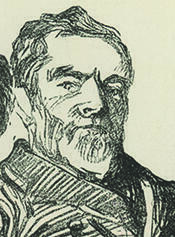
Here you will find contact information for Representative Felix Campbell, including email address, phone number, and mailing address.
| Name | Felix Campbell |
| Position | Representative |
| State | New York |
| District | 2 |
| Party | Democratic |
| Status | Former Representative |
| Term Start | December 3, 1883 |
| Term End | March 3, 1891 |
| Terms Served | 4 |
| Born | February 28, 1829 |
| Gender | Male |
| Bioguide ID | C000082 |
About Representative Felix Campbell
Felix Campbell (February 28, 1829 – November 8, 1902) was an American businessman and Democratic politician who served four terms as a United States Representative from New York from 1883 to 1891. Born in Brooklyn, New York, he was raised in the growing urban environment of Kings County at a time when Brooklyn was emerging as a major industrial and commercial center. He attended the common schools, receiving a basic formal education that prepared him for a career in the rapidly expanding fields of manufacturing and engineering.
After completing his schooling, Campbell became a manufacturer of iron pipes, entering an industry closely tied to the development of urban infrastructure, water systems, and industrial facilities. In addition to his work as a manufacturer, he established himself as a consulting engineer, a role that reflected both his technical expertise and his familiarity with the practical demands of large-scale public and private works. His professional success in business and engineering helped build his reputation in Brooklyn and laid the groundwork for his entry into public life.
Campbell’s political career began at the local level. In 1858 he served as president of the board of supervisors, a key county-level governing body that oversaw local administration and finances in Kings County. His leadership in this role demonstrated his growing influence in Democratic Party circles and his capacity for public administration. Later, in recognition of his standing and experience, Governor Samuel J. Tilden appointed him a member of the board of commissioners from New York to the Centennial Exhibition at Philadelphia in 1876, a major national event commemorating the hundredth anniversary of American independence and showcasing industrial, technological, and cultural achievements.
Building on this record of public service, Campbell was elected as a Democrat to the Forty-eighth Congress and to the three succeeding Congresses, serving in the U.S. House of Representatives from March 4, 1883, to March 3, 1891. Representing a New York district during a significant period in American history marked by industrial expansion, labor unrest, and debates over tariffs and economic policy, he participated in the legislative process and represented the interests of his Brooklyn and New York constituents. As a member of the House of Representatives, Felix Campbell contributed to the democratic process over four consecutive terms in office, aligning with the Democratic Party during an era of closely contested national politics.
Campbell’s congressional service, spanning the Forty-eighth through the Fifty-first Congresses, placed him in the midst of major national issues of the late nineteenth century, including questions of economic regulation, infrastructure development, and federal oversight in a rapidly modernizing nation. While specific committee assignments and legislative initiatives associated with him are not extensively documented in the available record, his repeated reelection indicates sustained support from his district and continued engagement with the concerns of his constituents during his eight years in Congress.
In 1890 Campbell declined to be a candidate for renomination, bringing his congressional career to a close at the end of his fourth term on March 3, 1891. After leaving the House of Representatives, he returned to private life in Brooklyn, where his earlier business and engineering activities had been centered. He remained identified with the city in which he had been born, educated, and had built both his professional and political careers.
Felix Campbell died in Brooklyn on November 8, 1902. He was interred in Holy Cross Cemetery in Brooklyn, New York, a resting place for many of the city’s prominent Catholic families and public figures. His life reflected the trajectory of a nineteenth-century urban businessman who translated local prominence and technical expertise into sustained service at the county and national levels, representing New York in the United States Congress during a transformative period in American history.