Senator Felix Grundy
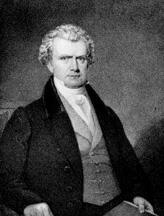
Here you will find contact information for Senator Felix Grundy, including email address, phone number, and mailing address.
| Name | Felix Grundy |
| Position | Senator |
| State | Tennessee |
| Party | Democratic |
| Status | Former Representative |
| Term Start | November 4, 1811 |
| Term End | March 3, 1841 |
| Terms Served | 5 |
| Born | September 11, 1777 |
| Gender | Male |
| Bioguide ID | G000509 |
About Senator Felix Grundy
Felix Grundy (September 11, 1777 – December 19, 1840) was an American attorney, jurist, and Democratic politician who served as the 13th attorney general of the United States, a United States representative, and a United States senator from Tennessee. Known throughout his career for his skill as a criminal lawyer who attracted crowds when he appeared for the defense, he played a prominent role in national politics during the early nineteenth century and was closely associated with the Jacksonian wing of the Democratic Party.
Grundy was born in Berkeley County, Virginia (now Berkeley County, West Virginia). During his childhood, his parents moved westward, first to Brownsville, Pennsylvania, and then to Kentucky, part of the trans-Appalachian frontier. He was educated at home and later attended Bardstown Academy in Bardstown, Kentucky. Choosing the law as his profession, he read law in an established firm, following the customary apprenticeship system of the period. In 1799 he was admitted to the Kentucky bar and that same year began the practice of law in Springfield, Washington County, Kentucky, quickly gaining a reputation for his courtroom abilities.
Grundy’s public career began almost immediately after his admission to the bar. In 1799 he was chosen to represent Washington County at the convention that drafted the second Kentucky Constitution. He subsequently served in the Kentucky House of Representatives from 1800 to 1802 as a representative of Washington County. After moving to Nelson County, Kentucky, he was again elected to the Kentucky House, serving from 1804 to 1806. On December 10, 1806, he was commissioned an associate justice of the Kentucky Court of Appeals, the state’s highest court, and on April 11, 1807, he was elevated to chief justice. Later in 1807, however, he resigned from the bench and moved to Nashville, in the Middle District of Tennessee, where he resumed the practice of law. His departure from Kentucky was influenced in part by his political opposition to the rising influence of Henry Clay, whose Bluegrass-region interests clashed with Grundy’s, and in part by the opportunities presented by rapidly growing Nashville. In Tennessee he soon became renowned as a criminal lawyer while maintaining his political ambitions.
Grundy entered national politics as a member of the United States House of Representatives. Elected as a Democratic-Republican to the 12th and 13th Congresses, he served from March 4, 1811, until his resignation in July 1814. His service in Congress occurred during a significant period in American history, encompassing the War of 1812, and he was identified with the “War Hawk” faction that supported a more assertive stance against Great Britain. As a member of the House, Felix Grundy participated in the legislative process and represented the interests of his constituents during this formative era. After leaving the House, he returned to Tennessee politics and was elected to the Tennessee House of Representatives, in which he served from 1819 to 1825. In 1820 he was appointed a commissioner to help settle the boundary line between Tennessee and Kentucky, reflecting his continued involvement in regional and interstate affairs.
Grundy’s long tenure in the United States Senate from Tennessee began with his election as a Jacksonian to fill the vacancy created by the resignation of Senator John H. Eaton, who had joined President Andrew Jackson’s Cabinet. Grundy took his seat on October 19, 1829, for the term ending March 4, 1833, and was reelected in 1832. He served in this first period in the Senate from October 19, 1829, until July 4, 1838, when he resigned to accept a Cabinet position. During these years he was a prominent Jacksonian Democrat and held important committee assignments. He served as chairman of the Senate Committee on Post Offices and Post Roads during the 21st through 24th Congresses and later as chairman of the Senate Committee on the Judiciary during the 24th and 25th Congresses. Across these years, Felix Grundy contributed significantly to the legislative process, and, as a member of the Senate, he participated in the democratic process and represented the interests of his Tennessee constituents during five terms in Congress, spanning from 1811 to 1841 when his various House and Senate service is considered together.
In July 1838 President Martin Van Buren appointed Grundy as attorney general of the United States, making him the 13th person to hold that office. As attorney general, he served as the chief legal adviser to the federal government during a period marked by contentious political and constitutional issues in the late Jacksonian era. While serving in the Cabinet, Grundy was elected on November 19, 1839, as a Democrat to the United States Senate to fill the vacancy in the term commencing March 4, 1839, caused by the resignation of Senator Ephraim H. Foster. To resolve the question of whether he could simultaneously hold the offices of attorney general and senator, Grundy resigned as attorney general on December 14, 1839. On that same day he was reelected by the Tennessee legislature to the Senate and resumed his seat. In this final period of Senate service, he served from December 14, 1839, until his death, and was chairman of the Senate Committee on Revolutionary Claims in the 26th Congress.
Felix Grundy died in office in Nashville, Tennessee, on December 19, 1840, a little over a year after returning to the Senate. He was interred in the Nashville City Cemetery. His influence endured in both law and politics. A mentor to future President James K. Polk, Grundy helped shape Polk’s early political career; Polk later purchased Grundy’s Nashville residence, known as “Grundy Place,” renamed it “Polk Place,” and lived and died there after his presidency. The house was demolished in 1901. In recognition of Grundy’s prominence, four American counties—in Illinois, Iowa, Missouri, and Tennessee—were named in his honor. Grundy Center, Iowa, and its surrounding Grundy County also bear his name; the town holds an annual “Felix Grundy Days” festival each July to mark the beginning of the Grundy County Fair, reflecting the continued commemoration of his legacy in the American Midwest and South.