Representative Finly Hutchinson Gray
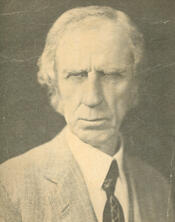
Here you will find contact information for Representative Finly Hutchinson Gray, including email address, phone number, and mailing address.
| Name | Finly Hutchinson Gray |
| Position | Representative |
| State | Indiana |
| District | 10 |
| Party | Democratic |
| Status | Former Representative |
| Term Start | April 4, 1911 |
| Term End | January 3, 1939 |
| Terms Served | 6 |
| Born | July 21, 1863 |
| Gender | Male |
| Bioguide ID | G000395 |
About Representative Finly Hutchinson Gray
Finly Hutchinson Gray (July 21, 1863 – May 8, 1947) was an American lawyer and Democratic politician who served two separate three-term stints as a U.S. Representative from Indiana in the early 20th century. Over the course of six terms in the United States House of Representatives between 1911 and 1939, he participated actively in the legislative process and represented the interests of his Indiana constituents during a period marked by profound national change, including the Progressive Era, World War I, the Great Depression, and the New Deal.
Gray was born on July 21, 1863, near Orange, Indiana. He attended the common schools, receiving the basic education typical of rural Indiana in the late nineteenth century. After his early schooling, he pursued the study of law, preparing for a professional career at a time when legal training was often obtained through apprenticeship and independent study rather than formal law school.
In 1892, Gray was admitted to the bar and commenced the practice of law in Connersville, Indiana, a community that would remain the center of his professional and political life. He quickly became involved in local affairs and built a reputation as a practicing attorney. His growing prominence in Connersville led to his election as mayor, a position he held from 1904 to 1910. As mayor, he gained administrative and political experience that would serve as a foundation for his subsequent congressional career.
Gray was elected as a Democrat to the Sixty-second, Sixty-third, and Sixty-fourth Congresses, serving his first consecutive three-term period in the U.S. House of Representatives from March 4, 1911, to March 3, 1917. During these years, he contributed to the legislative process as a member of the House of Representatives, participating in debates and votes on issues arising in the Progressive Era and the lead-up to American involvement in World War I. A member of the Democratic Party, he aligned with his party’s national leadership while representing the concerns of his Indiana district. He was an unsuccessful candidate for reelection in 1916 to the Sixty-fifth Congress and also failed in a 1917 bid to fill the vacancy in that same Congress caused by the death of Representative Daniel W. Comstock.
Following his initial departure from Congress, Gray resumed the practice of law in Connersville and also engaged in lecturing. For more than a decade he remained active in public life without holding federal office, maintaining his legal practice and public profile in Indiana. With the onset of the Great Depression and the political realignment that accompanied the New Deal, Gray returned to national office. He was again elected as a Democrat to the Seventy-third, Seventy-fourth, and Seventy-fifth Congresses, serving from March 4, 1933, to January 3, 1939. In this second three-term period, he once more participated in the democratic process in the House of Representatives, taking part in the consideration of major New Deal legislation and representing his constituents during a time of economic crisis and recovery. He was an unsuccessful candidate for reelection in 1938 to the Seventy-sixth Congress, concluding his congressional service after a total of six terms between 1911 and 1939.
After leaving Congress for the final time, Gray reengaged in the practice of law in Connersville. He and his wife, Mary Alice (Alice Green) Gray, undertook the restoration of the historic Canal House in Connersville and resided there from 1936 to 1947. The Canal House later served as the home of the local chapter of the Veterans of Foreign Wars and eventually became a local history museum. Reflecting its historical significance and the preservation efforts associated with Gray and his wife, the Canal House was added to the National Register of Historic Places in 1973.
Gray’s family life was marked by both dedication and tragedy. He married Mary Alice Green, and they had one daughter, Mary Gray, born in 1903. By the time of the 1930 census, Mary Gray was recorded as a patient at the Madison Hospital for the Insane in Madison, Jefferson County, Indiana, and she preceded her mother in death. In memory of their daughter, the Grays created a lasting conservation legacy. In 1943, Alice Green Gray donated an initial 264-acre (1.07 km²) tract south of Connersville in Fayette County to the Indiana Audubon Society as a living memorial to Mary, establishing what became the Mary Gray Bird Sanctuary. Upon his death in 1947, Congressman Finly H. Gray willed additional property to the society, bringing the sanctuary’s holdings to more than 600 acres (2.4 km²). Subsequent gifts from members allowed further expansion, and the sanctuary now encompasses more than 700 acres (2.8 km²), serving as a significant natural and educational resource in Indiana.
Finly Hutchinson Gray resided in Connersville until his death there on May 8, 1947. He was interred in Dale Cemetery in Connersville. His career as a lawyer, mayor, and six-term Democratic Representative from Indiana, together with the historic preservation of the Canal House and the establishment and expansion of the Mary Gray Bird Sanctuary, left a multifaceted legacy in both public service and community life.