Representative Fletcher B. Swank
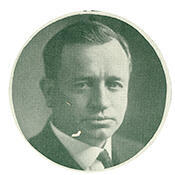
Here you will find contact information for Representative Fletcher B. Swank, including email address, phone number, and mailing address.
| Name | Fletcher B. Swank |
| Position | Representative |
| State | Oklahoma |
| District | 5 |
| Party | Democratic |
| Status | Former Representative |
| Term Start | April 11, 1921 |
| Term End | January 3, 1935 |
| Terms Served | 6 |
| Born | April 24, 1875 |
| Gender | Male |
| Bioguide ID | S001089 |
About Representative Fletcher B. Swank
Fletcher B. Swank (April 24, 1875 – March 16, 1950) was an American politician, attorney, jurist, and a U.S. Representative from Oklahoma. A member of the Democratic Party, he served six terms in the United States House of Representatives between 1921 and 1935, representing Oklahoma during a significant period in American history that encompassed the post–World War I era, the Roaring Twenties, and the early years of the Great Depression.
Swank was born near Bloomfield, Davis County, Iowa, on April 24, 1875, the son of Wallace and Melinda Wells Swank. In 1888 he moved with his parents to Beef Creek in Indian Territory, in what would later become the state of Oklahoma. Growing up in the developing frontier region, he attended an academy in Noble, Oklahoma, and later pursued higher education at the University of Oklahoma in Norman. On December 30, 1914, he married Ada Blake; the couple had two children, Fletcher B. Swank Jr. and James Wallace Swank.
Before entering law and national politics, Swank began his career in education. He taught school at Stella, Oklahoma, and in 1902 was elected Cleveland County school superintendent. He served in that position from 1903 to 1907, helping to administer and expand public education in a rapidly growing county. His work in local education brought him into contact with civic and political leaders and helped establish his reputation for public service.
Swank’s transition to national politics and the legal profession began when he became private secretary to Congressman Scott Ferris in 1907 and 1908, a role that brought him to Washington, D.C., and introduced him to the workings of the federal government. During this period he attended the law department of Georgetown University in Washington in 1907 and 1908. He subsequently completed his legal studies at Cumberland University in Lebanon, Tennessee, from which he graduated in 1909. That same year he was admitted to the bar and commenced the practice of law in Norman, Oklahoma.
In addition to his legal practice, Swank quickly advanced in the Oklahoma judiciary. He served as judge of the county court of Cleveland County, Oklahoma, from 1911 to 1915, presiding over local civil and criminal matters during the formative years of statehood. He was then appointed or elected judge of the Fourteenth Judicial District of Oklahoma, serving from 1915 until September 1920. In that capacity he oversaw a broader range of cases across multiple counties. He resigned from the district judgeship in September 1920, positioning himself to seek federal office.
Swank was elected as a Democrat to the Sixty-seventh Congress and to the three succeeding Congresses, serving from March 4, 1921, to March 3, 1929. During these four consecutive terms in the U.S. House of Representatives, he participated in the legislative process and represented the interests of his Oklahoma constituents as the nation grappled with postwar economic adjustments, agricultural issues, and emerging federal policies of the 1920s. An unsuccessful candidate for reelection in 1928 to the Seventy-first Congress, he temporarily left Congress but remained active in Democratic politics.
Regaining his seat two years later, Swank was elected to the Seventy-second and Seventy-third Congresses and served from March 4, 1931, to January 3, 1935. His return to Congress coincided with the onset of the Great Depression and the early New Deal period, during which he again contributed to the legislative process as the federal government expanded its role in economic relief and recovery. In 1934 he was an unsuccessful candidate for renomination, losing in the Democratic primary to Josh Lee. Swank subsequently sought to return to Congress in 1936, 1937, and 1938, but these later campaigns were not successful.
After his final congressional race, Swank returned to Norman, Oklahoma, where he resumed the practice of law. He continued to live in Norman for the remainder of his life, maintaining his professional ties and his long-standing connection to the community he had served as teacher, attorney, judge, and congressman. Fletcher B. Swank died in Norman, Cleveland County, Oklahoma, on March 16, 1950, at the age of 74. He was interred at Odd Fellows Cemetery in Norman, Oklahoma.