Representative Florian Lampert
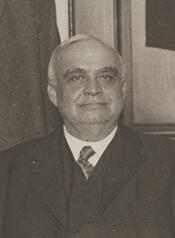
Here you will find contact information for Representative Florian Lampert, including email address, phone number, and mailing address.
| Name | Florian Lampert |
| Position | Representative |
| State | Wisconsin |
| District | 6 |
| Party | Republican |
| Status | Former Representative |
| Term Start | April 2, 1917 |
| Term End | March 3, 1931 |
| Terms Served | 7 |
| Born | July 8, 1863 |
| Gender | Male |
| Bioguide ID | L000041 |
About Representative Florian Lampert
Florian Lampert Jr. (July 8, 1863 – July 18, 1930) was an American businessman and progressive Republican politician from Oshkosh, Wisconsin, who served as a Representative from Wisconsin in the United States Congress from 1917 to 1931. A member of the Republican Party, he represented Wisconsin’s 6th congressional district for nearly twelve years, from his swearing-in on December 2, 1918, until his death in 1930, and contributed to the legislative process during seven terms in office. Earlier in his career, he served as sheriff of Winnebago County, Wisconsin, and was long active in state and local politics.
Lampert was born on July 8, 1863, in West Bend, Wisconsin, the youngest of four children of Florian Lampert Sr. and Anna Katherina Lampert. Both parents were Swiss American immigrants who came to the United States in the 1840s and were among the pioneers of the West Bend area. His father, a mason and building contractor, was responsible for much of the early construction in West Bend. Lampert received his early education in the public schools of West Bend. After his father’s death in 1875, he moved with his mother to Oshkosh, Wisconsin. He attended high school there for one year before leaving school to work as a clerk and salesman for a boot and shoe dealer in Oshkosh, helping to support his family.
In the early 1880s, Lampert went to work for his elder brother, Mathias (also known as Matthew), who had entered the boot and shoe trade. By 1885, the brothers bought out their business partners and operated their enterprise as M. Lampert & Co., establishing themselves in the local commercial community. On May 4, 1885, Lampert married Mary Catherine Vetter of Sheboygan County, Wisconsin. The couple had nine children, though two died in infancy. All five of their surviving sons served in the United States armed forces during World War I, beginning a family tradition of military service that extended into the next generation. Their eldest son, James Gillespie Blaine Lampert, a graduate of the United States Military Academy at West Point, became a career U.S. Army officer, served with the 1st U.S. Engineer Regiment in France, rose to the rank of lieutenant colonel, and died of disease in January 1919 before returning home. James G. B. Lampert’s son, James Benjamin Lampert, also became a career officer in the United States Army Corps of Engineers, was decorated for service in the Pacific during World War II, rose to the rank of lieutenant general, served three years as Superintendent of the United States Military Academy, and later was high commissioner of the United States Civil Administration of the Ryukyu Islands. Lampert’s third son, Lester Leland Lampert, likewise graduated from West Point and pursued a career in the U.S. Army. He served in France with the 49th U.S. Infantry Division during World War I as a major, was assigned to Schofield Barracks near Pearl Harbor in late 1941 just weeks before the Japanese attack—an event his wife later described in a first-hand account—served through most of World War II as a training officer, and retired as a colonel. Lester Leland Lampert Jr., Lester’s son, also graduated from West Point and commanded a battalion of the 103rd U.S. Infantry Division during World War II, earning a Silver Star for his conduct during the Battle of the Bulge.
Lampert became involved in politics in his early twenties and was an active supporter of Republican presidential nominee James G. Blaine in the 1884 United States presidential election. He made his first bid for public office in 1892, running for treasurer of Winnebago County, but lost the general election by 43 votes. The following spring, he was appointed comptroller of the city of Oshkosh by Mayor Charles Oellerich and was reappointed in 1895, gaining administrative and fiscal experience in municipal government. In 1896, he was selected by the Winnebago County Republican convention as their nominee for sheriff. He won the nomination on the eighth ballot and prevailed in the general election, serving a two-year term as sheriff of Winnebago County. Rather than seek re-election in 1898, he pursued the Republican nomination for the Wisconsin Senate in the 19th Senate district, but the county convention chose George A. Buckstaff instead. For several years thereafter, Lampert did not seek elected office but remained active in political affairs as a supporter of progressive Republican Robert M. “Fighting Bob” La Follette, who became governor in 1901. During La Follette’s governorship, Lampert’s brother Mathias worked as a clerk in the state Department of Public Lands, and Lampert himself was employed on a temporary basis assisting in land sales. In late 1904, he sought appointment as state game warden and was described at the time as the leader of the La Follette Republicans in Winnebago County, though La Follette ultimately appointed Jonas Swenholt to the post.
Lampert continued to pursue public office and party responsibilities in the new century. In 1906, he sought the Republican nomination to return as sheriff of Winnebago County under Wisconsin’s new primary election system. Facing six opponents in a crowded primary, he finished second to Joachim Rhyner. By 1907, with La Follette now a U.S. senator, Lampert sought his support for appointment as United States Marshal for the Eastern District of Wisconsin, but again did not receive the position. He remained a steadfast partisan of La Follette and attempted to secure election as a La Follette delegate to the 1908 Republican National Convention. Although he was not elected, he was appointed an alternate by the state Republican Central Committee and ultimately served in place of elected delegate Thomas Torrison, who was unable to attend. That fall, Lampert was chosen by the state party as one of Wisconsin’s presidential electors, and, with Republican candidate William Howard Taft carrying the state, he served as one of Wisconsin’s thirteen electors in the 1908 United States presidential election. He was further honored by being selected to carry Wisconsin’s official electoral votes to Washington, D.C., for the formal tabulation of the Electoral College. Over the next several years, he served as a commissioner on the Oshkosh city police and fire board and remained a visible figure in local governance.
In 1912, Lampert ran for a seat on the Oshkosh city commission but narrowly lost the general election. He attended the 1912 Republican National Convention, though not as a delegate, and later that year joined the short-lived Progressive, or Bull Moose, Party in support of Theodore Roosevelt’s presidential candidacy, serving on the state central committee of the Progressive Party. He was standing near Roosevelt during the attempted assassination in Milwaukee on October 14, 1912. Lampert was placed on the Progressive Party’s presidential elector slate that year, but Roosevelt lost Wisconsin in the general election. In 1914, Lampert again ran for city commissioner and this time won, though contemporary newspapers described the contest between him and incumbent commissioner Henry Kitz as particularly bitter. Under Oshkosh’s hybrid city commission form of government, the city was governed by a mayor and two commissioners elected at large, and Lampert played a significant role in municipal administration. At the start of his fifth year as city commissioner, he announced his candidacy for the U.S. House of Representatives from Wisconsin’s 6th congressional district.
Lampert’s entry into congressional politics came at a moment of national crisis. He led a revolt of district Republicans in a primary challenge against incumbent Republican Representative James H. Davidson, whose opposition to U.S. entry into World War I had become controversial. Davidson was one of fifty members of the House who voted against the declaration of war against Germany, and opposition to his stance intensified in the district. After Lampert demonstrated strong support at county conventions, Davidson withdrew from the race and, a month later, died after a brief illness. His death necessitated a special election to fill the remainder of his term in the 65th Congress, and it was decided to hold the special election concurrently with the fall general election. Even after Davidson’s withdrawal and death, Lampert faced three opponents in the Republican primary, but he won the nomination with the aid of a large plurality from his home base in Winnebago County. During the general election campaign, he continued to fulfill his duties as city commissioner and supported strict quarantine measures in Oshkosh in response to the Spanish flu pandemic. In the November 5, 1918, general election, Lampert won both the regular election and the special election for the 6th congressional district and was sworn into the House of Representatives on December 2, 1918.
As a member of the House of Representatives, Lampert participated actively in the democratic process and represented the interests of his constituents during a significant period in American history, including the final months of World War I, the postwar transition, and the 1920s. His first full term was relatively uneventful legislatively, though he faced and easily overcame a primary challenge from State Senator Julius H. Dennhardt in 1920 and then won a landslide victory in the general election, receiving nearly 69 percent of the vote. In the 67th Congress, he was appointed chairman of the House Committee on Patents. In that capacity, he authored and secured passage of the Patent Act of 1922, which increased the powers of the patent commissioner and funded forty-nine new technical examiner positions for the United States Patent and Trademark Office, strengthening the federal government’s capacity to administer intellectual property law. He faced another primary challenge in 1922 from State Senator William A. Titus, a stalwart Republican, but again won decisively and then carried the general election by a wide margin, receiving more than 86 percent of the vote against independent Democrat William E. Cavanaugh.
Lampert went on to win three additional terms in Congress, consistently receiving large electoral majorities. Over the course of his seven terms, he devoted substantial time and effort to constituent services, particularly in handling applications for veterans’ pensions and related matters, reflecting the needs of a district with many World War I veterans. He was also active in securing public improvements for his district and served on the committee that framed much of the early federal aviation legislation, participating in the development of national policy in a new and rapidly evolving field. His tenure in Congress, spanning from his initial swearing-in on December 2, 1918, until his death in 1930, coincided with major national developments in economic policy, infrastructure, and veterans’ affairs, and he remained aligned with the progressive wing of the Republican Party while working within the broader Republican majority.
On July 8, 1930, Lampert was involved in a serious automobile accident in Chicago, Illinois. While being driven back to Oshkosh, his car struck a coal truck on a slippery road. He was taken to a hospital in Chicago Heights, Illinois, where he initially appeared likely to recover. His condition was complicated by pneumonia, however, and he ultimately suffered a fatal heart attack on July 18, 1930. His death made him one of the members of the United States Congress who died in office between 1900 and 1949. Lampert’s remains were interred at Riverside Cemetery in Oshkosh, Wisconsin, closing the life of a businessman-turned-progressive Republican who rose from local commerce and municipal service to a prominent role in Wisconsin and national politics.