Representative Floyd V. Hicks
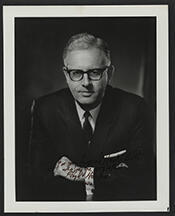
Here you will find contact information for Representative Floyd V. Hicks, including email address, phone number, and mailing address.
| Name | Floyd V. Hicks |
| Position | Representative |
| State | Washington |
| District | 6 |
| Party | Democratic |
| Status | Former Representative |
| Term Start | January 4, 1965 |
| Term End | January 3, 1977 |
| Terms Served | 6 |
| Born | May 29, 1915 |
| Gender | Male |
| Bioguide ID | H000563 |
About Representative Floyd V. Hicks
Floyd Verne Hicks (May 29, 1915 – December 1, 1992) was an American politician, attorney, and jurist who served six terms as a Democratic member of the United States House of Representatives from Washington and later as an associate justice of the Washington Supreme Court. Over the course of a public career that spanned teaching, military service, law, trial and appellate judging, and congressional service, he played a notable role in both state and national affairs during a significant period in American history.
Hicks was born on May 29, 1915, in Prosser, Benton County, Washington. He was educated in Washington State and pursued higher education at Central Washington University, where he earned a bachelor’s degree in education. Following his graduation, he became a high school teacher and football coach, reflecting an early commitment to public service and youth development. He continued his studies at Washington State University, obtaining certification as an education administrator, which prepared him for leadership roles in the educational field before he turned to law and politics.
With the onset of World War II, Hicks entered military service, joining the United States Army in 1942. He served for four years during the war and rose to the rank of captain, gaining experience in leadership and administration that would later inform his work in both the legal system and Congress. After his discharge from the Army, he returned to Washington and shifted his professional focus to the law, enrolling in the University of Washington School of Law. He earned his Juris Doctor degree in 1948.
Upon completing his legal education, Hicks established a small private law practice in Pierce County, Washington. His work as an attorney in the postwar years brought him into close contact with the legal and civic issues of his community. In 1961 he was chosen as a judge of the Pierce County Superior Court, marking his entry into the judiciary. As a superior court judge, he presided over a broad range of civil and criminal matters, building a reputation that would soon propel him onto the national stage.
In 1964, Hicks was elected as a Democrat to the United States House of Representatives from Washington, beginning his service in the 89th Congress on January 3, 1965. He served six consecutive terms, remaining in office until January 3, 1977. During his twelve years in the House, he represented his Washington constituents through a period marked by the Vietnam War, the civil rights movement, and significant social and economic change. Hicks served on the House Committee on Armed Services, where his World War II military background informed his work on defense and national security legislation. Over the course of his congressional career, he sponsored a total of 48 bills, reflecting both national policy concerns and individual constituent needs. Among these were H.R. 15586 (94th Congress), a bill to set the October 1, 1976, pay raise for federal officers and employees at 6½ percent and to exclude Members of Congress from that pay raise; several private relief bills, including H.R. 12754 for the relief of S. Leon Levy, H.R. 12117 for the relief of Gertrude Faria Young, H.R. 11544 for the relief of Carlos Gregorio Hoff and Jean Hoff Mape, H.R. 8449 for the relief of the heirs of Anne E. Scarborough, and H.R. 8118 for the relief of Chin-Ho An; and measures affecting trade and taxation, such as H.R. 11694 prescribing, for a five-year period, the import duty on specified soccer uniforms under the U.S. Tariff Schedules, H.R. 10831 to amend the Tariff Schedules of the United States to provide duty-free treatment for softwood veneers imported for use in making plywood, and H.R. 10014 to amend the Internal Revenue Code of 1954 to exempt the use of certain punchboards, pull-tabs, and similar devices from federal wagering taxes. His tenure in Congress thus combined committee work on major national issues with targeted legislative efforts on behalf of individual citizens and specific industries.
After leaving Congress in 1977, Hicks returned to judicial service at the state level. That same year he became an associate justice of the Washington Supreme Court, the highest court in the state. He served on the Supreme Court from 1977 to 1982, participating in the resolution of significant questions of state constitutional and statutory law and authoring opinions that contributed to Washington’s legal jurisprudence. Following his tenure on the Supreme Court, he continued his judicial career when he was appointed a judge of the Pierce County Superior Court, returning to the trial bench where he had first served before his election to Congress.
Floyd Verne Hicks spent his later years in Washington State, remaining associated with the legal and civic life of his community. He died on December 1, 1992, in Tacoma, Washington, closing a career that had encompassed education, military service, the practice of law, trial and appellate judging, and a dozen years in the United States House of Representatives during a transformative era in American history.