Delegate Foto I. F. Sunia
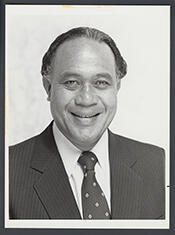
Here you will find contact information for Delegate Foto I. F. Sunia, including email address, phone number, and mailing address.
| Name | Foto I. F. Sunia |
| Position | Delegate |
| State | American Samoa |
| District | At-Large |
| Party | Democratic |
| Status | Former Representative |
| Term Start | January 5, 1981 |
| Term End | January 3, 1989 |
| Terms Served | 4 |
| Born | March 13, 1937 |
| Gender | Male |
| Bioguide ID | S001077 |
About Delegate Foto I. F. Sunia
Fofō Iosefa Fiti Sunia (March 13, 1937 – October 14, 2025) was an American Samoan politician who became the first non-voting Delegate from American Samoa to the United States House of Representatives. A member of the Democratic Party, he played a formative role in establishing American Samoa’s modern relationship with the federal government and in defining the territory’s representation in Congress. His career in public life spanned local administration, territorial politics, and national legislative service during a period of significant political and economic change for American Samoa and the broader United States.
Born on March 13, 1937, in American Samoa, Sunia grew up in a period when the territory was transitioning from U.S. Navy administration to a more civilian and locally driven government structure. His early life in the islands exposed him to the traditional Samoan communal system, village leadership, and the emerging institutions of territorial self-governance. These experiences helped shape his later political priorities, which consistently emphasized the preservation of Samoan culture and land tenure alongside efforts to secure greater federal support and recognition for the territory.
Sunia pursued his education with the aim of serving in public administration and public affairs. Coming of age at a time when more American Samoans were seeking higher education abroad, he benefited from the expanding educational opportunities available to territorial residents in the mid‑twentieth century. His academic and early professional experiences prepared him for work in government service, where he developed expertise in the practical administration of a small island territory operating within the broader framework of U.S. federal law and policy.
Before his election to Congress, Sunia built a career in public service and territorial affairs, gaining experience that would later inform his legislative work. He was active in the development of American Samoa’s political institutions as the territory moved toward greater self-governance under its own constitution and elected leadership. In this period, he became known as a key figure in articulating American Samoa’s interests to federal authorities, working to balance local autonomy with the benefits of closer integration into U.S. political and economic systems. His growing prominence in territorial politics and administration positioned him as a natural choice to seek the newly created congressional seat for American Samoa.
Sunia’s congressional service began in 1981, when he took office as the first non-voting Delegate from American Samoa to the United States House of Representatives. Serving four consecutive terms, he remained in Congress until 1989. As a Democratic member of the House, he participated in the legislative process during a significant period in American history marked by shifting economic policies, Cold War tensions, and evolving debates over the status and rights of U.S. territories. Although he did not have a vote on the House floor, he served on committees, introduced and co-sponsored legislation, and worked within the Democratic caucus to advance measures affecting American Samoa and other insular areas.
During his tenure from 1981 to 1989, Sunia focused on issues central to the welfare of his constituents, including federal funding for infrastructure, education, and health services in American Samoa, as well as policies affecting fisheries, maritime affairs, and economic development in the Pacific region. He used his position to highlight the unique constitutional and cultural status of American Samoa, advocating for the protection of communal land ownership and traditional Samoan customs while seeking to expand access to federal programs. His work helped to institutionalize the role of an American Samoan Delegate in Congress and to ensure that the territory’s concerns were regularly heard in national policy discussions.
After leaving Congress in 1989, Sunia remained an influential figure in American Samoan public life. Drawing on his congressional experience, he continued to engage with territorial leaders and federal officials on matters affecting the islands, including development, governance, and the evolving relationship between American Samoa and the United States. His post-congressional years were marked by ongoing involvement in civic and political affairs, mentorship of younger leaders, and continued advocacy for the interests of his home territory.
Fofō Iosefa Fiti Sunia died on October 14, 2025. His death marked the passing of a pioneering figure in American Samoa’s modern political history. As the first non-voting Delegate from American Samoa to the United States House of Representatives and a four-term member of Congress from 1981 to 1989, he left a legacy of expanded representation for the territory and a record of sustained effort to integrate American Samoa’s needs and perspectives into the broader legislative agenda of the United States.