Senator Forrest C. Donnell
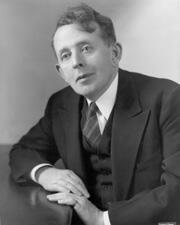
Here you will find contact information for Senator Forrest C. Donnell, including email address, phone number, and mailing address.
| Name | Forrest C. Donnell |
| Position | Senator |
| State | Missouri |
| Party | Republican |
| Status | Former Representative |
| Term Start | January 3, 1945 |
| Term End | January 3, 1951 |
| Terms Served | 1 |
| Born | August 20, 1884 |
| Gender | Male |
| Bioguide ID | D000414 |
About Senator Forrest C. Donnell
Forrest C. Donnell (August 20, 1884 – March 3, 1980) was an American attorney and Republican politician who served as the 40th governor of Missouri and as a United States senator from Missouri. He held a single term in the U.S. Senate from 1945 to 1951, contributing to the legislative process during a significant period in American history and representing the interests of his Missouri constituents.
Donnell was born in Quitman, Nodaway County, Missouri, where his family was active in local civic life; his father served as mayor of nearby Maryville. The Donnell family lived in a house that had once belonged to Albert Morehouse, who later became governor of Missouri, an early association with the state’s political tradition. Donnell attended public schools and graduated from Maryville High School in 1900. His early academic success and exposure to local public affairs helped shape his interest in law and politics.
Donnell pursued higher education at the University of Missouri in Columbia, where he distinguished himself both academically and socially. He was valedictorian of the class of 1904 and was elected to Phi Beta Kappa, reflecting his high scholastic standing. He was also a member of the Kappa Sigma and Phi Delta Phi fraternities, and he joined the Theta Kappa Nu and QEBH honor societies. Donnell continued at the University of Missouri School of Law, earning his law degree in 1907, and soon thereafter embarked on a legal career that would underpin his later political life.
In 1907 Donnell moved to St. Louis, Missouri, where he established himself as a practicing attorney. In October 1911 he and future U.S. senator Selden P. Spencer founded the law firm Spencer & Donnell, which became a prominent practice in the city. Donnell married Hilda Hays in 1913; the couple had two children, Ruth and John Lanier. Alongside his legal work, he became active in Republican politics in the St. Louis area. He served as president of the Association of Young Republicans of Missouri in 1917, was a member of the executive committee of the Republican State Committee of Missouri from 1918 to 1920, and in 1919 served as president of the 28th Ward Republican Club of St. Louis. He also held local public office as city attorney for Webster Groves, a suburb southwest of St. Louis, further grounding his reputation as a capable lawyer and public servant.
Donnell’s civic involvement extended into fraternal organizations, most notably Freemasonry. He was a member of Tuscan Lodge No. 360 in St. Louis, serving as Worshipful Master in 1915, and was later elected Grand Master of the Grand Lodge of Missouri A.F. & A.M. for 1942–1943, during his tenure as governor. His Masonic standing intersected with state and national politics; Democrat Harry S. Truman later implied that Donnell’s high Masonic reputation helped counter accusations made against Truman in the 1940 U.S. Senate race, thereby assisting Truman’s successful election to the Senate.
Donnell rose to statewide prominence when he was elected governor of Missouri in 1940. He served one term from January 1941 to January 1945 as the state’s 40th governor and the first Republican governor after the collapse of Tom Pendergast’s Kansas City political machine. In the 1940 election he defeated St. Louis politician Lawrence “Larry” McDaniel by 3,613 votes out of nearly two million cast, drawing decisive support from rural areas. His victory came in a political climate still shaped by the influence of Pendergast and by the efforts of his Democratic predecessor, Governor Lloyd C. Stark, who had wrested control of federal appointments in Missouri from the Pendergast organization in 1936. Concern within the Democratic Party over a Republican assuming control of patronage led to a protracted dispute over Donnell’s right to take office, an episode known as the “Great Governorship Steal.”
Within hours of the 1940 election, prominent Missouri Democrats, including U.S. Senator Bennett Champ Clark, St. Louis Mayor Bernard F. Dickmann, Democratic Party Chairman Robert Hannegan, Attorney General Roy McKittrick, and state Democratic Chairman C. Marion Hulen, met at the DeSoto Hotel in St. Louis to plan their response to Donnell’s apparent victory. They alleged that Republican votes had been fraudulently bought and sought to invoke a provision of the Missouri Constitution allowing the speaker of the Missouri House of Representatives to count and tabulate the votes and proclaim the winner. On that basis, Donnell was initially refused seating as governor while the speaker investigated the returns. Governor Stark, however, urged that Donnell be seated, and the Missouri Supreme Court ultimately ordered that he assume office. As governor, Donnell advanced an ambitious program, but many of his plans were thwarted despite Republicans gaining control of the Missouri House of Representatives and achieving an equal share in the state senate in 1942.
Donnell’s gubernatorial record and statewide profile positioned him for national office. In 1944 he was elected to the United States Senate from Missouri as a Republican, defeating Democratic state attorney general Roy McKittrick by 1,988 votes out of nearly 1.56 million cast. McKittrick had earlier unseated incumbent U.S. Senator Bennett Champ Clark in the Democratic primary, making the general election a closely watched contest. Donnell took his seat in the 79th Congress on January 3, 1945, and served one full term, leaving office on January 3, 1951. His Senate tenure coincided with the final months of World War II, the immediate postwar period, and the early Cold War, a time of major legislative decisions on labor, taxation, and foreign policy. As a senator, Donnell supported the Taft–Hartley Act and other measures regarded as antilabor, and he favored lower income taxes. He opposed an excess-profits tax and was generally critical of most foreign aid programs, reflecting a fiscally conservative and cautious international outlook. In the 1950 Senate election he was defeated for reelection by former U.S. representative Thomas C. Hennings Jr., losing by a margin of 53.6 percent to 46.4 percent.
After leaving the Senate in 1951, Donnell returned to the practice of law in Missouri. He resumed his legal career in St. Louis and remained active in civic and educational affairs. He served as president of the University of Missouri Alumni Association, maintaining close ties to his alma mater, and as a trustee of the State Historical Society of Missouri, contributing to the preservation and interpretation of the state’s history. Donnell retired from active legal practice in 1956 but continued to be regarded as an influential elder statesman within Missouri Republican circles.
Forrest C. Donnell died in St. Louis, Missouri, on March 3, 1980, at the age of 95. He was interred in Bellefontaine Cemetery in St. Louis. His long life spanned from the late nineteenth century through the modern era, and his career encompassed service as a local attorney, party leader, governor, and United States senator during a transformative period in Missouri and American political history.