Representative Francis Baylies
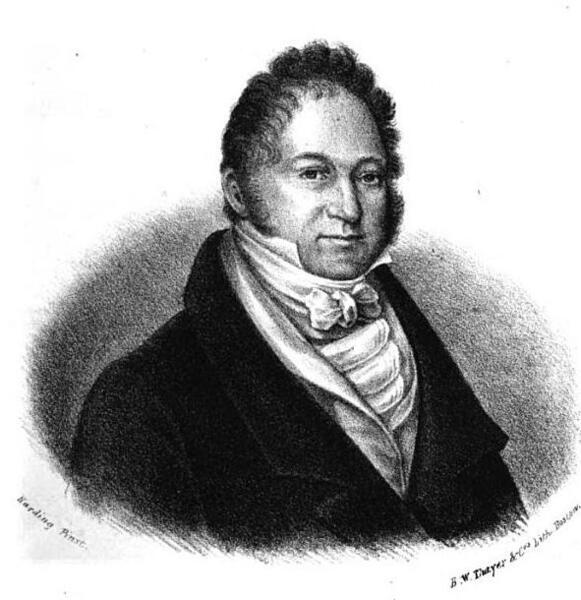
Here you will find contact information for Representative Francis Baylies, including email address, phone number, and mailing address.
| Name | Francis Baylies |
| Position | Representative |
| State | Massachusetts |
| District | 12 |
| Party | Jackson |
| Status | Former Representative |
| Term Start | December 3, 1821 |
| Term End | March 3, 1827 |
| Terms Served | 3 |
| Born | October 16, 1783 |
| Gender | Male |
| Bioguide ID | B000255 |
About Representative Francis Baylies
Francis Baylies (October 16, 1783 – October 28, 1852) was a United States representative from Massachusetts, lawyer, state legislator, diplomat, and author, and the brother of congressman William Baylies. He was born in Taunton, Massachusetts, in 1783, the son of Dr. William Baylies (1742–1826), a prominent physician. Through his father he was a great-grandson of Thomas Baylies, an ironmaster from Coalbrookdale, England, who immigrated to Boston in 1737 and became associated with early ironworks in New England, a background that linked the family to the region’s commercial and industrial development.
Baylies received his early education in Taunton and pursued the study of law in preparation for a professional career. He was admitted to the bar in 1810 and commenced legal practice in Taunton, Massachusetts. Almost immediately he became involved in local public affairs. From 1812 to 1820 he served as Register of Probate for Bristol County, overseeing matters related to estates and guardianships, a position that gave him experience in both legal administration and county-level governance. In 1818 he sought to extend his public service to the national level as a candidate for election to the Sixteenth Congress, but he was unsuccessful in that first bid for federal office.
Undeterred by this defeat, Baylies remained active in politics and was elected as a Federalist to the Seventeenth Congress, a Jackson Federalist to the Eighteenth Congress, and a Jacksonian to the Nineteenth Congress, serving from March 4, 1821, to March 3, 1827. During his tenure in the U.S. House of Representatives he represented a Massachusetts district at a time of transition from the Federalist Party to the emerging Jacksonian movement, reflecting the shifting partisan alignments of the era. His service coincided with debates over internal improvements, tariffs, and the evolving balance of power between the federal government and the states. In 1827 he was an unsuccessful candidate for reelection to the Twentieth Congress, bringing his continuous service in the national legislature to a close.
After leaving Congress, Baylies continued his public career at the state level. He served as a member of the Massachusetts House of Representatives from 1827 to 1832, participating in legislative deliberations during a period of economic expansion and political realignment within the Commonwealth. His experience in Congress and his legal background informed his work on state issues, including questions of infrastructure, commerce, and legal reform. In 1835 he was again elected to the Massachusetts House of Representatives, returning to the state legislature for an additional term of service.
Baylies also held a diplomatic post under President Andrew Jackson. Following the raid on the Falkland Islands by the United States warship USS Lexington in 1831, Jackson appointed him United States chargé d’affaires in Buenos Aires in the Argentine Confederation. He and his family were conveyed to the Río de la Plata aboard the USS Peacock, and on that occasion the British line-of-battle ship Plantagenet and the frigate Druid honored the American vessel by playing “Hail, Columbia,” a gesture of courtesy between naval powers. Baylies’s term in Buenos Aires was very short, owing to the unsettled political and diplomatic conditions of the time in the region and the complexities of U.S. relations with the Argentine Confederation and Great Britain.
In addition to his legal, legislative, and diplomatic work, Baylies engaged in literary and historical pursuits. He is best known as the author of “An Historical Memoir of the Colony of New Plymouth,” published in 1830, a substantial early contribution to the historiography of New England and the Plymouth Colony in particular. His correspondence from this period, including letters written between 1827 and 1834, later appeared in the Proceedings of the Massachusetts Historical Society (vol. 45, 1912), providing insight into his views on politics, diplomacy, and history and underscoring his role as both participant in and commentator on the public life of his time.
Francis Baylies spent his later years in Taunton, where he continued to be regarded as a figure of local and state prominence. He died in Taunton, Massachusetts, on October 28, 1852. He was interred in Old Plain Cemetery, joining earlier generations of his family in a community with which he and his ancestors had long been closely identified.