Senator Francis Marion Cockrell
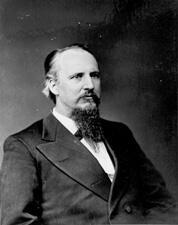
Here you will find contact information for Senator Francis Marion Cockrell, including email address, phone number, and mailing address.
| Name | Francis Marion Cockrell |
| Position | Senator |
| State | Missouri |
| Party | Democratic |
| Status | Former Representative |
| Term Start | December 6, 1875 |
| Term End | March 3, 1905 |
| Terms Served | 5 |
| Born | October 1, 1834 |
| Gender | Male |
| Bioguide ID | C000576 |
About Senator Francis Marion Cockrell
Francis Marion Cockrell (October 1, 1834 – December 13, 1915) was a Confederate military commander and American politician from the state of Missouri who served as a United States senator from Missouri for five consecutive terms from 1875 to 1905. A member of the Democratic Party, he contributed to the legislative process during a significant period in American history and was a prominent member of the famed South–Cockrell–Hargis family of Southern politicians. His long Senate career, combined with his distinguished Civil War service, made him one of Missouri’s most notable public figures of the late nineteenth and early twentieth centuries.
Cockrell was born in Warrensburg, Johnson County, Missouri, the son of Nancy (Ellis) Cockrell and Joseph Cockrell, who served as sheriff of Johnson County. He grew up in a frontier community in western Missouri and attended local schools before pursuing higher education. His older brother, Jeremiah Vardaman Cockrell, later served as a congressman from Texas in the 1890s, underscoring the family’s broader political influence in the South and border states. From an early age, Francis Cockrell was exposed to public affairs through his father’s local office and the rapidly developing political life of Missouri.
For his formal education, Cockrell attended Chapel Hill College in Lafayette County, Missouri, from which he graduated in July 1853. Following his graduation, he studied law and was admitted to the bar in 1855. He established a law practice in Warrensburg, where he built a professional reputation in the years immediately preceding the Civil War. During this period he became well known in his community as a capable attorney, and his legal career provided the foundation for his later entrance into public life.
Cockrell’s personal life was marked by both close family ties and repeated bereavements. He was married three times. His first wife, Arthusa Dorcas Stapp (1830–1859), with whom he had three sons, died relatively young. He later married Anna E. Mann (1840–1871) of Kentucky, who died of consumption. In July 1873 he married his third wife, Anna Ewing (1846–1894), the eldest daughter of Judge Ephraim Brevard Ewing of Missouri. These marriages connected Cockrell to prominent regional families and further entrenched his position within Missouri’s legal and political circles.
At the outbreak of the American Civil War in 1861, Cockrell joined the pro-Confederate Missouri State Guard as a captain. Early in 1862 he was mustered into the Confederate States Army in the 2nd Missouri Regiment, which was originally formed as the 1st Missouri but renumbered because General John S. Bowen had already organized a regiment under that designation. Cockrell was promoted to colonel and soon emerged as one of the most respected field officers from Missouri in Confederate service. He commanded a brigade during the Vicksburg Campaign and distinguished himself at the Battle of Champion Hill, where he led a counterattack that temporarily drove elements of the Union XVII Corps from their positions. He also took part in the Battle of Big Black River Bridge, where his brigade managed to escape just before federal troops seized the crossing. During the subsequent Siege of Vicksburg he was wounded in the hand by an exploding shell.
On July 18, 1863, Cockrell was promoted to brigadier general in the Confederate Army. He went on to fight in many of the major engagements of the 1864 Atlanta Campaign, earning a reputation for tenacity and tactical skill. Later that year he participated in General John Bell Hood’s Tennessee Campaign and was severely wounded at the Battle of Franklin on November 30, 1864, one of the war’s bloodiest clashes. In 1865 he commanded a division in the defense of Fort Blakeley, Alabama. On April 9, 1865, the same day as General Robert E. Lee’s surrender at Appomattox, Cockrell was captured at Fort Blakeley but was paroled on May 14, 1865. His First Missouri Brigade was widely regarded as one of the finest fighting units on either side of the conflict, and Cockrell himself is often cited by historians as one of the best combat brigadier generals of the entire war. After the Confederacy’s defeat, he returned to Missouri and resumed his law practice, reintegrating into civilian life and the postwar legal profession.
Cockrell’s formal political career began in the Reconstruction era. A Democrat, he was elected by the Missouri state legislature in 1874 to the United States Senate, his first and only elected office. He took his seat on March 4, 1875, and served continuously until March 3, 1905, encompassing five full terms in office. During these thirty years in the Senate, he represented the interests of Missouri constituents through periods of rapid industrialization, economic upheaval, and political realignment. He held several important committee chairmanships, including the Committee on Claims, the Committee on Engrossed Bills, and, most notably, the powerful Committee on Appropriations, where he played a central role in shaping federal spending. His influence and seniority made him a key figure in Democratic Party deliberations, and at the 1904 Democratic National Convention he received 42 votes for the presidential nomination, though the nomination ultimately went to Alton B. Parker. Cockrell retired from the Senate in 1905 at the conclusion of his fifth term.
Following his long Senate service, Cockrell continued to hold significant federal appointments. In 1905, President Theodore Roosevelt, a Republican, appointed him to the Interstate Commerce Commission, reflecting the bipartisan respect he commanded. He served on the Commission until 1910, participating in the regulation of railroads and other interstate carriers at a time when federal oversight of commerce was expanding. In 1911 he was appointed commissioner to help negotiate the boundaries between the state of Texas and the New Mexico Territory, which was then on the verge of statehood, contributing to the final settlement of a long-standing regional issue. In 1913, President Woodrow Wilson appointed him as the civilian member of the Board of Ordnance and Fortifications for the War Department, a position he held until his death. In this capacity he brought his combined experience as a former general and long-serving senator to bear on questions of military preparedness and infrastructure.
Francis Marion Cockrell died in Washington, D.C., on December 13, 1915, while still serving as the civilian member of the Board of Ordnance and Fortifications. His life spanned from the antebellum frontier era through the Civil War and into the modern industrial age, and his career encompassed distinguished military service, three decades in the United States Senate, and important federal regulatory and advisory roles. As a Confederate general, influential Democratic senator from Missouri, and respected federal commissioner, he left a lasting imprint on both his home state and the national government.