Representative Francis Wellington Cushman
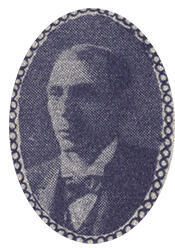
Here you will find contact information for Representative Francis Wellington Cushman, including email address, phone number, and mailing address.
| Name | Francis Wellington Cushman |
| Position | Representative |
| State | Washington |
| District | 2 |
| Party | Republican |
| Status | Former Representative |
| Term Start | December 4, 1899 |
| Term End | March 3, 1911 |
| Terms Served | 6 |
| Born | May 8, 1867 |
| Gender | Male |
| Bioguide ID | C001018 |
About Representative Francis Wellington Cushman
Francis Wellington Cushman (May 8, 1867 – July 6, 1909) was a United States Representative from the state of Washington who served in Congress at the turn of the twentieth century. He was born in Brighton, Washington County, Iowa, where he attended the local public schools. He continued his early education at Pleasant Plain Academy in Pleasant Plain, Iowa, receiving the preparatory training that enabled his later professional pursuits in law and public service.
In 1885, Cushman moved west to Albany County, Wyoming, reflecting the broader pattern of migration to the American frontier in the late nineteenth century. There he worked both as a ranch hand and as a teacher, gaining experience in agricultural life and education in a developing region. While in the West he studied law, and in 1889 he was admitted to the bar. Following his admission, he began practicing law in Bassett, Nebraska, marking the formal start of his legal career.
Cushman relocated again in 1891, moving to Tacoma, Washington, where he continued the practice of law. His arrival in Tacoma coincided with a period of rapid growth in the Pacific Northwest, and he established himself professionally in the city. In addition to his legal work, he undertook military service at the state level. From 1896 to 1903, he served as a member of Troop B, First Cavalry, Washington National Guard, participating in the organized militia that formed part of the state’s defense and emergency response structure.
Cushman entered national politics as a member of the Republican Party. He was elected to the Fifty-sixth Congress and was subsequently reelected to the five succeeding Congresses, representing Washington in the U.S. House of Representatives. His continuous service extended from March 4, 1899, until his death on July 6, 1909. During his decade in Congress, he served through the administrations of Presidents William McKinley, Theodore Roosevelt, and William Howard Taft, a period marked by expansion of federal authority, growing interest in conservation, and increasing federal involvement in Western development. As a representative from a rapidly developing state, he was associated with issues affecting the Pacific Northwest, including infrastructure, economic development, and federal relations with Native American communities.
In 1908, Cushman took a notable position regarding federal Indian education policy in his home region. He argued in favor of keeping open the Puyallup Indian School in Washington, emphasizing its economic benefits to the surrounding community as well as its role in local life. His advocacy reflected the complex interplay of federal policy, local economic interests, and Native American affairs in the early twentieth century. In recognition of his efforts and his broader role in public life, the institution was renamed Cushman Indian School in his honor in 1910, the year after his death.
Cushman died in office in New York City on July 6, 1909, while still serving as a member of the House of Representatives. His death brought to a close a career that had taken him from rural Iowa through the frontier regions of Wyoming and Nebraska to the rapidly growing state of Washington and ultimately to the national legislature. His legacy in Washington state and in federal Indian education policy was commemorated through the naming of the Cushman Indian School, underscoring his lasting association with the development of the Pacific Northwest and its institutions.