Representative Francis Burton Harrison
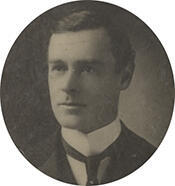
Here you will find contact information for Representative Francis Burton Harrison, including email address, phone number, and mailing address.
| Name | Francis Burton Harrison |
| Position | Representative |
| State | New York |
| District | 20 |
| Party | Democratic |
| Status | Former Representative |
| Term Start | November 9, 1903 |
| Term End | March 3, 1915 |
| Terms Served | 5 |
| Born | December 18, 1873 |
| Gender | Male |
| Bioguide ID | H000268 |
About Representative Francis Burton Harrison
Francis Burton Harrison (December 18, 1873 – November 21, 1957) was an American-Filipino statesman, lawyer, and legislator who served as a Democratic Representative from New York in the United States Congress from 1903 to 1915 and later as governor-general of the Philippines. Born in New York City, he was the son of Burton Harrison, a lawyer who had been private secretary to Confederate President Jefferson Davis, and Constance Cary Harrison, a novelist and social arbiter. Through his mother he was the great-grandson of Virginia planter Thomas Fairfax, 9th Lord Fairfax of Cameron, and was related by birth and marriage to several prominent American families and founding-era figures, including Gouverneur Morris, Thomas Jefferson, the Randolphs, the Ishams, Robert Carter I, and Confederate General Robert E. Lee. These connections placed him within a long-established Southern and Virginian lineage while he himself grew up and made his career in New York.
Harrison was educated at Yale College, from which he graduated in 1895. At Yale he was a member of the Psi Upsilon fraternity and the secret society Skull and Bones. He pursued legal studies at New York Law School, receiving his degree in 1897. From 1897 to 1899 he served as an instructor in the Evening Division at New York Law School, beginning a professional association with the law that would frame much of his early career. He left academic life to enter military service during the Spanish–American War, serving in the United States Army as an assistant adjutant general with the rank of captain, an experience that introduced him to public service in a national context.
A member of the Democratic Party, Harrison entered electoral politics in the early twentieth century. He was elected to the Fifty-eighth Congress as a Representative from New York and served from March 4, 1903, to March 3, 1905. In 1904 he ran unsuccessfully for lieutenant governor of New York and, after that defeat, returned to the practice of law. He was subsequently elected again to the House of Representatives and served five terms in all, holding office during a significant period in American history. He was returned to the Sixtieth, Sixty-first, Sixty-second, and Sixty-third Congresses, serving from March 4, 1907, to September 3, 1913, when he resigned to accept appointment as governor-general of the Philippines by President Woodrow Wilson. Across these nonconsecutive terms, he contributed to the legislative process and represented the interests of his New York constituents. Among the measures associated with his name was the Harrison Narcotics Tax Act, a landmark federal law regulating and taxing the production, importation, and distribution of opiates and coca products, which was enacted on December 17, 1914.
Harrison’s congressional service coincided with the Progressive Era, and his work in the House of Representatives reflected the broader national debates over regulation, public health, and America’s expanding international role. Although he left Congress in 1913 to assume colonial administrative responsibilities, his influence on federal policy continued through legislation bearing his name and through his association with the Wilson administration. During his years in national politics he established himself as a committed Democrat with a growing interest in America’s overseas territories, an interest that would define the next and most consequential phase of his public life.
As governor-general of the Philippines from 1913 to 1921, Harrison presided over a critical stage in the evolution of the archipelago’s political institutions under United States sovereignty. He advocated and implemented a policy of “Filipinization,” the systematic transfer of authority and administrative responsibility from American officials to Filipino leaders in the Insular Government to prepare the territory for eventual independence. During his tenure the Philippine Autonomy Act, commonly known as the Jones Act, was enacted, transforming the partially elected Philippine Legislature—previously composed of an appointed Philippine Commission as the upper house and an elected Philippine Assembly as the lower house—into a fully elected body. Under this law, the Philippine Commission was abolished and replaced by an elected Philippine Senate, while the Philippine Assembly became the House of Representatives of the Philippines. Despite the length of his service, Harrison vetoed only five bills, the fewest of any American governor-general, a reflection of his generally cooperative relationship with Filipino political leaders. His pronouncedly pro-Filipino stance made him a popular figure in the islands but also drew criticism from conservative Americans who believed his liberal approach did not sufficiently advance or protect U.S. interests. During his administration, the Spanish-era Malacañang Palace, the official residence of the governor-general, was expanded with the construction of an executive building. While still serving in the Far East, he allowed his name to be put forward for the Democratic nomination for President in 1920, but he lost the nomination at the San Francisco convention to Ohio Governor James M. Cox, who was subsequently defeated in the general election by Republican Warren G. Harding.
After leaving the Philippines in 1921, Harrison lived for a time in Scotland. He remained closely identified with Philippine affairs and was recalled to the islands in 1934, as the United States and Filipino leaders negotiated the transition from colonial status to the Commonwealth of the Philippines. When the Commonwealth was inaugurated, Manuel L. Quezon became its first president and, in November 1935, invited Harrison to serve as his principal adviser. Harrison held this position for about ten months. In 1936 he expressed interest in acquiring Filipino citizenship but did not meet the residency requirements under the existing Naturalization Law. At Quezon’s initiative, the National Assembly enacted Commonwealth Act No. 79 on October 26, 1936, declaring the Honorable Francis Burton Harrison, former governor-general of the Philippines, a citizen of the Philippines and conferring upon him all the rights, duties, privileges, and prerogatives of Filipino citizenship. During World War II, after the fall of Bataan and Corregidor and Quezon’s exile to the United States, Harrison again served as an adviser to the Philippine government-in-exile beginning in May 1942.
With the establishment of the independent Republic of the Philippines in 1946, Harrison continued his advisory role to the new nation’s leadership. From November 1946 to February 1947 he served in Manila as commissioner of claims in the civil service of the United States Army. He then became an adviser to the first four presidents of the Philippine Republic, including service as special adviser on foreign affairs to President Manuel Roxas. His long association with the Philippines, from his governorship through the Commonwealth and into the early years of independence, made him a unique figure in the history of U.S.–Philippine relations and the only former governor-general to be granted Philippine citizenship. After this final period of public service, Harrison retired to Spain, where he lived for six years, and then moved in August 1957 to Califon, New Jersey.
Harrison’s personal life was marked by several marriages and family tragedies. His first wife was Mary Crocker, daughter of California railroad and mining magnate Charles Frederick Crocker. They were married on June 7, 1900, at St. Mary’s Church in Tuxedo Park, New York. She died in 1905 in an automobile accident, leaving Harrison with two young daughters, Virginia Randolph Harrison and Barbara Harrison Wescott. He subsequently married and divorced four more times: to Mabel Judson Cox; to Elizabeth Wrentmore, who divorced him in 1927 on grounds of abandonment; to Margaret Wrentmore, with whom he had a son, Norvell Burton Harrison, who died in an automobile accident in Tucson, Arizona, on April 19, 1941, at the age of thirteen; and to Doria Lee. His only surviving son, Dr. Francis Burton “Kiko” Harrison Jr. (1921–2014), born of his third marriage, became the subject of numerous photographs taken between 1939 and 1942 by the PaJaMa Collective and photographer George Platt Lynes. Harrison’s last wife was Maria Teresa Larrucea, a young Basque woman born in Amorebieta, Bizkaia, Spain, who outlived him.
In addition to his political and administrative work, Harrison was an author. His writings included The Corner-Stone of Philippine Independence (1922), which reflected on his role and the broader process leading toward Philippine self-government; Indo-China, A Sportsman’s Opportunity (1933), co-authored with Archibald Cary Harrison; and Origins of the Philippine Republic: Extracts from the Diaries and Records of Francis Burton Harrison, published posthumously in 1974 and drawn from his personal papers. His Philippine administration and its impact have been the subject of scholarly reassessment, including studies such as Napoleon J. Casambre’s “The Response to Harrison’s Administration in the Philippines, 1913–1921” (1969) and Michael Paul Onorato’s “Governor General Francis Burton Harrison and His Administration: A Reappraisal” (1970).
Francis Burton Harrison died on November 21, 1957, at Hunterdon Medical Center in Raritan Township, near Flemington, New Jersey. Honoring his expressed wish to be buried in the Philippines, he was interred in Manila North Cemetery in Manila. His legacy in the Philippines is reflected in several major thoroughfares bearing his name, including F.B. Harrison Street in the cities of Manila, Pasay, and Parañaque in Metro Manila, and Harrison Road in Baguio, a principal artery beginning in the city center between Burnham Park and near the Baguio Convention Center.