Senator Francis Kernan
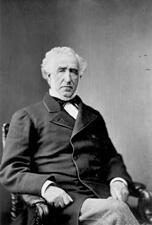
Here you will find contact information for Senator Francis Kernan, including email address, phone number, and mailing address.
| Name | Francis Kernan |
| Position | Senator |
| State | New York |
| Party | Democratic |
| Status | Former Representative |
| Term Start | December 7, 1863 |
| Term End | March 3, 1881 |
| Terms Served | 2 |
| Born | January 14, 1816 |
| Gender | Male |
| Bioguide ID | K000133 |
About Senator Francis Kernan
Francis Kernan (January 14, 1816 – September 7, 1892) was an American lawyer and Democratic politician from New York who served in the New York State Assembly, the United States House of Representatives, and as a United States Senator from New York. A prominent War Democrat and influential figure in state and national politics, he served in Congress during a significant period in American history and contributed to the legislative process over two terms in the national legislature, including service in the House from 1863 to 1865 and in the Senate from 1875 to 1881. He was the first Catholic senator from New York and the first Democrat to represent the state in the Senate in 24 years.
Kernan was born in Wayne, Steuben County, New York, on January 14, 1816, the son of General William Kernan, who emigrated from County Cavan, Ireland, to the United States in 1800, and Rose Anna (Stubbs) Kernan, also a native of Ireland. Raised in a family of Irish Catholic background, he grew up in upstate New York at a time when Catholic participation in public life was still relatively uncommon. His early life in a household headed by a militia general and immigrant parents helped shape both his sense of public duty and his enduring ties to the Catholic Church and its institutions.
Kernan graduated from Georgetown University in Washington, D.C., in 1836. After completing his collegiate studies, he read law with his brother-in-law, Edward Quinn, at Watkins Glen, New York. In 1839 he moved to Utica, New York, intending to pursue a legal career in that growing commercial and political center. He completed his legal training under the noted attorney Joshua A. Spencer and was admitted to the bar in July 1840. Kernan then entered practice as Spencer’s partner in the firm of Spencer and Kernan, and later became the senior partner in family-based firms styled Kernan and Quinn, and subsequently Kernan, Quinn and Kernan. From 1854 to 1857 he served as Reporter of Decisions for the New York Court of Appeals, preparing and publishing the official reports of the state’s highest court and thereby enhancing his professional reputation.
In addition to his legal work, Kernan was deeply involved in civic and charitable affairs in Utica and New York State. He served for many years on the Utica school board and was a member of the board of managers of the New York State Hospital. A committed Catholic layman, he was president of St. John’s Female Orphan Asylum in Utica, which had been co-founded in 1843 by his father-in-law, Nicholas Devereux, and Devereux’s brother John. The asylum was staffed by the Daughters of Charity from Emmitsburg, Maryland, while the Christian Brothers operated St. Vincent’s orphanage for boys. His work with these institutions reflected both his religious convictions and his interest in education and social welfare.
Kernan’s formal political career began in state government. A Democrat, he was elected to the New York State Assembly from Oneida County’s 1st District and served in 1861. During the American Civil War he emerged as a prominent War Democrat, supporting the national government’s efforts to maintain the integrity of the Union. He was a delegate to the New York Constitutional Convention of 1867, where he participated in efforts to revise the state’s fundamental law. From 1870 until his death in 1892 he served on the Board of Regents of the University of the State of New York, helping oversee educational policy and institutions across the state.
Kernan entered national office when he was elected as a Democrat to the Thirty-eighth Congress, defeating Republican Roscoe Conkling in the 1862 election. He served in the United States House of Representatives from March 4, 1863, to March 3, 1865. In the House he rendered important service as a member of the Judiciary Committee and was known for his spirit of justice and moderation. During the Civil War he was thoroughly in accord with the Lincoln administration in its efforts to preserve the Union, and President Abraham Lincoln is reported to have consulted him on matters pertaining to the conduct of the war. Kernan was instrumental in having the per capita tax on emigrants declared unconstitutional, a matter of particular importance to immigrant communities. In 1864 he was defeated for reelection by Roscoe Conkling, but their political rivalry did not prevent a warm personal friendship. His service in the House thus formed part of his broader congressional career, which spanned from 1863 to 1881 and placed him at the center of national debates during and after the Civil War.
Kernan remained influential in Democratic politics after leaving the House. In 1871 he allied himself with Samuel J. Tilden in the successful effort to overthrow the Tweed Ring in New York City, contributing to the reform movement within his party. In 1872 he was nominated as the joint Democratic and Liberal Republican candidate for Governor of New York, but he was defeated by the Republican nominee, John Adams Dix. Despite this loss, his stature within the party continued to grow, and he was regarded as a trusted adviser by leading Democrats.
In January 1875, Kernan was elected by the New York State Legislature as a United States Senator from New York. He thus became the first Catholic senator from New York and the first Democrat to represent the state in the Senate in 24 years. He served from March 4, 1875, to March 3, 1881, alongside his old rival and friend Roscoe Conkling. During his Senate term he participated in the legislative process in the postwar and Reconstruction-era Congress, representing the interests of his New York constituents and contributing to national deliberations. At the 1876 Democratic National Convention in St. Louis, he placed Samuel J. Tilden’s name in nomination for President, underscoring his close association with the reform wing of the party. In 1880 his alma mater, Georgetown University, conferred upon him the honorary degree of Doctor of Laws (LL.D.). In January 1881 he was defeated for reelection to the Senate by Republican Thomas C. Platt. After Platt resigned in May 1881, Kernan again sought the Senate seat in the ensuing special election but was defeated by Republican Warner Miller. His combined service in the House and Senate, from 1863 to 1865 and from 1875 to 1881, marked nearly two decades of intermittent but significant participation in the federal legislature.
In his later years Kernan remained active in public and religious life, though he no longer held elective office. At the Democratic National Convention of 1884 in Chicago, he was not a delegate, but party leaders requested his presence, and he was one of the most effective advocates outside the convention hall for the nomination of Grover Cleveland. In 1889 he represented Georgetown College at the Catholic Congress of laymen in Baltimore, where he delivered a widely noted address. He continued to provide legal advice, often without fee, to clergy and to Georgetown University, and he gave generously, relative to his means, to the Catholic Church and to charitable institutions, though he was never a wealthy man.
Kernan married Hannah Avery Devereux in 1843. She was the daughter of Nicholas Devereux of Utica, one of the principal patrons and benefactors of the Catholic Church and its charitable institutions in central and western New York. Francis and Hannah Kernan were the parents of ten children, including John Devereux Kernan, who became a railroad commissioner in New York. In the often bitter atmosphere of nineteenth-century politics, Kernan’s Catholic faith was frequently attacked, but throughout his public life no suspicion was ever cast upon his personal character or the integrity with which he discharged the high trusts confided to him. A devoted family man, he preferred home life to the theater, opera, or club society. He enjoyed reading, conversation, and an occasional game of cards, and he often worked at home late into the night on lawsuits and congressional speeches. Described as tall, with a good figure and an attractive, intellectual face, he was widely regarded as a gentleman of natural dignity and simplicity.
Francis Kernan spent his final years in Utica, where his old age was remembered as calm, genial, peaceful, and contented. He died there on September 7, 1892, and was interred in St. Agnes Cemetery in Utica, New York.