Representative Francis Rives Lassiter
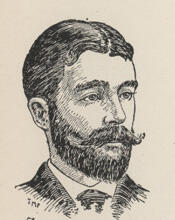
Here you will find contact information for Representative Francis Rives Lassiter, including email address, phone number, and mailing address.
| Name | Francis Rives Lassiter |
| Position | Representative |
| State | Virginia |
| District | 4 |
| Party | Democratic |
| Status | Former Representative |
| Term Start | December 4, 1899 |
| Term End | March 3, 1911 |
| Terms Served | 4 |
| Born | February 18, 1866 |
| Gender | Male |
| Bioguide ID | L000106 |
About Representative Francis Rives Lassiter
Francis Rives Lassiter (February 18, 1866 – October 31, 1909) was a Democratic U.S. Representative from Virginia who served in the United States Congress between 1899 and 1911 and was a great-nephew of Congressman Francis E. Rives. Known in contemporary records as Francis or “Francie” Rives Lassiter, he was born in Petersburg, Virginia, on September 29, 1867, the son of Dr. Daniel W. Lassiter and Anna Rives (Heath) Lassiter. He grew up in a family with notable public and military connections; his brother William Lassiter became a career officer in the United States Army and rose to the rank of major general, while another brother, Charles T. Lassiter, pursued a parallel path in law and politics.
Lassiter received his early education at McCabe’s University School in Petersburg, a prominent preparatory institution of the period. He then attended the University of Virginia at Charlottesville, where he studied law and was graduated from the law department in 1886. The following year, in 1887, he was admitted to the bar and commenced the practice of law in Boston, Massachusetts. In 1888 he returned to his native Petersburg, where he continued in private legal practice and quickly established himself in local legal and civic affairs.
From 1888 to 1893 Lassiter served as city attorney of Petersburg, a role that placed him at the center of municipal legal matters during a period of post-Reconstruction adjustment and economic change in Virginia. His growing reputation led to federal appointment: in 1893 President Grover Cleveland named him United States attorney for the Eastern District of Virginia. Lassiter held this position until 1896, when he resigned and returned to private practice. In addition to his legal and political work, he was active in the Virginia State Militia, serving as captain of Company G, Fourth Regiment, Virginia State Militia, reflecting the era’s close ties between civic leadership and organized military service.
Lassiter’s involvement in public administration extended beyond the courtroom and the militia. In 1899 he was appointed supervisor of the Twelfth Census for the Fourth Congressional District of Virginia, overseeing the federal census operations in his region. This appointment coincided with his emergence as a leading Democratic figure in the district and helped position him for national office. During this period, he was recognized within the Democratic Party as a capable organizer and advocate for his constituents’ interests.
Lassiter entered Congress as a Democrat during a significant period in American history, marked by the nation’s transition into the twentieth century and the early stirrings of the Progressive Era. He was first elected to the U.S. House of Representatives to the Fifty-sixth Congress to fill the vacancy caused by the death of Representative Sydney P. Epes. In a special election held in 1900, he won the seat with 98.65 percent of the vote, defeating Independent candidate James Seldon Cowdon. Later that year, in the general election, he was re-elected with 60.06 percent of the vote, defeating Republican C. E. Wilson. He was subsequently re-elected to the Fifty-seventh Congress and served from April 19, 1900, to March 3, 1903, participating in the legislative process and representing the interests of his Virginia constituents in debates over economic policy, federal administration, and regional concerns.
After a brief interval out of office, Lassiter returned to the House as a member of the Sixtieth and Sixty-first Congresses. He was elected again as a Democrat and served from March 4, 1907, until his death in 1909. In the 1906 and 1908 elections he was re-elected unopposed, a measure of his standing within his district and the strength of the Democratic Party in that region of Virginia. Across what amounted to four terms in Congress between 1899 and 1911, he contributed to the legislative work of the House of Representatives during a time of expanding federal responsibilities, industrial growth, and evolving national policy, consistently aligning with Democratic positions and the priorities of his district.
Lassiter died in office in Petersburg, Virginia, on October 31, 1909, while serving in the Sixty-first Congress, placing him among the members of the United States Congress who died in office in the early twentieth century. He was interred in Blandford Cemetery in Petersburg, a historic burial ground for many of the city’s leading families. His family papers, including materials related to his legal practice and congressional career, are preserved in the Special Collections Research Center at the College of William & Mary, providing a documentary record of his life and service. Memorial addresses in his honor were delivered in the House of Representatives and the Senate and later published in 1910, reflecting the esteem in which he was held by his colleagues and his role in the public life of Virginia and the nation.