Senator Francis Thomas Maloney
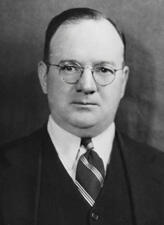
Here you will find contact information for Senator Francis Thomas Maloney, including email address, phone number, and mailing address.
| Name | Francis Thomas Maloney |
| Position | Senator |
| State | Connecticut |
| Party | Democratic |
| Status | Former Representative |
| Term Start | March 9, 1933 |
| Term End | December 31, 1945 |
| Terms Served | 3 |
| Born | March 31, 1894 |
| Gender | Male |
| Bioguide ID | M000088 |
About Senator Francis Thomas Maloney
Francis Thomas Maloney (March 31, 1894 – January 16, 1945) was a Democratic U.S. Representative from Connecticut from 1933 to 1935 and a U.S. Senator from Connecticut from 1935 to 1945. Over the course of three terms in the Senate, he contributed to the legislative process during a significant period in American history, representing the interests of his constituents during the Great Depression and the Second World War.
Maloney was born in Meriden, Connecticut, on March 31, 1894. He was raised in a Catholic family; his father and maternal grandparents were immigrants from Ireland, reflecting the strong Irish American presence in New England at the turn of the twentieth century. He attended the public and parochial schools of Meriden, receiving a local education that grounded him in the community he would later represent in municipal and national office.
From 1914 to 1921 Maloney worked as a newspaper reporter, a profession that exposed him to public affairs and the concerns of ordinary citizens. His early career was interrupted by military service during the First World War. From 1917 to 1918 he served in the United States Navy as a seaman first class, contributing to the nation’s war effort. After the war he returned to civilian life and entered the real estate and insurance business, establishing himself in the private sector while building the local connections that would support his later political career.
Maloney’s formal political career began at the municipal level. He served as mayor of Meriden from 1929 to 1933, leading the city through the early years of the Great Depression. His tenure as mayor helped to elevate his profile within the Democratic Party in Connecticut and positioned him for national office. In 1932 he was elected as a Democrat to the U.S. House of Representatives for the Seventy-third Congress. He served in the House from March 4, 1933, to January 3, 1935, a term that was shorter than the traditional two years because of the constitutional change that altered the opening date of congressional sessions. During this period he participated in the democratic process at the federal level as Congress and President Franklin D. Roosevelt launched New Deal responses to the economic crisis.
Choosing to seek higher office rather than reelection to the House, Maloney did not run again for his House seat because he had been nominated for the United States Senate. He was elected to the Senate in 1934 and took office in 1935. He was re-elected in 1940 and served continuously until his death in 1945, completing three terms in the upper chamber. As a member of the Senate during an era marked by economic recovery efforts, the approach of global war, and U.S. involvement in World War II, he participated in shaping national policy and legislation. He served as chairman of the Committee on Public Buildings and Grounds in the Seventy-seventh through Seventy-ninth Congresses, overseeing matters related to federal construction and public facilities. Throughout his Senate career, he remained a loyal Democrat and an active representative of Connecticut’s interests.
In addition to his legislative duties, Maloney was involved in national party affairs. He served as a delegate from Connecticut to the Democratic National Conventions in 1936, 1940, and 1944, participating in the nomination of presidential candidates and the formulation of party platforms during the Roosevelt era. His role at these conventions underscored his standing within the Democratic Party both in his home state and nationally.
Maloney’s final days were marked by sudden illness. He was admitted to Meriden Hospital on January 1, 1945, initially with what was believed to be a bad cold that developed into influenza. On January 10 he suffered a heart attack at the hospital and was determined to be suffering from coronary thrombosis. He experienced a second heart attack at 10:45 a.m. on January 16, 1945, and died within seconds, thus becoming one of the members of the United States Congress who died in office in the first half of the twentieth century. He was interred in Sacred Heart Cemetery in Meriden, the city where he had been born and had begun his public career.
Maloney’s legacy in his hometown has been commemorated in a lasting way. One of the two public high schools in Meriden, Connecticut, is named for him, reflecting the community’s recognition of his service as mayor, representative, and senator, and his long-standing connection to the city and the state he represented in Congress.