Representative Francis Rooney
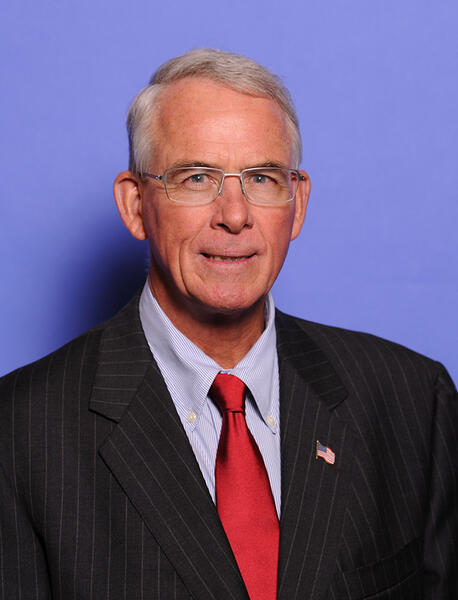
Here you will find contact information for Representative Francis Rooney, including email address, phone number, and mailing address.
| Name | Francis Rooney |
| Position | Representative |
| State | Florida |
| District | 19 |
| Party | Republican |
| Status | Former Representative |
| Term Start | January 3, 2017 |
| Term End | January 3, 2021 |
| Terms Served | 2 |
| Born | December 4, 1953 |
| Gender | Male |
| Bioguide ID | R000607 |
About Representative Francis Rooney
Laurence Francis Rooney III (born December 4, 1953) is an American politician, businessman, and diplomat who represented Florida’s 19th Congressional District in the U.S. House of Representatives from January 3, 2017, to January 3, 2021. A member of the Republican Party, he also served as United States Ambassador to the Holy See from 2005 until 2008 and has been a major Republican donor and party fundraiser. During his two terms in Congress, Rooney participated actively in the legislative process, represented the interests of his southwest Florida constituents, and earned a 95.90% lifetime score from the American Conservative Union, marking him as one of the more consistently conservative members of the House.
Rooney was born in Muskogee, Oklahoma, the oldest of six children of Laurence Francis Rooney Jr. and Lucy Turner Rooney. He was raised in a family deeply involved in construction and business, a background that would shape his later career. He attended Georgetown Preparatory School in North Bethesda, Maryland, before enrolling at Georgetown University in Washington, D.C. He received a Bachelor of Arts degree from Georgetown University in 1975 and went on to earn a Juris Doctor from Georgetown University Law Center in 1978, grounding himself in both liberal arts and the law in the nation’s capital.
Following law school, Rooney entered the family business and built a substantial career in construction and investment. He became president and chief executive officer of Rooney Holdings, Inc.—formerly Rooney Brothers Company—in 1984, serving in those roles until 2016, and thereafter continued as chairman. Based in Naples, Florida, Rooney Holdings is an investment and holding company whose principal asset is Manhattan Construction Group. Rooney represents the fourth generation of his family to own Manhattan Construction, which has been responsible for numerous high-profile projects, including AT&T Stadium and Globe Life Field in Arlington, Texas; Choctaw Stadium (formerly Globe Life Park and The Ballpark in Arlington); the BOK Center in Tulsa; the Smoothie King Center in New Orleans; and NRG Stadium (formerly Reliant Stadium) in Houston. The company also constructed the United States Capitol Visitor Center in Washington, D.C., the original Oklahoma State Capitol in Guthrie, and later work on the relocated Oklahoma State Capitol in Oklahoma City, including the addition of the dome in 2002 and interior restoration completed in 2022. Other major projects have included the U.S. Army Medical Research Institute of Infectious Diseases (USAMRIID) Replacement Project, the Cato Institute headquarters, Walter Reed Army Institute of Research Phases I and II, and multiple facilities at Dallas/Fort Worth International Airport, George Bush Intercontinental Airport, and Southwest Florida International Airport. Manhattan Construction built both the George H. W. Bush Presidential Library and Museum and the George W. Bush Presidential Center, making it the only construction company to have built two presidential libraries. Through these enterprises, Rooney amassed significant personal wealth; with an estimated net worth of $22.6 million, he was considered one of the wealthiest members of Congress.
Rooney’s business prominence led to roles in international and public affairs before his entry into elective office. He served as a member of the advisory board of the Panama Canal Authority from 2002 to 2005 and again from 2008 to 2016, and he was part of the U.S. delegation led by Secretary of State Colin Powell to the 2004 inauguration of Panamanian President Martín Torrijos. In 2005, President George W. Bush appointed Rooney as United States Ambassador to the Holy See, a post he held until 2008. In that capacity, he represented U.S. interests to the Vatican during a period that included the early years of the papacy of Pope Benedict XVI. Rooney is also a member of the Inter-American Dialogue, reflecting his ongoing engagement with Western Hemisphere policy issues.
Parallel to his diplomatic and business activities, Rooney became a major Republican donor and fundraiser. He contributed heavily to George W. Bush’s campaigns and served on the fundraising team of Representative Connie Mack IV of Florida. Rooney donated $1 million to Restore Our Future, the super PAC supporting Mitt Romney’s 2012 presidential campaign, and hosted a Romney fundraiser at his home in Naples, Florida. In the 2016 election cycle, he gave more than $2 million to the super PAC supporting former Florida Governor Jeb Bush. These activities cemented his status as an influential figure in Republican political finance and helped build the network that would support his own run for Congress.
Rooney entered electoral politics in 2016 after incumbent Republican Representative Curt Clawson announced in May that he would not seek a third full term in Florida’s 19th Congressional District, a heavily Republican district encompassing parts of southwest Florida. Rooney quickly entered the Republican primary to succeed Clawson, spending approximately $4 million of his own money and significantly outspending his opponents in a compressed campaign calendar. He received an unusual primary endorsement from Florida Governor Rick Scott, his neighbor in the Port Royal community of Naples. In the August 30, 2016, Republican primary, Rooney defeated Sanibel councilman Chauncey Goss and radio personality Dan Bongino. As expected in the strongly Republican district—numbered the 13th from 1983 to 1993, the 14th from 1993 to 2013, and the 19th since 2013—he won decisively in the November 2016 general election, becoming only the fifth person to represent the area in Congress since its creation.
Rooney was sworn into the U.S. House of Representatives on January 3, 2017, and served two terms until January 3, 2021. During his tenure, he was a member of the conservative Republican Study Committee and also joined the bipartisan Climate Solutions Caucus, reflecting an interest in environmental and climate issues affecting coastal Florida. He served on the House Committee on Education and the Workforce, including the Subcommittee on Workforce Protections and the Subcommittee on Health, Employment, Labor, and Pensions. He also sat on the House Committee on Foreign Affairs, serving on the Subcommittee on Europe, Eurasia, and Emerging Threats and the Subcommittee on the Western Hemisphere, and he was a member of the Joint Economic Committee. In 2017, he introduced the Pell Performance Act with Representative Ralph Norman, a proposal under which Pell Grants would convert into Stafford Loans if recipients failed to graduate from college within six years of receiving the award, reflecting his emphasis on accountability in federal education spending.
In domestic policy, Rooney generally aligned with conservative positions. He advocated the repeal of the Affordable Care Act, calling it “an experiment that didn’t work,” and voted in favor of the American Health Care Act of 2017, the House Republican plan to replace it. On gun policy, he held a “B” rating from the NRA Political Victory Fund as of 2017, indicating a voting record that generally supported gun rights. He voted for H.R. 38, the Concealed Carry Reciprocity Act, which would establish nationwide reciprocity for state-issued concealed carry permits. He also supported the Veterans Second Amendment Protection Act, which would allow veterans deemed “mentally incompetent” by the Department of Veterans Affairs to purchase firearms and ammunition unless a judge specifically found them to be a danger. Rooney voted for H.J. Res. 40, which used the Congressional Review Act to overturn an Obama-era regulation aimed at preventing certain individuals with mental impairments from purchasing firearms. At the same time, following the February 2018 mass shooting at Marjory Stoneman Douglas High School in Parkland, Florida, Rooney announced a broad proposal to limit mass shootings. He expressed support for the Fix NICS Act of 2017, mandatory background checks for every firearm purchase, a gun violence restraining order system to temporarily remove firearms from individuals deemed a threat, a mandatory three-day waiting period for all gun sales, a ban on bump stocks, and raising the minimum age to purchase any firearm to 21. His plan also called for hardening school security and hiring veterans and retired law enforcement officers as armed guards, and he stated openness to the controversial idea of arming teachers. He conditioned his support for new gun control measures on inclusion of a rider advancing concealed carry reciprocity, and when asked about reinstating the Federal Assault Weapons Ban, he responded, “How willing are we to throw the Constitution out the window?”
Rooney’s congressional tenure also included moments of national visibility. In December 2017, he drew widespread attention when he criticized certain FBI officials involved in investigations related to President Donald Trump and called for the Bureau to be “purged” of “politically compromised” agents, remarks that closely aligned him with Trump’s criticisms of federal law enforcement at the time. Despite his conservative voting record and early alignment with the president, Rooney later expressed concerns about aspects of the administration and, over time, signaled increasing independence on issues such as climate change and government ethics.
On October 19, 2019, Rooney announced that he would not seek re-election in 2020, stating that he would retire from Congress at the end of his second term. He completed his service on January 3, 2021, and was succeeded by Republican state representative Byron Donalds. After leaving office, Rooney continued to be known as chairman of Rooney Holdings and as a prominent figure in business and Republican politics, with his wealth, diplomatic experience, and legislative record marking a career that spanned construction, international affairs, and national policymaking.