Representative Francis Seiberling
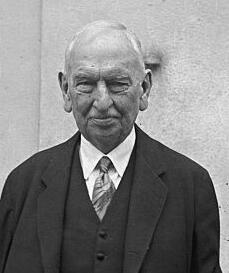
Here you will find contact information for Representative Francis Seiberling, including email address, phone number, and mailing address.
| Name | Francis Seiberling |
| Position | Representative |
| State | Ohio |
| District | 14 |
| Party | Republican |
| Status | Former Representative |
| Term Start | April 15, 1929 |
| Term End | March 3, 1933 |
| Terms Served | 2 |
| Born | September 20, 1870 |
| Gender | Male |
| Bioguide ID | S000229 |
About Representative Francis Seiberling
Francis Seiberling (September 20, 1870 – February 1, 1945) was an American lawyer, industrial executive, and Republican politician who served two terms as a U.S. Representative from Ohio from 1929 to 1933. He was born in Des Moines, Iowa, on September 20, 1870, and in 1873 moved with his parents to Wadsworth, Ohio. He was a cousin of John F. Seiberling, who would later also represent Ohio in the U.S. House of Representatives, continuing the family’s involvement in public service.
Seiberling was educated in the public schools of Ohio and pursued higher education at Wittenberg College in Springfield, Ohio. He later attended the College of Wooster in Wooster, Ohio, from which he was graduated in 1892. After completing his undergraduate studies, he turned to the study of law, preparing for a professional career in the legal field. His early academic training at two Ohio institutions helped establish his long-standing ties to the state’s educational and civic life.
In 1894, Seiberling was admitted to the bar and commenced the practice of law in Akron, Ohio. Alongside his legal work, he became actively involved in the region’s growing industrial economy, particularly in the manufacture of rubber and tires, an industry that was central to Akron’s development. He served as a director in various manufacturing companies, reflecting both his business acumen and his engagement with the city’s commercial expansion. In addition to his professional pursuits, he maintained a connection to higher education as a trustee of Wittenberg College, contributing to the governance and oversight of his former institution.
Seiberling’s prominence in law and business provided a foundation for his entry into national politics. A member of the Republican Party, he was elected to the U.S. House of Representatives as a Republican to the Seventy-first and Seventy-second Congresses, serving from March 4, 1929, to March 3, 1933. During these two terms in office, he represented his Ohio constituents in the House of Representatives and participated in the legislative process at a time of major economic and political change in the United States. His service in Congress occurred during the onset of the Great Depression, a significant period in American history, during which he took part in the democratic process and worked to represent the interests of his district within the broader national debate.
After completing his second term, Seiberling stood for reelection in 1932 but was an unsuccessful candidate for the Seventy-third Congress. Following his departure from Congress in March 1933, he resumed the practice of law in Akron, returning to the profession that had first established his public standing. He continued his involvement in the community and in his business interests while maintaining his longstanding connections to Ohio’s civic and educational institutions.
Francis Seiberling died in Akron, Ohio, on February 1, 1945. He was interred in Rose Hill Cemetery in Akron. His career combined legal practice, industrial leadership, and congressional service, and his tenure in the House of Representatives from 1929 to 1933 placed him at the center of federal policymaking during one of the most challenging eras in modern American history.