Senator Francis Brown Stockbridge
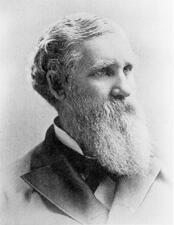
Here you will find contact information for Senator Francis Brown Stockbridge, including email address, phone number, and mailing address.
| Name | Francis Brown Stockbridge |
| Position | Senator |
| State | Michigan |
| Party | Republican |
| Status | Former Representative |
| Term Start | December 5, 1887 |
| Term End | March 3, 1895 |
| Terms Served | 2 |
| Born | April 9, 1826 |
| Gender | Male |
| Bioguide ID | S000932 |
About Senator Francis Brown Stockbridge
Francis Brown Stockbridge (April 9, 1826 – April 30, 1894) was a Republican businessman and legislator who represented Michigan in the United States Senate from 1887 until his death in 1894. His congressional service, spanning two terms, occurred during a significant period in American history, and he participated actively in the legislative process while representing the interests of his Michigan constituents.
Stockbridge was born in Bath, Maine, the son of Dr. John Stockbridge, a physician. He attended the common schools of Bath, receiving a basic formal education typical of the period. In 1843 he left Maine for Boston, Massachusetts, where he clerked at a wholesale house until 1847. These early commercial experiences introduced him to the world of trade and laid the foundation for the business career that would later underpin his political prominence.
In 1847 Stockbridge moved west to Chicago, Illinois, where he opened a lumber yard, entering an industry that was rapidly expanding with the growth of the Midwest. In 1851 he relocated to Saugatuck, Michigan, on the Lake Michigan shore, and engaged in the operation of sawmills. He also pursued various mercantile enterprises, consolidating his position as a significant figure in the regional lumber trade. In 1863 he moved to Kalamazoo, Michigan, where he continued in the lumber business and broadened his commercial interests. That same year he married Bessie Arnold, a schoolteacher and the sister of George Thomas Arnold, a lumberman and business associate of Stockbridge in Kalamazoo and later at Mackinac Island. His success in lumber and related ventures made him one of the notable business leaders in western Michigan.
Stockbridge’s business standing led naturally into public service. In 1869 he was elected to the Michigan House of Representatives from Allegan County’s first district, marking his formal entry into politics. He advanced to the Michigan State Senate in 1871, representing the 17th district. His legislative experience in Lansing established him as a prominent Republican in state politics. On July 12, 1875, he was appointed United States minister (ambassador) to the Netherlands; he took the oath of office but, for reasons not fully documented, never proceeded to the post. His combined service in the Michigan Legislature and later in the U.S. Senate placed him in a select line of Michigan politicians; no one else would hold both roles until Debbie Stabenow, who was elected to the U.S. Senate in 2000.
In addition to his political career, Stockbridge played a significant role in the development of Mackinac Island as a resort destination. In 1882 he purchased the site on Mackinac Island that would become the location of the Grand Hotel. Recognizing the island’s potential as a tourist center, he arranged financing for the hotel’s construction from the three major transportation companies then serving the island: the Michigan Central Railroad, the Grand Rapids and Indiana Railroad, and the Detroit and Cleveland Navigation Company. Together they formed the Mackinac Island Hotel Company, which built the Grand Hotel in 1887, an enterprise that became one of Michigan’s most famous resort landmarks and reflected Stockbridge’s continued engagement in large-scale business ventures.
Stockbridge was elected as a Republican to the United States Senate from Michigan in 1887 and was reelected in 1893. He served from March 4, 1887, until his death on April 30, 1894, thus completing one full term and part of a second. During his tenure he contributed to the legislative process at a time of industrial expansion and political realignment in the United States. He served as chairman of the Senate Committee on Fisheries in the Fiftieth, Fifty-first, and Fifty-second Congresses, overseeing matters related to the nation’s fishing industries and maritime resources. His work in the Senate reflected both his party’s priorities and the economic interests of Michigan, particularly in areas tied to commerce and natural resources.
Stockbridge’s death occurred while he was still in office. While visiting his nephew, James Houghteling, in Chicago, Illinois, he was struck and injured by a Chicago cable car. Although the physical injuries from the accident were not themselves deemed fatal, his associates later attributed his death to the mental stress and shock he endured as a result of the incident. He died in Chicago on April 30, 1894, and, as a sitting U.S. senator, was included among the members of Congress who died in office in the nineteenth century. Francis Brown Stockbridge and his wife Bessie were interred in Mountain Home Cemetery in Kalamazoo, Michigan, closing the life of a businessman-turned-legislator whose career linked Maine, the Midwest lumber trade, Michigan state politics, and the United States Senate.