Representative Francis Thomas
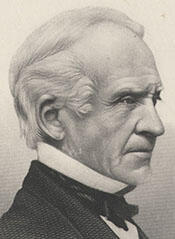
Here you will find contact information for Representative Francis Thomas, including email address, phone number, and mailing address.
| Name | Francis Thomas |
| Position | Representative |
| State | Maryland |
| District | 4 |
| Party | Republican |
| Status | Former Representative |
| Term Start | December 5, 1831 |
| Term End | March 3, 1869 |
| Terms Served | 9 |
| Born | February 3, 1799 |
| Gender | Male |
| Bioguide ID | T000166 |
About Representative Francis Thomas
Francis Thomas (February 3, 1799 – January 22, 1876) was an American politician who served as the 26th governor of Maryland from 1842 to 1845 and as a United States Representative from Maryland for nine terms between 1831 and 1869. Over the course of his long public career he represented, at different times, Maryland’s fourth, fifth, sixth, and seventh congressional districts, served as speaker of the Maryland House of Delegates in 1829, and later held diplomatic office as United States minister to Peru from 1872 to 1875. A member of several political parties over his lifetime, he ultimately aligned with the Republican Party and contributed to the legislative process during a period that spanned the Jacksonian era, the Civil War, and Reconstruction.
Thomas was born on February 3, 1799, in Frederick County, Maryland, near South Mountain on an estate known as the “Merryland tract.” He was raised in western Maryland, a region that would remain his political and personal base throughout his life. He attended St. John’s College in Annapolis, Maryland, where he received a classical education that prepared him for the legal profession and public service. After completing his studies, he read law and was admitted to the bar in 1820. He commenced the practice of law in Frankville, Maryland, a community along what later became the Baltimore and Ohio Railroad in present-day Garrett County.
Thomas entered public life at an early age. He was elected to the Maryland House of Delegates in 1822, returned to that body in 1827, and again in 1829. In his final term he was chosen as the 34th speaker of the House of Delegates, gaining prominence in state politics and establishing himself as a capable legislative leader. His rising profile in Maryland affairs led naturally to a bid for national office, and he soon transitioned from state to federal service.
In 1831 Thomas was elected to the United States House of Representatives as a Jacksonian, beginning the first phase of his long congressional career. He served in the Twenty-second through Twenty-fourth Congresses as a Jacksonian and in the Twenty-fifth and Twenty-sixth Congresses as a Democrat, holding office continuously from March 4, 1831, to March 3, 1841. During this decade in Congress he represented, at different times, several of Maryland’s districts, including the sixth district, and became an influential legislator. He served as chairman of the Committee on the Judiciary in the Twenty-fourth and Twenty-fifth Congresses and as a member of the Committee on Naval Affairs in the Twenty-sixth Congress. In addition to his congressional duties, he served as president of the Chesapeake & Ohio Canal Company in 1839 and 1840, reflecting his involvement in major internal improvement projects of the era.
In 1841 Thomas was elected governor of Maryland, narrowly defeating William Cost Johnson—whom he had succeeded as Maryland’s sixth district congressman—by a margin of about 600 votes. He assumed office in 1842 and served a three-year term until 1845. His governorship was marked by serious fiscal challenges; he inherited a substantial state deficit and proposed a direct tax on the people of Maryland to address the public debt. The tax was deeply unpopular and failed to generate sufficient revenue to repudiate or fully resolve the state’s financial obligations. Thomas was also notable as a staunch opponent of slavery in a border state where such views were far from universal. He denounced slavery as “altogether unworthy of enlightened statesmen, and should be by all patriots repudiated,” a position that distinguished him within Maryland’s political class. His tenure was overshadowed in the public eye by a highly publicized and contentious divorce from his wife, Sally Campbell Preston McDowell, daughter of Virginia Governor James McDowell. She left the marriage alleging “violent jealous rages” that made her fear for her life, and her father sought a legislative divorce from the Virginia General Assembly. Until this scandal, Thomas had been regarded as a leading potential candidate for the Democratic nomination for President of the United States, but the controversy effectively ended any national presidential prospects. He was an unsuccessful candidate for reelection as governor in 1844.
After leaving the governorship in 1845, Thomas remained active in Maryland politics and public affairs. He served as a member of the Maryland state constitutional convention in 1850, participating in debates over the structure and powers of state government at mid-century. With the coming of the Civil War era, he returned to national office. He was elected to the Thirty-seventh Congress as a Unionist, to the Thirty-eighth and Thirty-ninth Congresses as an Unconditional Unionist, and to the Fortieth Congress as a Republican, serving from March 4, 1861, to March 3, 1869. In this second, extended phase of his House service, he represented Maryland’s interests during the secession crisis, the Civil War, and the early years of Reconstruction. During these years he participated actively in the democratic process, representing his constituents while supporting the Union cause. He also served as a delegate to the National Union Convention held in Philadelphia, Pennsylvania, in 1866, which sought to rally support for President Andrew Johnson’s Reconstruction policies. By the time he left Congress in 1869, Thomas had served a total of nine terms in the House of Representatives over nearly four decades, spanning multiple party affiliations and some of the most turbulent years in American history.
Following his final departure from Congress, Thomas continued in federal service. He was appointed collector of internal revenue for Maryland in 1870, a position he held until 1872, administering federal tax laws during the Reconstruction period. In 1872 President Ulysses S. Grant appointed him United States minister to Peru. Thomas served in this diplomatic post from March 25, 1872, to July 9, 1875, representing American interests in South America and concluding his formal public career on the international stage.
After leaving the ministership in Peru in 1875, Thomas retired from public and professional life and returned to his estate near Frankville, Maryland. He devoted his remaining time to agricultural pursuits and the management of his property. On January 22, 1876, while overseeing improvements on his estate along the Baltimore and Ohio Railroad in Garrett County, he was struck and killed instantly by a locomotive. Francis Thomas was interred in a vault in Rose Hill Cemetery in Cumberland, Maryland, closing the life of a Maryland statesman whose career encompassed state leadership, national legislation, and diplomatic service.