Representative Francis Eugene Walter
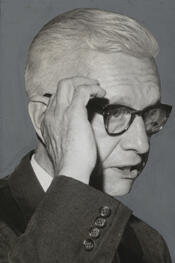
Here you will find contact information for Representative Francis Eugene Walter, including email address, phone number, and mailing address.
| Name | Francis Eugene Walter |
| Position | Representative |
| State | Pennsylvania |
| District | 15 |
| Party | Democratic |
| Status | Former Representative |
| Term Start | March 9, 1933 |
| Term End | January 3, 1965 |
| Terms Served | 16 |
| Born | May 26, 1894 |
| Gender | Male |
| Bioguide ID | W000108 |
About Representative Francis Eugene Walter
Francis Eugene Walter (May 26, 1894 – May 31, 1963) was a Democratic member of the U.S. House of Representatives from Pennsylvania who served in Congress from 1933 until his death in 1963. Over sixteen consecutive terms, he represented his constituents during a transformative period in American history that spanned the Great Depression, World War II, the early Cold War, and the beginning of the civil rights era. He became nationally known for his staunch anti-Communism, his long tenure on the House Un-American Activities Committee, and his central role in shaping mid‑twentieth‑century U.S. immigration policy.
Walter was born in Easton, Northampton County, Pennsylvania, and maintained close ties to his hometown throughout his life. He attended Lehigh University in Bethlehem, Pennsylvania, and later pursued further studies at George Washington University and Georgetown University in Washington, D.C. His early education and legal training prepared him for a career that combined law, banking, and politics, and positioned him to enter public service at the county and then national levels.
During both World War I and World War II, Walter served in the air service of the United States Navy, reflecting a continuing commitment to military service across two global conflicts. Between the wars, he was active in business and local affairs. He served as director of the Broad Street Trust Company in Philadelphia and of the Easton National Bank in Easton, roles that gave him experience in finance and regional economic development. From 1928 to 1933, he was solicitor of Northampton County, Pennsylvania, providing legal counsel to the county government, and in 1928 he was a delegate to the Democratic National Convention, marking his emergence as a significant figure in state and national Democratic politics.
Walter was elected as a Democrat to the 73rd United States Congress in 1932 and took office in March 1933, at the outset of the New Deal. He served continuously in the House of Representatives from 1933 to 1965, though his service in fact ended with his death in 1963. Over sixteen terms, he contributed to the legislative process on a broad range of issues and participated in the democratic governance of the nation during the New Deal, World War II, and the Cold War. In 1947–1948, he served on the Herter Committee, a special House committee that studied U.S. foreign aid and helped lay the groundwork for postwar foreign policy, including the Marshall Plan. Throughout his tenure, he was regarded as a vigorous advocate for his district in Pennsylvania while also playing an influential role in national security and immigration debates.
Walter’s congressional career became most closely identified with his work on internal security and immigration. He was a member of the House Un-American Activities Committee (HUAC) from 1951 to 1963 and served as its chairman during the 84th through 88th Congresses, holding the gavel for the last nine of his years on the committee. A staunch anti-Communist, he presided over numerous high-profile hearings, including contentious exchanges with civil rights activist and performer Paul Robeson, during which his views were regarded by some contemporaries and later commentators as reactionary and racist. His prominence in HUAC made him a central figure in the federal government’s efforts to investigate alleged subversive activities during the height of the Cold War.
Walter is best known legislatively for his leading role in the enactment of the Immigration and Nationality Act of 1952, commonly called the McCarran–Walter Act. Seeking to minimize immigration and maintain the existing national-origins quota system, he was largely responsible for the measure, which was passed over President Harry S. Truman’s veto in 1952. The act preserved the quota framework first established in 1924 but also, for the first time, opened naturalization to many Asian immigrants and created new avenues for legal immigration to the United States. At the same time, it expanded the government’s authority to exclude, deport, and bar re-entry to individuals identified as subversives, particularly members and former members of the Communist Party, thereby intertwining immigration law with Cold War security concerns.
Walter’s public image was further shaped by several widely noted episodes. In 1944, during World War II, he presented President Franklin D. Roosevelt with a letter opener fashioned from the arm bone of a fallen Japanese soldier; Roosevelt later returned the object and requested that the remains be given a proper burial, an incident that drew attention to wartime attitudes and conduct. Outside of Congress, Walter served as a director of the Pioneer Fund, a controversial foundation best known for its advocacy of theories about IQ variation among races, a connection that later attracted critical scrutiny. His role in anti-Communist politics also led to his appearance in the U.S. government propaganda film “Operation Abolition,” produced in the early 1960s to defend HUAC’s activities, and historical footage of him was later included in the 1990 documentary film “Berkeley in the Sixties,” which examined student protest and political dissent.
Francis Eugene Walter died in Washington, D.C., on May 31, 1963, at the age of 69, while still serving in the House of Representatives. He died from leukemia and thus became one of the members of Congress who died in office in the mid-twentieth century. He was interred at Arlington National Cemetery, reflecting both his long public service and his military record in the United States Navy during both world wars. His extensive correspondence and papers, including letters available through Lehigh University’s “I Remain” digital archive, continue to provide insight into his legislative work, his role in shaping immigration and internal security policy, and his place in the political history of Pennsylvania and the United States.