Representative Francis Eugene Worley
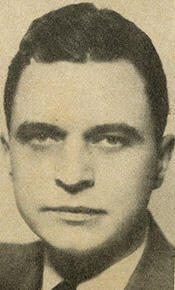
Here you will find contact information for Representative Francis Eugene Worley, including email address, phone number, and mailing address.
| Name | Francis Eugene Worley |
| Position | Representative |
| State | Texas |
| District | 18 |
| Party | Democratic |
| Status | Former Representative |
| Term Start | January 3, 1941 |
| Term End | January 3, 1951 |
| Terms Served | 5 |
| Born | October 10, 1908 |
| Gender | Male |
| Bioguide ID | W000744 |
About Representative Francis Eugene Worley
Francis Eugene Worley (October 10, 1908 – December 17, 1974) was a United States Representative from Texas and later an Associate Judge and Chief Judge of the United States Court of Customs and Patent Appeals. A member of the Democratic Party, he served in the United States Congress from 1941 to 1951, contributing to the legislative process during five terms in office, and subsequently played a significant role in the development of federal customs and patent jurisprudence.
Worley was born on October 10, 1908, in Lone Wolf, Oklahoma. In 1922 he moved with his family to Shamrock, Texas, where he attended the public schools. He pursued higher education at the Agricultural and Mechanical College of Texas (now Texas A&M University) in 1927 and 1928. He then studied law at the University of Texas School of Law from 1930 to 1935. Upon completion of his legal studies, he was admitted to the bar in 1935 and commenced the private practice of law in Shamrock, where he practiced from 1935 to 1941.
Worley entered public office as a member of the Texas House of Representatives, serving from 1935 to 1940. During this period he built a political base in the Texas Panhandle and gained experience in legislative procedure and state governance. His early political campaigns were notable for their grassroots character; he won the Democratic primary nomination for Congress following a mass campaign that included the participation of many high school students, reflecting his ability to mobilize local support.
In 1940 Worley was elected as a Democrat to the 77th United States Congress and was reelected to the four succeeding Congresses. He served from January 3, 1941, until his resignation on April 3, 1950. His tenure in the House of Representatives coincided with a significant period in American history, encompassing World War II and the early years of the Cold War. As a member of the House, he participated in the democratic process and represented the interests of his Texas constituents. During the 78th Congress he served as Chairman of the Committee on Election of President, Vice President, and Representatives, a committee concerned with federal election procedures and disputes. In the 1948 general election, he decisively defeated the Republican nominee, Texas historian and rancher J. Evetts Haley, who later became known for his conservative activism and subsequent campaigns. Among Worley’s most notable electoral challengers during his congressional years was LaMarr Bailey, a World War II veteran who ran as an anti–New Deal Democrat and campaigned throughout the district on horseback; Bailey was defeated by Worley in the 1944 Democratic primary.
During World War II, Worley also served in the United States Naval Reserve. From 1941 to 1942 he held the rank of lieutenant commander while simultaneously serving as a Member of Congress, reflecting the dual responsibilities undertaken by some legislators during the war emergency. His congressional service, extending from 1941 to 1951 as recorded in contemporary accounts, placed him at the center of major legislative decisions on wartime mobilization, postwar reconstruction, and the emerging national security framework.
Worley resigned from Congress in 1950 to accept a federal judicial appointment. He was nominated by President Harry S. Truman on February 24, 1950, to an Associate Judge seat on the United States Court of Customs and Patent Appeals, filling the vacancy created by the death of Judge Charles Sherrod Hatfield. The United States Senate confirmed his nomination on March 8, 1950, and he received his commission on March 9, 1950. At the time of his appointment, the court operated under Article I of the Constitution as a specialized tribunal. By operation of law on August 25, 1958, the court was elevated to Article III status, and Worley thereafter served as an Article III judge, enjoying the tenure and protections accorded to federal judges under the Constitution. His service as an Associate Judge terminated on April 30, 1959, when he was elevated to the position of Chief Judge of the same court.
Worley’s elevation to Chief Judge came through nomination by President Dwight D. Eisenhower on March 25, 1959, to succeed Chief Judge Noble J. Johnson. He was confirmed by the Senate on April 29, 1959, and received his commission as Chief Judge on April 30, 1959. In this capacity he oversaw the administration of the United States Court of Customs and Patent Appeals during a period of growing complexity in international trade and intellectual property law. From 1961 to 1972 he was a member of the Judicial Conference of the United States, the principal policy-making body for the federal judiciary, where he participated in deliberations on judicial administration and court governance at the national level. He assumed senior status on June 26, 1972, due to a certified disability, continuing to serve the court in a reduced capacity until his death.
During his years on the federal bench, Worley resided in Arlington County, Virginia, in proximity to the nation’s capital and the court on which he served. He died on December 17, 1974, in Naples, Florida. Following his death, he was cremated, and his ashes were interred at Columbia Gardens Cemetery in Arlington County, Virginia, closing a career that spanned state politics, congressional service, and high judicial office in the federal government.