Representative Francisco "Quico" Canseco
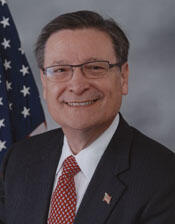
Here you will find contact information for Representative Francisco "Quico" Canseco, including email address, phone number, and mailing address.
| Name | Francisco "Quico" Canseco |
| Position | Representative |
| State | Texas |
| District | 23 |
| Party | Republican |
| Status | Former Representative |
| Term Start | January 5, 2011 |
| Term End | January 3, 2013 |
| Terms Served | 1 |
| Born | July 30, 1949 |
| Gender | Male |
| Bioguide ID | C001082 |
About Representative Francisco "Quico" Canseco
Francisco Raul “Quico” Canseco (born July 30, 1949) is an American attorney, businessman, and former U.S. Representative for Texas’s 23rd congressional district. A member of the Republican Party, he served one term in the United States House of Representatives from 2011 to 2013, during which he participated in the legislative process and represented the interests of his South and West Texas constituents. He has been active in Republican politics over several decades and has repeatedly sought to return to Congress, including as a declared candidate in the 2026 U.S. House election in Texas’s 23rd congressional district, challenging incumbent Tony Gonzales in the Republican primary.
Canseco was born and reared in Laredo, in Webb County in south Texas, the eldest of eight children of Consuelo Sada Rangel and Dr. Francisco Manuel Canseco, both of whom were born in Monterrey, Mexico. His father was of Italian descent and his mother was of Sephardic Jewish descent, and the family’s immigrant background and professional standing in Laredo shaped his early life. Growing up along the U.S.–Mexico border, he was exposed to the cultural and economic issues of the region that would later feature prominently in his political career.
Canseco attended Saint Louis University in St. Louis, Missouri, where he earned a Bachelor of Arts degree in history in 1972. He continued his studies at Saint Louis University School of Law, receiving a Juris Doctor in 1975. During his time in college, he became a member of the Tau Kappa Epsilon International Fraternity. His legal education and early professional affiliations laid the groundwork for a career that would span private practice, corporate counsel roles, and leadership positions in banking and real estate development.
Beginning his legal career in 1975, Canseco joined the Laredo law firm of Mann, Castillon, Fried and Kazen as an associate attorney. After several years, he left to operate his own law practice for five years, gaining experience as an independent practitioner. He subsequently became a participating associate at the Laredo firm of Person, Whitworth, Ramos, Borchers, and Morales. In 1987, he moved from private practice into the financial sector, becoming general counsel at Union National Bank of Texas, where he served until 1992. From 2003 to 2007 he was counsel to the firm of Escamilla and Ponek. In parallel with his legal work, he developed a substantial business career. Since 1988, he has been president and director of FMC Developers, which includes Canseco Investments, incorporated in 1993. He became chairman of Texas Heritage Bancshares from 2001 until 2007. Working with chairman James William Danner Sr., he helped transform Hondo National Bank from a failing institution with approximately $8 million in assets and one location into a bank with more than $180 million in assets and four branches, serving as board president beginning in 1995.
Canseco’s involvement in electoral politics began with bids for Congress in the early 2000s. After redistricting, he ran in the Republican primary for the newly drawn Texas’s 28th congressional district. In that primary, he and attorney Jim Hopson advanced to a runoff; Canseco received about 21 percent of the vote to Hopson’s 49 percent in the initial round, with Hopson narrowly missing the majority needed to avoid a runoff. In the subsequent runoff election, Hopson defeated Canseco by a margin of 65 percent to 35 percent. In a later race, Canseco again sought a Republican nomination but was defeated in the primary by Bexar County Commissioner and former San Antonio city councilman Lyle Larson, who prevailed by 62 percent to 38 percent. These early campaigns established Canseco as a persistent conservative candidate in South Texas Republican politics.
Canseco achieved national office in the 2010 election cycle. Running as a self-described “limited-government conservative” and openly identifying with the Tea Party movement, he sought the Republican nomination for Texas’s 23rd congressional district. In the Republican primary, he and former CIA officer Will Hurd advanced to a runoff; Hurd received 34 percent and Canseco 32 percent in the first round. In the runoff, Canseco defeated Hurd by 53 percent to 47 percent, securing the Republican nomination. In the general election, he faced incumbent Democratic Representative Ciro Rodriguez. The Republican National Committee provided strong financial support in an effort to regain the seat. As of October 13, 2010, Rodriguez had raised more overall campaign funds—$1,481,520 to Canseco’s $980,821—but Canseco held more cash on hand, $147,961 compared to Rodriguez’s $90,915. In the November 2010 general election, Canseco defeated Rodriguez with 74,853 votes (49 percent) to 67,348 (44 percent), flipping the district to the Republican Party.
Serving in the 112th Congress from January 3, 2011, to January 3, 2013, Canseco represented a vast district stretching from San Antonio westward along the U.S.–Mexico border. He was a member of the House Committee on Financial Services, serving on the Subcommittee on Financial Institutions and Consumer Credit and the Subcommittee on Oversight and Investigations, assignments that reflected his professional background in banking and finance. Ideologically, he was aligned with conservative House Republicans and joined the Republican Study Committee, a caucus of conservative members. During his tenure, he was one of four voting Latino members of Congress known to be members of the Republican Study Committee, alongside Bill Flores of Texas, Raúl Labrador of Idaho, and Jaime Herrera Beutler of Washington. He was also a member of the Congressional Hispanic Conference. Canseco supported the Arizona immigration law, advocated the extension of the Bush-era tax cuts, and favored repeal of the Patient Protection and Affordable Care Act. Voting records indicated that he voted with his party approximately 96 percent of the time on all issues.
During his term, Canseco was involved in several notable legislative and public controversies. In the summer of 2011, he drew criticism after initially declining to introduce a House bill to authorize a land swap between the federal government and Bexar County, Texas, a measure supported by U.S. Secretary of the Interior Ken Salazar and sponsored in the Senate by retiring Senator Kay Bailey Hutchison. The proposal was intended to expand development of the San Antonio River and the San Antonio Missions National Historical Park. In October 2011, Canseco introduced the San Antonio Missions National Historical Park Boundary Expansion Act in the House, mirroring Hutchison’s Senate bill; the legislation was projected to cost about $4 million over four years, even though the lands involved would be donated. In April 2012, he was involved in an incident at San Antonio International Airport in which he claimed he was assaulted by a Transportation Security Administration officer during a pat-down search, stating that the officer “was patting me down where no one is supposed to go.” The TSA officer, in turn, alleged that he had been assaulted by Canseco. No arrests were made, but the episode led Canseco to advocate changes in airport security procedures. In 2012, Canseco also delivered the Spanish-language version of the Republican response to the State of the Union address, highlighting his role as a Spanish-speaking voice within the party.
In the 2012 election cycle, former Representative Ciro Rodriguez sought a rematch but lost the Democratic primary to State Representative Pete Gallego, who defeated Rodriguez by 55 percent to 45 percent. In the November 6, 2012 general election, Canseco faced Gallego and lost his seat by a margin of 96,676 votes (50 percent) to 87,547 (46 percent), with two minor candidates receiving the remaining 4.1 percent of the vote. The contest was marked by allegations of voter fraud and irregularities. Although Canseco continued to assert that numerous irregularities had occurred, he conceded to Gallego on November 9, 2012, citing the high costs and lengthy timeframe that a formal challenge and recount would entail in a district encompassing all or parts of 29 counties. He carried the portion of Bexar County within the district, which contained more than half of the district’s population, but Gallego’s strong margins in the central and western parts of the district—areas largely overlapping with his former state House district—and his dominance in heavily Hispanic border counties proved decisive.
After leaving Congress in January 2013, Canseco remained active in Republican politics and in his business endeavors. In 2014, he launched a bid to return to Congress in Texas’s 23rd congressional district. In the Republican primary, he again faced Will Hurd; both advanced to a runoff, in which Canseco was handily defeated by Hurd. Hurd went on to win the general election over incumbent Democratic U.S. Representative Pete Gallego, returning the seat to Republican control. Continuing his efforts to reenter the House, Canseco ran in the crowded 2018 Republican primary for Texas’s 21st congressional district, an 18-way contest to succeed retiring Republican Representative Lamar Smith. In that race he was ultimately unsuccessful, garnering less than 5 percent of the vote. He has since continued his involvement in politics and, as noted, is currently a candidate in the 2026 U.S. House election in Texas’s 23rd congressional district, seeking the Republican nomination against incumbent Tony Gonzales.