Representative Francisco Afan Delgado
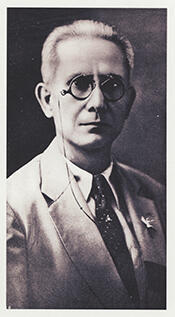
Here you will find contact information for Representative Francisco Afan Delgado, including email address, phone number, and mailing address.
| Name | Francisco Afan Delgado |
| Position | Representative |
| State | Philippine Islands |
| District | At-Large |
| Party | Unknown |
| Status | Former Representative |
| Term Start | January 3, 1935 |
| Term End | January 3, 1937 |
| Terms Served | 1 |
| Born | January 25, 1886 |
| Gender | Male |
| Bioguide ID | D000218 |
About Representative Francisco Afan Delgado
Francisco Afan Delgado (January 25, 1886 – October 27, 1964) was a Filipino politician, jurist, diplomat, and Freemason who played a significant role in both Philippine and United States political history. Born in the Philippine Islands, he would go on to become one of the key Filipino figures engaged with American institutions during the era of U.S. sovereignty over the Philippines, ultimately serving in the United States Congress as a Resident Commissioner from the Philippine Islands during a pivotal period in American and Philippine history.
Delgado pursued legal training and entered public service early in his career. After completing his education, he returned to the Philippine Islands in 1908 and joined the Philippine Government as a law clerk. Demonstrating strong legal acumen and administrative capability, he rose to become the chief of the law division of the executive bureau, a position he held until 1913. At that point, he left government service to resume private law practice, establishing himself as a prominent attorney. In 1918, he served in the Philippine National Guard and became a member of the National Council of Defense for the Philippines, reflecting his growing stature in both legal and public affairs.
In the 1920s, Delgado’s influence extended beyond government into professional and civic organizations. He was the first Filipino to be made an active member of the American Bar Association in 1919, a notable milestone in the integration of Filipino legal professionals into international legal circles. He was also an organizer and director of the International Bar Association, helping to shape emerging global legal networks. At the same time, he was an active Freemason, serving as Grand Master of the Grand Lodge of Freemasonry in the Philippines between 1926 and 1927. As a Shriner and Masonic leader, he founded the Masonic Hospital for Children in Manila, underscoring his commitment to philanthropy and public welfare.
Delgado’s formal political career in the Philippines advanced in the early 1930s. From 1931 to 1935, he served in the Philippine House of Representatives for Bulacan’s 1st district as a member of the Nationalist Party. His legislative work in Manila brought him into the forefront of Philippine politics during the transition toward greater self-government. This experience prepared him for his subsequent role representing Philippine interests in Washington, D.C., at a time when the political status of the islands and their relationship with the United States were undergoing fundamental change.
Francisco Afan Delgado served as a Representative from the Philippine Islands in the United States Congress from 1935 to 1937. More specifically, he was elected as a Resident Commissioner to the United States and took his seat in the U.S. House of Representatives on January 3, 1935. As a Resident Commissioner, he participated in the democratic and legislative processes of the United States Congress, representing the interests of his Philippine constituents and contributing to deliberations affecting the future of the islands. A member of the Nationalist Party, he served one term in this capacity, his service concluding on February 14, 1936, when a successor qualified under the new government of the Commonwealth of the Philippine Islands. His tenure coincided with a significant period in American and Philippine history, as both nations navigated the evolving framework of Commonwealth status and eventual Philippine independence.
After leaving the United States Congress, Delgado continued to hold important judicial and diplomatic posts. In February 1936, he was appointed as a justice of the Court of Appeals of the Philippines, serving until 1937 before again resuming private law practice. His international legal reputation led to his selection as a delegate to the International Committee of Jurists in Washington, D.C., and later as a delegate to the United Nations Conference in San Francisco, California, in April 1945, where the postwar international order was being shaped. From June 4, 1946, to March 31, 1951, he served as a member of the Philippine War Damage Commission, helping to address the complex issues of reconstruction and compensation in the aftermath of World War II.
Delgado’s later political and diplomatic career further solidified his status as a senior statesman of the Philippines. He served as a Senator of the Philippines from 1951 to 1957, participating in the legislative life of the newly independent republic. Subsequently, he was appointed Ambassador to the United Nations, serving from September 29, 1958, to January 1, 1962, where he represented Philippine interests in the emerging multilateral system and contributed to debates on decolonization and international law. Upon his retirement from public life, he resided in Bulacan. Francisco Afan Delgado died in Manila on October 27, 1964, leaving a legacy that spanned law, legislation, diplomacy, and international cooperation, and marking him as one of the notable Filipino figures to have served in the United States Congress.