Representative Frank Llewellyn Bowman
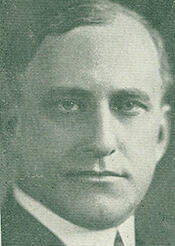
Here you will find contact information for Representative Frank Llewellyn Bowman, including email address, phone number, and mailing address.
| Name | Frank Llewellyn Bowman |
| Position | Representative |
| State | West Virginia |
| District | -1 |
| Party | Republican |
| Status | Former Representative |
| Term Start | December 7, 1925 |
| Term End | January 3, 1935 |
| Terms Served | 5 |
| Born | January 21, 1879 |
| Gender | Male |
| Bioguide ID | B000704 |
About Representative Frank Llewellyn Bowman
Frank Llewellyn Bowman (January 21, 1879 – September 15, 1936) was an American politician and attorney who represented West Virginia in the United States House of Representatives from 1925 to 1933. A member of the Republican Party, he served multiple terms in Congress during a significant period in American history and contributed to the legislative process over what contemporary accounts and later summaries describe as five terms in office, representing the interests of his constituents in West Virginia.
Bowman was born in Masontown, Fayette County, Pennsylvania, on January 21, 1879. He attended the public schools there before moving with his parents to Morgantown, West Virginia. Raised in a region shaped by both agriculture and emerging industry, he benefited from the expanding educational opportunities of the late nineteenth century. His family’s relocation to Morgantown placed him in proximity to West Virginia University, which would become central to his academic and professional development.
Bowman enrolled at West Virginia University in Morgantown and graduated in 1902. During his collegiate years he distinguished himself as a brilliant student, winning the Inter-Society Oration and Debate prize, an honor that reflected his early skill in public speaking and argumentation. He was also a member of the Phi Sigma Kappa fraternity, through which he formed social and professional connections that would support his later career. His university experience laid the foundation for his work in law, business, and public service.
Following his graduation in 1902, Bowman worked as a bank teller in Morgantown from 1902 to 1904. He resigned from this position to pursue the study of law, again at West Virginia University. In 1904 he became a member of the then-professional law fraternity Delta Chi, further integrating himself into the legal community. He was admitted to the bar in 1905 and commenced the practice of law in Morgantown. Alongside his legal work, Bowman developed an interest in the coal industry, participating as a shareholder and serving on the boards of coal enterprises, an involvement that reflected the central role of coal in the regional economy.
Bowman’s public career began with federal and municipal appointments. On May 25, 1911, he was appointed postmaster of Morgantown, West Virginia, a position he held until April 14, 1915, when a successor was appointed. He subsequently entered local politics and served as mayor of Morgantown in 1916 and 1917. Although he was regarded favorably in that role, he declined renomination for mayor, choosing instead to continue his legal and business pursuits while remaining active in Republican Party affairs.
In national politics, Bowman was elected as a Republican to the Sixty-ninth Congress and to the three succeeding Congresses, serving in the United States House of Representatives from March 4, 1925, to March 3, 1933. During these years he participated in the democratic process in Washington, D.C., representing West Virginia at a time that spanned the later years of the 1920s economic expansion and the onset of the Great Depression. As a member of the House of Representatives, he contributed to legislative deliberations and sought to advance the interests of his district and state. He was an unsuccessful candidate for reelection in 1932 to the Seventy-third Congress, concluding his formal congressional service in March 1933.
After leaving Congress, Bowman returned to the coal business and legal practice on a broader stage. He organized the Tropf Coal Company in Washington, D.C., and served as its president, drawing on his earlier experience in coal and corporate governance. He also acted as corporate attorney for several other coal companies, maintaining close ties to an industry that remained vital to West Virginia and the surrounding region. In 1935 he was appointed a member of the Board of Veterans’ Appeals of the Veterans’ Administration, where he reviewed and adjudicated claims and appeals brought by former service members. He served on the Board of Veterans’ Appeals until his death.
Bowman’s personal life reflected extensive civic and fraternal involvement. In addition to his college fraternities, he was a Freemason and participated actively in several fraternal and service organizations. He was involved in the Rotary Club and held membership in Morgantown Commandery No. 18, Knights Templar, and in Osiris Temple of the Mystic Shrine at Wheeling. He also belonged to the Knights of Pythias. In all of these organizations he was remembered by his biographers as “very popular,” suggesting a reputation for sociability and leadership beyond his formal offices. His religious faith was that of the Presbyterian Church. On June 3, 1904, he married Pearl Silveus of Pittsburgh, Pennsylvania; the couple had two children.
Frank Llewellyn Bowman died in Washington, D.C., on September 15, 1936, while serving on the Board of Veterans’ Appeals. He was buried in East Oak Grove Cemetery in Morgantown, West Virginia, the community where he had been educated, practiced law, and begun his public career. His wife and parents were later interred there as well, underscoring his enduring connection to Morgantown and to the state he represented in Congress.