Senator Frank Bosworth Brandegee
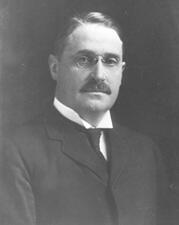
Here you will find contact information for Senator Frank Bosworth Brandegee, including email address, phone number, and mailing address.
| Name | Frank Bosworth Brandegee |
| Position | Senator |
| State | Connecticut |
| Party | Republican |
| Status | Former Representative |
| Term Start | November 4, 1902 |
| Term End | October 14, 1924 |
| Terms Served | 7 |
| Born | July 8, 1864 |
| Gender | Male |
| Bioguide ID | B000769 |
About Senator Frank Bosworth Brandegee
Frank Bosworth Brandegee (July 8, 1864 – October 14, 1924) was a United States Representative and Senator from Connecticut. A member of the Republican Party, he served in the House of Representatives from 1902 to 1905 and in the United States Senate from 1905 until his death in 1924, contributing to the legislative process during seven terms in the Senate. His long tenure in Congress spanned a significant period in American history, including the Progressive Era, World War I, and the early 1920s, during which he participated in the democratic process and represented the interests of his Connecticut constituents.
Brandegee was born in New London, Connecticut, on July 8, 1864. He was the son of Augustus Brandegee, who also served in the United States House of Representatives, and his wife, and he grew up in a family closely connected with public affairs and the legal profession. Raised in New London, he attended local schools and was prepared early for higher education and a professional career.
Brandegee graduated from New London’s Bulkeley High School in 1881. He then attended Yale College, from which he received his degree in 1885. While at Yale he was a member of the secret society Skull and Bones, an affiliation that placed him among a network of future leaders in law, politics, and business. After college he studied law, was admitted to the bar in 1888, and commenced the practice of law in New London, establishing himself in the legal community of his native city.
A Republican, Brandegee entered public life soon after beginning his law practice. In 1888 he was elected to the Connecticut House of Representatives. He also served as New London’s corporation counsel from 1889 to 1893 and again from 1894 to 1897, advising the city on legal matters and municipal governance. He returned to the Connecticut House in 1899 and was chosen Speaker, reflecting his growing influence in state politics. Brandegee once more held the position of New London corporation counsel from 1901 to 1902, resigning when he was elected to the United States Congress.
Brandegee was elected as a Republican to the Fifty-seventh Congress to fill the vacancy caused by the death of Representative Charles A. Russell. He was reelected to the Fifty-eighth and Fifty-ninth Congresses and served in the House of Representatives from November 4, 1902, until May 10, 1905, when he resigned. During this period he was active in party affairs, serving as a delegate to several state and national Republican conventions and acting as chairman of the Connecticut Republican Party’s 1904 state convention. His work in the House marked the beginning of more than two decades of continuous service in the national legislature.
Brandegee resigned from the House to accept election to the United States Senate, filling the vacancy caused by the death of Senator Orville H. Platt. He was reelected to the Senate in 1908, 1914, and 1920, and served from May 10, 1905, until his death on October 14, 1924. A staunch “Old Guard” conservative, he opposed women’s suffrage and was a prominent critic of American participation in the League of Nations following World War I. In the 1920 presidential election, he was one of the chief promoters of Warren G. Harding for President, aligning himself with the conservative wing of the Republican Party that favored a return to “normalcy” and a more limited international role for the United States.
During his Senate career, Brandegee held several important committee assignments and leadership positions. He served as chairman of the Committee on Interoceanic Canals and the Committee on Panama during the Sixty-second Congress, reflecting congressional interest in the Panama Canal and related issues of interoceanic transportation. He later chaired the Committee on Pacific Railroads during the Sixty-third through Sixty-fifth Congresses, overseeing matters related to railroad regulation and development in the western United States. In the postwar period he was chairman of the Committee on the Library during the Sixty-sixth and Sixty-seventh Congresses, and he became chairman of the powerful Committee on the Judiciary in the Sixty-eighth Congress. Brandegee also briefly served as President pro tempore of the Senate for two days, March 25–26, 1912, during the Sixty-second Congress, underscoring his seniority and standing among his colleagues.
Brandegee never married and had no children. In his later years he experienced declining health and serious financial reverses, reportedly losing much of his fortune through poor investments. On October 14, 1924, while still in office, he killed himself in Washington, D.C., by inhaling fumes from a gas light in a seldom-used bathroom on the third floor of his home. Contemporary press accounts indicated that he left his chauffeur a suicide note and $100, and left another $100 for two other household servants. His death placed him among the members of the United States Congress who died in office in the early twentieth century. Brandegee was interred at Cedar Grove Cemetery in New London, Connecticut, returning in death to the city where he had been born, educated, and first entered public life.