Representative Frank Brasco
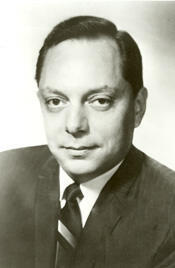
Here you will find contact information for Representative Frank Brasco, including email address, phone number, and mailing address.
| Name | Frank Brasco |
| Position | Representative |
| State | New York |
| District | 11 |
| Party | Democratic |
| Status | Former Representative |
| Term Start | January 10, 1967 |
| Term End | January 3, 1975 |
| Terms Served | 4 |
| Born | October 15, 1932 |
| Gender | Male |
| Bioguide ID | B000771 |
About Representative Frank Brasco
Frank James Brasco (October 15, 1932 – October 19, 1998) was an American politician and attorney who served four terms as a Democratic member of the United States House of Representatives from New York from January 3, 1967, to January 3, 1975. Representing a Brooklyn-based district, he participated in the legislative process during a significant period in American history, including the later stages of the civil rights era, the Vietnam War, and the unfolding of the Watergate scandal. Over the course of his four terms in office, he represented the interests of his constituents as a member of the House of Representatives and took part in the broader democratic process at the federal level.
Brasco was born in Brooklyn, New York, on October 15, 1932. Raised in the borough he would later represent in Congress, he attended local schools and graduated from high school in Brooklyn. He went on to pursue higher education at Brooklyn College, where he received a Bachelor of Arts degree in 1955. He then continued his legal studies at Brooklyn Law School, earning an LL.B. in 1957. In addition to his academic training, Brasco served in the United States Army Reserve, reflecting an early commitment to public service and civic responsibility.
Following completion of his legal education, Brasco embarked on a career in law and public service. He was admitted to the bar and began practicing law in New York. He subsequently served as an assistant district attorney for Kings County, New York, where he gained prosecutorial experience and became familiar with the workings of the criminal justice system in New York City. His work as an assistant district attorney helped establish his public profile in Brooklyn and provided a foundation for his entry into electoral politics as a member of the Democratic Party.
Brasco was elected to Congress in 1966 as a Democrat from New York and took office on January 3, 1967. He served four consecutive terms in the U.S. House of Representatives, remaining in office until January 3, 1975. During his tenure, he aligned with the Democratic Party and was generally regarded as having a liberal voting record. He contributed to the legislative process at a time marked by major national debates over civil rights, urban policy, crime, and the Vietnam War, and he was known as a vocal opponent of President Richard Nixon on many issues. As a representative, he focused on the needs and concerns of his Brooklyn constituents while participating in the broader national policymaking process.
Brasco’s congressional career became entangled with legal and ethical controversy in the early 1970s. In 1973 he was indicted, along with his uncle, Joseph Brasco, on federal bribery and conspiracy charges stemming from payoffs he received from a Mafia-owned Bronx trucking company that was seeking mail-hauling contracts from the United States Post Office. The first trial ended in a hung jury, but he was subsequently retried, convicted, and sentenced to five years in prison, with all but three months of the sentence suspended. In addition to the custodial sentence, he was fined and later disbarred, effectively ending his legal career. Against this backdrop, he chose not to run for re-election in 1974, bringing his service in Congress to a close at the end of his fourth term.
The investigation that led to Brasco’s indictment also intersected with the broader political climate of the Watergate era. While under scrutiny by the United States Department of Justice, Brasco crossed party lines to vote against allowing the House Banking and Currency Committee, chaired by Wright Patman, to subpoena members of the Nixon administration in connection with suspected violations of the Federal Election Campaign Act. This vote was widely regarded as surprising in light of his generally liberal record and his previously strong opposition to President Nixon. According to later accounts, New York Governor Nelson Rockefeller arranged a meeting between Brasco and Attorney General John N. Mitchell, during which Brasco was promised leniency in his own legal difficulties in exchange for opposing the proposed investigation. The failure of the Patman committee’s effort to obtain subpoenas contributed to delaying full congressional exposure of the Watergate scandal until after the 1972 presidential election.
In his later years, following his conviction, fine, and disbarment, Brasco lived outside the public spotlight. His earlier prominence as a Brooklyn congressman and his subsequent fall from political grace placed him among the American federal politicians whose careers were significantly affected by criminal convictions and political scandal. Frank James Brasco died on October 19, 1998, at the age of 66, four days after his birthday.