Representative Frank Buchanan
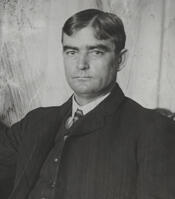
Here you will find contact information for Representative Frank Buchanan, including email address, phone number, and mailing address.
| Name | Frank Buchanan |
| Position | Representative |
| State | Illinois |
| District | 7 |
| Party | Democratic |
| Status | Former Representative |
| Term Start | April 4, 1911 |
| Term End | March 3, 1917 |
| Terms Served | 3 |
| Born | June 14, 1862 |
| Gender | Male |
| Bioguide ID | B001001 |
About Representative Frank Buchanan
Frank Buchanan was a Democratic member of the United States House of Representatives who represented the State of Illinois in Congress from 1911 to 1917. Serving three consecutive terms, he participated actively in the legislative process during a significant period in American history, contributing to the work of the House of Representatives and representing the interests of his constituents. His congressional career placed him among a small group of similarly named public figures of his era, including another Democratic Representative, Frank Buchanan of Pennsylvania (1902–1951), and the earlier naval officer Franklin Buchanan (1800–1874), who served in both the United States Navy and the Confederate States Navy.
Frank Buchanan, the Illinois politician, was born in 1862 and became identified with the Democratic Party in a period marked by rapid industrialization, labor unrest, and the realignment of national political coalitions. Although detailed records of his early life and education are limited in the surviving summaries, his emergence as a Democratic officeholder from Illinois indicates that he rose to political prominence in a state that was central to national debates over economic policy, regulation of industry, and the role of the federal government in social and labor issues. His formative years would have coincided with the post–Civil War reconstruction of the nation and the expansion of railroads and heavy industry, developments that shaped the political and economic environment in which he later served.
By the time Buchanan entered Congress in 1911, he had established himself sufficiently within Illinois Democratic circles to win election to the U.S. House of Representatives. He took office at the start of the Sixty-second Congress, at a moment when the Democratic Party was regaining national strength and preparing for the presidential election of 1912. As a member of the House, Buchanan participated in the democratic process at the federal level, engaging in debates and votes on legislation that reflected the concerns of his Illinois constituents, including issues related to commerce, labor, and the broader Progressive Era agenda of reform. His service coincided with the administrations of Presidents William Howard Taft and Woodrow Wilson, when Congress addressed tariff reform, banking and currency legislation, and regulatory measures affecting business and transportation.
Buchanan’s three terms in office, from 1911 to 1917, spanned the Sixty-second, Sixty-third, and Sixty-fourth Congresses, a period that saw the enactment of landmark legislation such as the Underwood Tariff and the Federal Reserve Act, as well as growing national attention to foreign affairs as Europe descended into World War I. While the existing record does not enumerate specific bills he sponsored or committees on which he served, his role as a Democratic Representative from Illinois placed him within the majority party during much of the Wilson administration, affording him an opportunity to contribute to the shaping of domestic policy and to the preliminary debates over America’s posture toward the emerging global conflict. Throughout this time, he continued to represent and advocate for the interests of his district within the broader framework of national legislative priorities.
After leaving Congress in 1917, Buchanan’s public profile diminished in the national record, but his career remained part of the broader narrative of Democratic leadership from industrial states in the early twentieth century. He lived through the end of World War I, the economic and social changes of the 1920s, and the onset of the Great Depression, a period in which many of the issues that had animated his congressional service—labor conditions, economic regulation, and the balance between federal and state authority—remained central to American politics. Frank Buchanan, the Illinois politician, died in 1930, closing a life that had intersected with major transformations in the nation’s political and economic life. His name endures in historical and biographical references alongside those of other public figures bearing the Buchanan surname, including Frank Buchanan of Pennsylvania, a later Democratic member of the U.S. House of Representatives, and Franklin Buchanan, the nineteenth-century naval officer.