Senator Frank Jenne Cannon
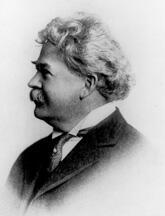
Here you will find contact information for Senator Frank Jenne Cannon, including email address, phone number, and mailing address.
| Name | Frank Jenne Cannon |
| Position | Senator |
| State | Utah |
| Party | Silver Republican |
| Status | Former Representative |
| Term Start | December 2, 1895 |
| Term End | March 3, 1899 |
| Terms Served | 2 |
| Born | January 25, 1859 |
| Gender | Male |
| Bioguide ID | C000118 |
About Senator Frank Jenne Cannon
Frank Jenne Cannon (January 25, 1859 – July 25, 1933) was the first United States Senator from Utah, serving in the Senate from 1896 to 1899. A prominent figure in Utah’s transition from territorial status to statehood, he was initially a Republican and later a member of the Silver Republican Party, contributing to the legislative process during a significant period in American political and economic history. His service in Congress encompassed two terms in office—first as a territorial delegate and then as a United States senator—during which he represented the interests of his constituents and participated actively in national debates over tariffs, monetary policy, and the political influence of the Church of Jesus Christ of Latter-day Saints (LDS Church).
Cannon was born in Salt Lake City, Utah Territory, as the eldest child of Sarah Jenne Cannon and George Q. Cannon. His father was a leading figure in the LDS Church, serving as an apostle and later as a member of its First Presidency, which placed the younger Cannon at the center of both religious and political life in the territory. He attended local schools in Salt Lake City and then studied at the University of Deseret (later the University of Utah), from which he graduated at the age of nineteen. In 1878 he married Martha Brown of Ogden, Utah, establishing family and social ties in one of the territory’s principal communities.
Before entering national office, Cannon became involved in the complex negotiations that preceded Utah’s admission to the Union. In the events leading up to LDS Church President Wilford Woodruff’s 1890 Manifesto declaring that the Church would no longer sanction additional plural marriages, Cannon played a role as an intermediary, shuttling communications between leaders of the LDS Church and officials in the United States Congress. He also emerged as a party organizer in the evolving territorial political landscape. In 1891 he helped to organize the Utah Republican Party, aligning the territory’s politics more closely with national party structures. After an initial unsuccessful attempt to be elected delegate from the Utah Territory to Congress, he won election and served as the territory’s nonvoting delegate in the United States House of Representatives from March 4, 1895, to January 4, 1896.
With Utah’s admission as a state in January 1896, Cannon’s political career advanced to the Senate. In 1896 the Utah Legislature chose him to serve as one of the state’s first United States senators, selecting him despite the preference of LDS Church leadership for his father, George Q. Cannon, for the post. He thus became the first United States Senator from Utah. He initially served in the Senate as a member of the Republican Party, reflecting his earlier role in organizing the Utah Republican Party. During his term, he participated in the democratic process at the national level and represented the interests of his constituents at a time when issues such as tariffs, the status of silver in the national monetary system, and the political role of the LDS Church were highly contested. Over the course of his Senate service, he shifted his allegiance to the Silver Republican Party, a faction that broke with the main Republican Party over the question of “free silver” and bimetallism. The Silver Republican Party was founded by his eventual successor in the Senate and future employer at The Salt Lake Tribune, Thomas Kearns.
Cannon’s Senate career ended amid controversy and shifting political alliances. He served in the Senate from 1896 until 1899, but he lost his bid for re-election when the Utah Legislature declined to return him to office following the November 1898 elections. One of the principal issues was his vote against the Dingley Act, a tariff measure that would have raised duties on sugar and was strongly supported by the LDS Church hierarchy and by interests in the Utah sugar industry. His opposition to the Dingley Act, his advocacy of Free Silver, rumors of immoral conduct during his residence in Washington, D.C., and the control of the Utah Legislature by Democrats all contributed to the erosion of his support. Alfred W. McCune, a prominent Salt Lake City businessman, secured the backing of LDS Church leaders in his own campaign for the Senate seat, but the legislature became deadlocked. Over the course of 121 ballots no candidate secured a majority. On February 18, a state representative accused McCune of attempting to buy his vote; a seven-member legislative committee investigated and voted 7–2 to absolve McCune of the charge. Balloting resumed on March 8, but McCune still lacked sufficient support, receiving only twenty-five votes, and the legislature ultimately adjourned without electing a senator. As a result, Utah’s U.S. Senate seat remained vacant until January 1901.
Following his Senate defeat, Cannon continued to play an active role in both politics and journalism. In 1900 he affiliated with the Democratic Party and subsequently served as chairman of the Utah Democratic Party from 1902 to 1904. At the same time, he pursued a substantial career in the newspaper business. Even before his Senate service, he had been involved in journalism, establishing the Ogden Standard in 1888 and working with the Ogden Herald in Ogden, Utah. After leaving the Senate, he expanded this work and became associated with The Salt Lake Tribune, where he served as an editor. Between 1904 and 1911 he consistently supported the anti-Mormon American Party in his newspaper editorials, reflecting his growing opposition to what he viewed as the excessive political influence of the LDS Church in Utah’s civic affairs.
In later years Cannon moved decisively away from the faith and political structures that had shaped his early life. He ultimately rejected Mormonism and became a vocal critic of the LDS Church. With journalist Harvey J. O’Higgins, he authored the book Under the Prophet in Utah, in which he described what he regarded as the rigidly hierarchical and absolutist nature of the Church’s leadership and its interference in politics. The work recounted the negotiations in which he had participated during the 1890s, when Utah sought statehood in exchange for the official abandonment of polygamy and a reduction in direct Church control over civil government, and it detailed what he saw as a subsequent retreat from those commitments. In the book, he argued that ordinary Church members lived under an “absolutism” that deprived them of independent judgment, even as the diffusion of authority created the impression that many shared in power.
During the last two decades of his life, Cannon devoted much of his time to lecturing and public advocacy. He spoke widely against Mormonism and in favor of Free Silver monetary policies, maintaining his long-standing opposition to the Gold Standard that had divided him from many in his former party. His public career thus spanned roles as territorial delegate, United States senator, party organizer, editor, author, and lecturer, and it reflected the broader struggles over religion, economics, and governance in the American West at the turn of the twentieth century. Frank Jenne Cannon died in Denver, Colorado, on July 25, 1933, at the age of seventy-four.