Representative Frank Ertel Carlyle
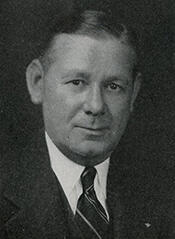
Here you will find contact information for Representative Frank Ertel Carlyle, including email address, phone number, and mailing address.
| Name | Frank Ertel Carlyle |
| Position | Representative |
| State | North Carolina |
| District | 7 |
| Party | Democratic |
| Status | Former Representative |
| Term Start | January 3, 1949 |
| Term End | January 3, 1957 |
| Terms Served | 4 |
| Born | April 7, 1897 |
| Gender | Male |
| Bioguide ID | C000156 |
About Representative Frank Ertel Carlyle
Frank Ertel Carlyle (April 7, 1897 – October 2, 1960) was a Democratic member of the United States House of Representatives from North Carolina who served four terms in Congress between 1949 and 1957. A lifelong North Carolinian, he became a prominent lawyer and public official, ultimately representing his state in the national legislature during a significant period in mid-twentieth-century American history.
Carlyle was born on April 7, 1897, in North Carolina. He pursued higher education at the University of North Carolina at Chapel Hill, from which he graduated before embarking on a career in law and public service. His education at Chapel Hill provided the foundation for his later legal practice and political career, and connected him with the professional and political networks that would shape his public life.
During World War I, Carlyle served in the United States Navy, contributing to the nation’s military efforts in a global conflict that deeply affected his generation. Following his wartime service, he returned to North Carolina and established a law practice in Lumberton, in Robeson County. As a practicing attorney in Lumberton, he built a reputation in the legal community that led to further responsibilities in public office.
Carlyle’s legal and public career advanced when he became solicitor of the 9th judicial district of North Carolina, a prosecutorial position in which he was responsible for representing the state in criminal cases. His work as solicitor enhanced his standing as a public official and helped prepare him for national office. His experience in the courtroom and in district-level public service provided him with practical knowledge of the law and of the concerns of North Carolina citizens.
In 1948, Carlyle was elected as a Democrat to the 81st United States Congress, taking office on January 3, 1949, as a Representative from North Carolina. He would go on to serve four consecutive terms, remaining in the House of Representatives until January 3, 1957. During this period, which encompassed the early Cold War years and the beginnings of the modern civil rights era, Carlyle participated in the legislative process and represented the interests of his constituents in North Carolina. As a member of the House, he took part in debates and votes on domestic and foreign policy issues that shaped postwar American society.
Carlyle’s congressional service included involvement in one of the most contentious issues of his time: school desegregation. In 1956, he was a signatory to the Southern Manifesto, a document issued by a group of southern members of Congress opposing the Supreme Court’s decision in Brown v. Board of Education, which had ordered the desegregation of public schools. By signing the manifesto, Carlyle aligned himself with those resisting federally mandated desegregation, reflecting the views of many white southern constituents and the broader political tensions over civil rights in the 1950s.
Carlyle’s tenure in Congress came to an end after he lost his bid for re-election in 1956. Leaving office on January 3, 1957, he concluded eight years of service in the House of Representatives. After his congressional career, he returned to private life in North Carolina. Frank Ertel Carlyle died on October 2, 1960. His career spanned military service, legal practice, judicial office, and four terms in the United States Congress, marking him as a significant mid-century political figure from North Carolina.