Representative Frank Leslie Chelf
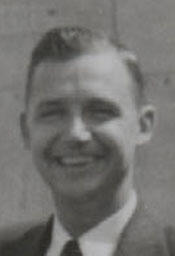
Here you will find contact information for Representative Frank Leslie Chelf, including email address, phone number, and mailing address.
| Name | Frank Leslie Chelf |
| Position | Representative |
| State | Kentucky |
| District | 4 |
| Party | Democratic |
| Status | Former Representative |
| Term Start | January 3, 1945 |
| Term End | January 3, 1967 |
| Terms Served | 11 |
| Born | September 22, 1907 |
| Gender | Male |
| Bioguide ID | C000342 |
About Representative Frank Leslie Chelf
Frank Leslie Chelf (September 22, 1907 – September 1, 1982) was a United States Representative from Kentucky who served eleven consecutive terms in the U.S. House of Representatives from 1945 to 1967. A member of the Democratic Party, he represented his constituents during a significant period in American history that spanned the end of World War II, the early Cold War, and the modern civil rights era. Over the course of his congressional career, he participated actively in the legislative process and helped shape national policy during more than two decades of service.
Chelf was born on a farm near Elizabethtown, Hardin County, Kentucky, on September 22, 1907. Orphaned at a young age, he was raised at the Masonic Widows and Orphans Home (now Masonic Homes of Kentucky) in Louisville, where he also attended Masonic Home High School, from which he graduated. In addition to his time at the Masonic Home, he was educated in the public schools of Kentucky. His early experiences in rural Kentucky and in institutional care informed a lifelong interest in public service and the welfare of ordinary citizens.
Following his secondary education, Chelf pursued higher studies at several institutions. He attended Centre College in Danville, Kentucky, and St. Mary’s College in Kentucky, reflecting a broad liberal arts background before turning to the study of law. He then enrolled at the Cumberland School of Law at Cumberland University in Lebanon, Tennessee, from which he graduated in 1931. That same year he was admitted to the bar and commenced the practice of law in Lebanon, Marion County, Kentucky, establishing the professional base from which he would later enter public office.
Chelf’s early career was rooted in local legal and political service. From 1933 to 1944 he served as attorney of Marion County, Kentucky, a position that placed him at the center of county governance and legal affairs during the Great Depression and the early years of World War II. His growing prominence in Democratic politics was reflected in his role as a delegate to the Democratic National Convention in 1936, where he participated in the national party deliberations during the New Deal era. These experiences helped build the political network and reputation that would support his subsequent bid for Congress.
During World War II, Chelf temporarily set aside his civilian responsibilities to enter military service. Taking a leave of absence from his duties as county attorney on August 1, 1942, he volunteered for the United States Army and was commissioned a first lieutenant in the Army Air Corps. He saw active service in the Air Transport Command, serving as chief code designator in the Intelligence Division. He later became executive officer of the Plans and Liaison Division and subsequently assistant chief of Air Staff Training, roles that involved planning, coordination, and training functions critical to wartime air operations. Chelf was discharged on August 10, 1944, due to physical disability, with the rank of major in the Air Corps, and he returned to Kentucky with both military and administrative experience that would inform his later legislative work.
Chelf was elected as a Democrat to the Seventy-ninth Congress and to the ten succeeding Congresses, serving from January 3, 1945, to January 3, 1967. Over these eleven terms, he represented Kentucky during a transformative era in domestic and foreign policy, including postwar reconstruction, the onset of the Cold War, and the expansion of federal social and economic programs. As a member of the House of Representatives, he participated in the democratic process by debating and voting on major legislation, advocating for the interests of his district, and contributing to committee work that shaped federal law. His long tenure reflected sustained electoral support from his constituents, though he was ultimately an unsuccessful candidate for reelection in 1966 to the Ninetieth Congress.
Chelf’s record on civil rights legislation illustrates the complexity of Southern and border-state politics during his years in Congress. He did not sign the 1956 Southern Manifesto, a document in which many Southern legislators opposed the Supreme Court’s decision in Brown v. Board of Education and the desegregation of public schools, thereby distancing himself from the most hardline segregationist stance. In roll-call votes, he supported several key measures: he voted in favor of the Civil Rights Act of 1960, which strengthened federal enforcement of voting rights; the Twenty-fourth Amendment to the U.S. Constitution, which abolished the poll tax in federal elections; the Voting Rights Act of 1965, which provided robust federal protections for minority voting rights; and the Civil Rights Act of 1968, which included fair housing provisions. At the same time, he voted against the Civil Rights Acts of 1957 and 1964, two landmark statutes that expanded federal authority to protect civil and voting rights and prohibit discrimination in public accommodations and employment. This mixed record reflected both the evolving national debate and the political pressures within his home state.
After leaving Congress in January 1967, Chelf returned to Lebanon, Kentucky, where he resumed the practice of law and remained active as a legislative consultant. Drawing on his extensive experience in federal lawmaking and his long familiarity with Kentucky’s legal and political landscape, he continued to advise on public policy and legal matters. He lived in Lebanon until his death there on September 1, 1982. Frank Leslie Chelf was interred in Ryder Cemetery, leaving a legacy as a long-serving Kentucky congressman who bridged local, military, and national service over the course of his life.