Representative Frank Gay Clarke
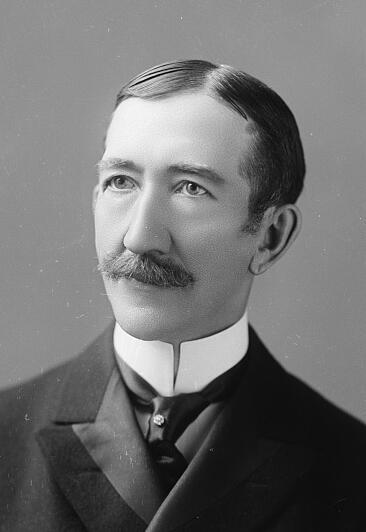
Here you will find contact information for Representative Frank Gay Clarke, including email address, phone number, and mailing address.
| Name | Frank Gay Clarke |
| Position | Representative |
| State | New Hampshire |
| District | 2 |
| Party | Republican |
| Status | Former Representative |
| Term Start | March 15, 1897 |
| Term End | March 3, 1901 |
| Terms Served | 2 |
| Born | September 10, 1850 |
| Gender | Male |
| Bioguide ID | C000460 |
About Representative Frank Gay Clarke
Frank Gay Clarke (September 10, 1850 – January 9, 1901) was an American politician, lawyer, and United States Representative from New Hampshire. A member of the Republican Party, he served in the U.S. House of Representatives from 1897 to 1901, contributing to the legislative process during two terms in office and representing New Hampshire’s second congressional district during a significant period in American history.
Clarke was born in Wilton, Hillsborough County, New Hampshire, on September 10, 1850, the son of Moses and Julia Gay Clarke. He was educated in New Hampshire, attending Kimball Union Academy in Meriden, an institution that prepared many students for collegiate and professional careers in the nineteenth century. He subsequently enrolled at Dartmouth College in Hanover, New Hampshire, where he pursued scientific studies and earned a Bachelor of Science degree in 1873. On May 13, 1875, he married Frances A. Brooks; the couple had one daughter, Mabel Frances.
After completing his college education, Clarke studied law and was admitted to the bar in 1876. He commenced the practice of law in Peterborough, New Hampshire, where he established himself as an attorney and became active in local affairs. His legal career in Peterborough provided the foundation for his later public service, as he gained experience in the issues and concerns of his community and the broader region.
Clarke’s formal political career began in state government. He was elected a member of the New Hampshire House of Representatives in 1885. That same year he was appointed a colonel on the military staff of Governor Moody Currier’s successor, Governor Charles H. Hale, and he served in that capacity from 1885 to 1887, reflecting the confidence placed in him by the state’s executive leadership. In 1889 he was elected to the New Hampshire Senate, further advancing his role in state politics. Returning to the lower chamber, he was again elected to the New Hampshire House of Representatives in 1891 and was chosen Speaker of that body, a position that underscored his influence and leadership within the state legislature.
Building on his state legislative experience, Clarke was elected as a Republican to the Fifty-fifth and Fifty-sixth Congresses. He served as United States Representative for the second district of New Hampshire from March 4, 1897, until his death on January 9, 1901. During his tenure in the House of Representatives, he participated in the democratic process at the national level and represented the interests of his New Hampshire constituents at a time marked by economic change, the aftermath of the Panic of 1893, and the nation’s emergence as an international power following the Spanish–American War. His service in Congress thus occurred during a significant period in American history, and he took part in deliberations and legislation that reflected the political and economic issues of the late nineteenth century.
Frank Gay Clarke died of an aneurysm in Peterborough, New Hampshire, on January 9, 1901, at the age of 50 years and 121 days, while still in office as a member of the House of Representatives. He was interred at Pine Hill Cemetery in Peterborough. His death placed him among the members of the United States Congress who died in office in the early twentieth century, and it brought to a close a career that had spanned local legal practice, state legislative leadership, and national service in the United States Congress.