Representative Frank Crowther
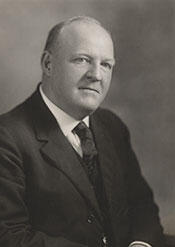
Here you will find contact information for Representative Frank Crowther, including email address, phone number, and mailing address.
| Name | Frank Crowther |
| Position | Representative |
| State | New York |
| District | 30 |
| Party | Republican |
| Status | Former Representative |
| Term Start | May 19, 1919 |
| Term End | January 3, 1943 |
| Terms Served | 12 |
| Born | July 10, 1870 |
| Gender | Male |
| Bioguide ID | C000948 |
About Representative Frank Crowther
Frank Crowther served as a Representative from New York in the United States Congress from 1919 to 1943. A member of the Republican Party, Frank Crowther contributed to the legislative process during 12 terms in office.
Frank Crowther’s service in Congress occurred during a significant period in American history. As a member of the House of Representatives, Frank Crowther participated in the democratic process and represented the interests of constituents.
Frank Crowther (July 10, 1870 – July 20, 1955) was a United States representative from New York. Born in Liverpool, England, he emigrated to the United States in 1872 with his parents, who settled in Canton, Massachusetts. He attended the public schools, graduated from the Lowell School of Design (a branch of the Massachusetts Institute of Technology) in 1888 and was a designer of fabrics, carpets, and rugs for seven years. He graduated from the Harvard Dental School in 1898 and commenced practice in Boston; in 1901 he moved to Perth Amboy, New Jersey and continued the practice of dentistry. He was a member of the New Jersey General Assembly in 1904 and 1905 and a member of the Middlesex County Board of Taxation from 1906 to 1909. In 1912, Crowther moved to Schenectady, New York and continued the practice of his profession until elected to Congress; he was president of the common council of Schenectady in 1917 and 1918, and elected as a Republican to the Sixty-sixth and to the eleven succeeding Congresses, holding office from March 4, 1919 to January 3, 1943. During the Seventy-first Congress he was chairman of the Committee on Memorials. He was not a candidate for renomination in 1942 and in 1943 moved to Pueblo, Colorado and engaged in violin study, landscape painting, and public speaking. He died in Pueblo in 1955; interment was in Roselawn Cemetery.