Representative Frank Dunklee Currier
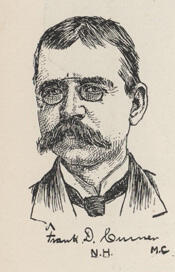
Here you will find contact information for Representative Frank Dunklee Currier, including email address, phone number, and mailing address.
| Name | Frank Dunklee Currier |
| Position | Representative |
| State | New Hampshire |
| District | 2 |
| Party | Republican |
| Status | Former Representative |
| Term Start | December 2, 1901 |
| Term End | March 3, 1913 |
| Terms Served | 6 |
| Born | October 30, 1853 |
| Gender | Male |
| Bioguide ID | C000999 |
About Representative Frank Dunklee Currier
Frank Dunklee Currier (October 30, 1853 – November 25, 1921) was an American politician and lawyer who served as a Republican Representative from New Hampshire in the United States Congress from 1901 to 1913. Over the course of six consecutive terms in the House of Representatives, he contributed to the legislative process during a significant period in American history, representing the interests of his constituents in New Hampshire’s second congressional district.
Currier was born in Canaan, Grafton County, New Hampshire, on October 30, 1853, the son of Horace S. Currier and Emma (Plastridge) Currier. He attended the common schools of his native town before pursuing further studies at Kimball Union Academy in Meriden, New Hampshire, and at Doctor Hixon’s School in Lowell, Massachusetts. These preparatory studies provided the foundation for his later legal and political career.
After completing his formal schooling, Currier read law in the office of Mr. Pike in Franklin, New Hampshire. He was admitted to the bar at Concord, New Hampshire, in April 1874 and commenced the practice of law in his hometown of Canaan. His legal practice established him as a figure of growing prominence in local affairs and provided a platform from which he entered public service. On May 31, 1890, he married Adelaide H. Sargent, further anchoring his personal and professional life in New Hampshire.
Currier’s political career began at the state level. He served as a member of the New Hampshire House of Representatives in 1879, marking his first term in elective office. He was secretary of the Republican State Committee from 1882 to 1890, a role that placed him at the center of party organization and strategy in New Hampshire. He served as clerk of the New Hampshire Senate in 1883 and again in 1885, and he was a delegate to the Republican National Convention in 1884. In 1887 he was elected to the New Hampshire Senate and served as president of that body, demonstrating his rising influence in state politics. From 1890 to 1894 he was appointed naval officer of customs at the port of Boston, Massachusetts, a federal customs position that broadened his administrative experience. Returning to New Hampshire, he was chosen speaker of the New Hampshire House of Representatives in 1899. In recognition of his public service and standing, Dartmouth College conferred upon him an honorary Master of Arts degree in 1901.
Elected as a Republican to the Fifty-seventh Congress and to the five succeeding Congresses, Currier served as United States Representative for New Hampshire’s second district from March 4, 1901, to March 3, 1913. His twelve years in the House of Representatives coincided with the administrations of Presidents William McKinley, Theodore Roosevelt, and William Howard Taft, a period marked by industrial expansion, progressive reforms, and significant changes in federal policy. As a member of the House, he participated in the democratic process and consistently represented the interests of his New Hampshire constituents, contributing to debates and legislation affecting both his state and the nation.
During his congressional service, Currier held a key leadership role as chairman of the Committee on Patents in the Fifty-eighth through the Sixty-first Congresses. In this capacity he was closely involved with legislation affecting intellectual property and innovation. One of the most notable achievements during his tenure on the committee was the passage of a new federal copyright law in 1909, which modernized and consolidated existing copyright statutes and had a lasting impact on authors, publishers, and creators. Despite his long service and leadership, he was an unsuccessful candidate for reelection in 1912 to the Sixty-third Congress, and his term in the House concluded on March 3, 1913.
Following his departure from Congress, Currier largely retired from national public life but continued to serve in a judicial capacity in his home state. In 1913 he was appointed by Governor Samuel D. Felker as justice of the police court, a local judicial office in which he served for two years. This appointment allowed him to apply his legal training and long experience in public affairs to the administration of local justice.
Frank Dunklee Currier died in Canaan, New Hampshire, on November 25, 1921. He was interred in Canaan Street Cemetery in his hometown, closing a life spent largely in service to New Hampshire at both the state and national levels.