Senator Frank Putnam Flint
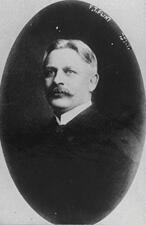
Here you will find contact information for Senator Frank Putnam Flint, including email address, phone number, and mailing address.
| Name | Frank Putnam Flint |
| Position | Senator |
| State | California |
| Party | Republican |
| Status | Former Representative |
| Term Start | December 4, 1905 |
| Term End | March 3, 1911 |
| Terms Served | 1 |
| Born | July 15, 1862 |
| Gender | Male |
| Bioguide ID | F000207 |
About Senator Frank Putnam Flint
Frank Putnam Flint (July 15, 1862 – February 11, 1929) was a Republican politician, attorney, banker, and fruit grower who represented California in the United States Senate from 1905 to 1911. Serving one term in office, he participated actively in the legislative process during a significant period in American history and holds the distinction of being the 1000th senator in overall seniority. As a senator from California, he represented the interests of his constituents while contributing to the broader democratic process of the early twentieth century.
Flint was born on July 15, 1862, in North Reading, Massachusetts, to Althea Louise (née Hewes) and Francis Eaton Flint. In 1869, when he was a child, his family moved to San Francisco, California, where he attended public schools. He suffered from asthma, a condition that affected him throughout his life. Seeking opportunity in the growing communities of Southern California, Flint moved to Orange and then to Los Angeles in 1888, at a time when the region was undergoing rapid development.
Flint’s professional career began in federal service and the law. In 1888 or 1890, he was appointed a clerk in the United States marshal’s office in Los Angeles, where he simultaneously began to study law. His abilities led to his appointment in 1892 as assistant United States attorney under Mathew Thompson Allen. After several years in government service, he resigned in 1893 and entered private practice, forming the law partnership of Allen, Allen & Flint, which continued for about two years until Allen became a judge. In 1895, Flint and Donald Barker reorganized the practice as the firm of Flint & Barker. His growing reputation as a lawyer and Republican activist culminated in his appointment in 1897 as United States Attorney for the Southern District of California, a post he held for four years, until 1901.
Flint’s legal and political prominence in Southern California helped propel him to national office. A committed Republican, he was active in party affairs and civic life in Los Angeles. In 1905 he entered the United States Senate as a Republican senator from California, serving until 1911. During his single term, he engaged in legislative work at a time of progressive reform and western expansion, representing California’s interests in matters such as infrastructure, water development, and regional planning. He did not seek reelection at the end of his term in 1911, concluding his formal congressional service after six years.
Outside of Congress, Flint was deeply involved in the civic, educational, and economic development of Southern California. In Los Angeles he was a member of the chamber of commerce and served on its law committee. He belonged to the Municipal League, the Sunset Club, the California Club, the Union League Club, and the Republican League, and was active in the Masonic order and the Knights Templar. A Presbyterian by faith, he attended the Presbyterian Church and served as a trustee of Occidental College. In 1914 he was elected president of the board of trustees of Occidental College, reflecting his long-standing interest in higher education. He was also a director of two financial institutions, the Equitable Savings Bank and the Los Angeles National Bank, and in 1915 became president of the Los Angeles Investment Company, a position he held until his resignation in October 1928.
Flint’s later career was marked by his advocacy for major public works and regional development. He served as chairman of the National Boulder Dam Association and was a prominent advocate for the construction of Boulder Dam on the Colorado River, a project later realized and renamed Hoover Dam. In Southern California, he played a major political role in bringing Owens Valley water to metropolitan Los Angeles, a critical step in the city’s growth. He also exerted influence on the built environment of the region; as a senator from California, he played a significant part in making the Mission style the official architectural style of government buildings in Southern California. Beyond politics and law, he was a fruit grower and a developer, and he became a majority stockholder in the Flintridge Country Club, although he withdrew his stake in 1927.
Flint’s personal life was closely tied to the Los Angeles area. On February 25, 1890, he married Katherine J. Bloss in Los Angeles, and the couple had two children. His brother, Motley H. Flint, served as postmaster of Los Angeles, underscoring the family’s public prominence in the region. Frank Flint resided on Flintridge Avenue in Pasadena and was instrumental in the development of the Flintridge area. His role in that development is commemorated in the name of the city of La Cañada Flintridge, California, which is named in part for him after Flintridge later merged with La Cañada in the late twentieth century.
Frank Putnam Flint died on February 11, 1929, aboard the S.S. President Polk near the harbor of Manila in the Philippine Islands. His death at sea while traveling abroad drew considerable attention in his home state. Upon the return of his remains, his body lay in state at Los Angeles City Hall, a mark of the esteem in which he was held by the community he had long served. He was interred at Forest Lawn Memorial Park Cemetery in Glendale, California. His legacy in law, politics, education, water and infrastructure development, and regional planning continues to be reflected in the institutions and communities of Southern California, including the Frank Putnam Flint Fountain and the city that bears part of his name.