Representative Frank William Fries
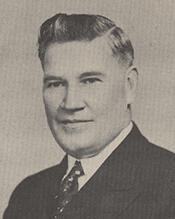
Here you will find contact information for Representative Frank William Fries, including email address, phone number, and mailing address.
| Name | Frank William Fries |
| Position | Representative |
| State | Illinois |
| District | 21 |
| Party | Democratic |
| Status | Former Representative |
| Term Start | January 5, 1937 |
| Term End | January 3, 1941 |
| Terms Served | 2 |
| Born | May 1, 1893 |
| Gender | Male |
| Bioguide ID | F000385 |
About Representative Frank William Fries
Frank William Fries was an American politician who served as a Democratic Representative from Illinois in the United States Congress from 1937 to 1941. His congressional career unfolded during a pivotal era in American history, as the nation grappled with the Great Depression and the evolving policies of the New Deal. As a member of the House of Representatives, Fries participated in the federal legislative process and represented the interests of his Illinois constituents over the course of two full terms in office. Within this role, he contributed to debates and votes on national economic recovery, social welfare, and other pressing issues of the late 1930s, helping to shape federal policy at a time of significant transformation in American public life.
Frank William Ernest Gibson, whose life and work are distinct from that of Congressman Fries, was born on 22 July 1923 in Melbourne, Victoria, Australia, to John William Gibson, a foreman stevedore employed by the Adelaide Steamship Company unloading coal, and Alice Ruby Gibson. He grew up in a working-class family alongside two sisters, Enid and Joan. Leaving formal schooling at the age of 14, he enrolled at Collingwood Technical College in Melbourne with the initial intention of training as a draughtsman. This early technical education and his proximity to others who moved into laboratory work would soon redirect his ambitions toward bacteriology and biochemistry, setting the foundation for a distinguished scientific career.
Gibson’s education followed an unconventional path. After Collingwood Technical College, he secured employment in the Bacteriology Department at the University of Melbourne, where his duties included preparing culture media and setting up laboratory equipment for undergraduate classes. His aptitude led to placement in the department’s research group, working under Sid Rubbo, who collaborated with Adrien Albert in Sydney. Encouraged to pursue formal qualifications, Gibson began a Diploma of Chemistry at the Working Men’s College—now the Royal Melbourne Institute of Technology—studying while employed. In 1939 he accepted a position as a technician in the new Bacteriology Department at the University of Queensland, a post that allowed him to undertake university study by night. Because he had never matriculated, he first spent a year completing the necessary subjects before beginning the science curriculum.
World War II interrupted Gibson’s academic progress. As a laboratory technician he was classified in a reserved occupation, creating tension between his own efforts to enlist and the university’s attempts to retain his services. Ultimately he was credited with 286 days of active service in Australia during the war. Afterward, he returned to Melbourne and completed his Bachelor of Science degree at the University of Melbourne, during which time he began conducting independent research that was published and attracted attention. Seeking advanced training at a time when Australian universities did not yet offer science doctorates, he applied for an Australian National University scholarship to pursue a DPhil at the University of Oxford. Although initially rejected, his application was eventually approved, and in 1949 he traveled to Oxford to work with D. D. Woods. His research on the biochemistry of amino acids, using both normal and mutant bacterial cells, culminated in a successful DPhil examination in 1953, assessed by Rudolph Peters and future Nobel laureate Hans Krebs.
Upon completion of his doctorate, Gibson returned to Australia in 1953 to accept a senior lectureship at the University of Melbourne, where he continued his research in chemical microbiology and was awarded a Doctor of Science (DSc) in 1964. In 1965 he was appointed to a personal chair in Chemical Microbiology at Melbourne. During this period, he, his wife Margaret, and their research group made their landmark discovery of chorismic acid, a key branching-point intermediate in the biosynthesis of aromatic compounds. Gibson later recounted that the name “chorismic” was suggested by his father-in-law, a Church of England clergyman and Greek scholar, who drew on a biblical phrase about two figures who “parted asunder,” proposing terms such as “apochorismate” and “chorismic” to reflect the compound’s role at a metabolic branch point; Gibson chose “chorismic” to avoid possible chemical confusion with the prefix “apo.”
In 1966 Gibson was appointed to the Chair of Biochemistry in the John Curtin School of Medical Research at The Australian National University (ANU) in Canberra. He was permitted to bring members of his Melbourne research team, and he and his family, along with five of his researchers and their families, relocated to Canberra, where they continued and expanded their work on chorismic acid and its many metabolites, including ubiquinone, central to the field of bioenergetics. Gibson’s investigations into adenosine triphosphate (ATP) led to a long-standing collaboration with Graeme Cox, who later became a professor at the John Curtin School. Gibson served as Professor of Biochemistry in the John Curtin School from 1967 to 1976 and again from 1980 to 1988, and from 1977 to 1980 he was Director and Howard Florey Professor of Medical Research there. His scientific achievements were recognized by numerous honors: he was elected a Fellow of the Australian Academy of Science in 1971 and a Fellow of the Royal Society of London in 1976, and he received awards including the David Syme Medal (1963), the Lemberg Medal and Lecture of the Australian Biochemical Society (1968), the Frederick Gowland Hopkins Medal of the Biochemical Society (UK) and the Leeuwenhoek Medal and Lecture of the Royal Society (both 1981), as well as the Frank Macfarlane Burnet Medal and Lecture of the Australian Academy of Science (1991). He held visiting and leadership roles such as Newton-Abraham Visiting Professor at Oxford and Vice-President of the Australian Academy of Science (1989–1990), and he was named Emeritus Professor and University Fellow at ANU in 1989. His service was further recognized with the Centenary Medal in 2001 and appointment as a Member of the Order of Australia in 2004.
In his personal life, Gibson married Margaret Isabel Nancy Burvill, a fellow science graduate from the University of Queensland, in 1949; she undertook a DPhil in physical chemistry at Oxford under Cyril Norman Hinshelwood. They had two daughters: Frances Joan Gibson, born in 1957, who later became a member of the independent band The Cannanes, and Ruth Enid Gibson, born in 1960 and deceased in 2004. After the end of his first marriage, he married lawyer Robin Margaret Barker (née Rollason) in 1980, and they had one son, Mark William Gibson, born in 1982. Frank William Ernest Gibson died on 11 July 2008, leaving a legacy as a pioneering Australian biochemist and molecular biologist whose work on chorismic acid, ubiquinone, and ATP significantly advanced understanding of microbial metabolism and bioenergetics, while Frank William Fries is remembered for his earlier public service as a Democratic member of the U.S. House of Representatives from Illinois during the consequential years from 1937 to 1941.