Representative Frank Hamilton Funk
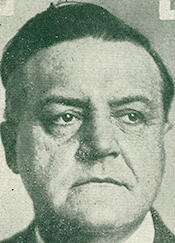
Here you will find contact information for Representative Frank Hamilton Funk, including email address, phone number, and mailing address.
| Name | Frank Hamilton Funk |
| Position | Representative |
| State | Illinois |
| District | 17 |
| Party | Republican |
| Status | Former Representative |
| Term Start | April 11, 1921 |
| Term End | March 4, 1927 |
| Terms Served | 3 |
| Born | April 5, 1869 |
| Gender | Male |
| Bioguide ID | F000428 |
About Representative Frank Hamilton Funk
Frank Hamilton Funk (April 5, 1869 – November 24, 1940) was a U.S. Representative from Illinois, a member of the Republican Party, and a prominent figure in early twentieth-century state and national politics. He was born in Bloomington, McLean County, Illinois, the son of Benjamin F. Funk, himself a former U.S. Representative, and the grandson of Isaac Funk, a noted pioneer, legislator, and founder of Funk’s Grove. Raised in a family long active in public affairs and agriculture, Funk grew up in central Illinois at a time when the region was developing rapidly in both farming and commerce.
Funk attended the public schools of Bloomington and continued his studies at the Illinois State Normal University in Normal, Illinois. He then enrolled at the Lawrenceville School in Lawrenceville, New Jersey, from which he graduated in 1888. Pursuing higher education in the East, he attended Yale University and was graduated in 1891. After completing his studies, Funk returned to Illinois, where he engaged in agricultural pursuits and livestock production in Bloomington, maintaining the family’s longstanding connection to farming and landholding in McLean County.
Funk’s formal political career began within the Republican Party organization. He served as a member of the Illinois Republican State Central Committee from 1906 to 1912, participating in party leadership and strategy during a period of growing internal division between conservative and progressive factions. In 1908 he was elected to the Illinois Senate from the 26th district, succeeding George W. Stubblefield. In that four-way race, he received 11,172 votes, defeating his Democratic opponent, who received 7,195 votes, as well as candidates of the Prohibition Party, who received 1,492 votes, and the Socialist Party, who received 192 votes. Funk served in the Illinois Senate from 1909 to 1913, where he took part in state legislative deliberations during the Progressive Era.
Aligning himself with the national Progressive movement, Funk became an important figure in the Progressive Party in Illinois. In 1912 he was the Progressive Party’s candidate for Governor of Illinois, though he was unsuccessful in that bid. He served as chairman of the Illinois delegation to the Progressive National Conventions in both 1912 and 1916, reflecting his prominence within the party and his close identification with its reform agenda. In 1913 he was the unsuccessful Progressive nominee for United States Senator from Illinois, further underscoring his role as a leading Progressive voice in the state.
Following his statewide campaigns, Funk continued in public service in a regulatory capacity. He served as a commissioner on the Illinois Public Utilities Commission from 1914 to 1921, a period in which state oversight of utilities and infrastructure was expanding in response to industrial growth and urbanization. In 1920 he returned formally to the Republican fold and served as a delegate to the Republican National Convention, participating in the nomination process that shaped national leadership in the post–World War I era.
Funk was elected as a Republican to the United States House of Representatives, serving in the Sixty-seventh, Sixty-eighth, and Sixty-ninth Congresses from March 4, 1921, to March 3, 1927. Representing Illinois in the House of Representatives during a significant period in American history marked by postwar adjustment, Prohibition, and economic expansion, Frank Hamilton Funk contributed to the legislative process over three consecutive terms in office. As a member of the House, he participated in the democratic process and represented the interests of his Illinois constituents within the broader national debates of the 1920s. In 1926 he was an unsuccessful candidate for renomination, bringing his congressional career to a close at the end of his third term.
After leaving Congress, Funk retired from public life and active business pursuits. He continued to reside in Bloomington, Illinois, maintaining his ties to the community and region where he had been born and where his family had long been established. Frank Hamilton Funk died in Bloomington on November 24, 1940. He was interred in Funk’s Grove Cemetery in Funk’s Grove, Illinois, a burial place closely associated with his family’s history and legacy in the state.