Representative Frank Edward Guernsey
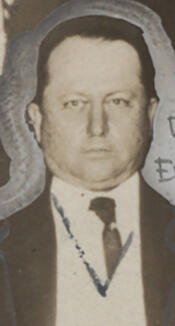
Here you will find contact information for Representative Frank Edward Guernsey, including email address, phone number, and mailing address.
| Name | Frank Edward Guernsey |
| Position | Representative |
| State | Maine |
| District | 4 |
| Party | Republican |
| Status | Former Representative |
| Term Start | December 2, 1907 |
| Term End | March 3, 1917 |
| Terms Served | 5 |
| Born | October 15, 1866 |
| Gender | Male |
| Bioguide ID | G000517 |
About Representative Frank Edward Guernsey
Frank Edward Guernsey (October 15, 1866 – January 1, 1927) was a Republican U.S. Representative from Maine who served in the United States Congress from 1907 to 1917. He was born in Dover, Piscataquis County, Maine, on October 15, 1866, the son of Edward Hersey Guernsey and Hannah (Thompson) Guernsey. Raised in rural Maine, he was educated in the local common schools before pursuing further study at several regional academies and seminaries, laying the foundation for a career in law, banking, and public service.
Guernsey attended Foxcroft Academy in Foxcroft, Maine, the East Maine Conference Seminary in Bucksport, Maine, and Wesleyan Seminary in Kents Hill, Maine. He later completed business studies at Eastman’s College in Poughkeepsie, New York, an institution known for commercial and practical training. On June 16, 1887, he married Josephine Frances Lyford in Vinalhaven, Maine. The couple made their home in Dover, where their son, Thompson L. Guernsey, was born on February 17, 1904. During these years, Guernsey combined family life with the steady advancement of his legal and political ambitions.
After his formal schooling, Guernsey studied law in the office of the Honorable Willis E. Parsons of Foxcroft, Maine. He was admitted to the bar in September 1890 and commenced the practice of law in Dover, Maine. That same year, in September 1890, he was elected treasurer of Piscataquis County, a position he would hold through two subsequent reelections, serving until December 31, 1896. His legal practice and county office made him a prominent figure in local affairs and provided him with administrative and financial experience that would later inform his work in banking and legislation.
Guernsey’s state-level political career began with his election to the Maine House of Representatives, where he served from 1897 to 1899. He later advanced to the Maine Senate, serving in 1903. These legislative roles gave him experience in state governance and policy-making at the turn of the twentieth century. In addition to his political work, Guernsey became active in the financial sector; in 1905 he was elected president of the Piscataquis Savings Bank, a position that underscored his standing in the business community. He also served as a trustee of the University of Maine, reflecting his engagement with higher education and public institutions in the state.
Guernsey entered national politics when he was elected as a Republican to the Sixtieth Congress to fill the vacancy caused by the death of Representative Llewellyn Powers. He was subsequently reelected to the Sixty-first and to the three succeeding Congresses, serving five terms in the U.S. House of Representatives from November 3, 1908, to March 3, 1917. During this significant period in American history, which encompassed the Progressive Era and the years leading up to U.S. involvement in World War I, Guernsey contributed to the legislative process as a member of the House of Representatives. As a Republican representative from Maine, he participated in the democratic process and represented the interests of his constituents in national debates over economic, social, and foreign policy issues. He also served as a delegate to the Republican National Convention in 1908, further cementing his role within the party’s state and national leadership.
At the conclusion of his fifth term, Guernsey chose not to run for reelection to the House. Instead, he sought higher office and became a candidate for the Republican nomination for United States Senator from Maine. He was unsuccessful in securing the nomination, which effectively ended his congressional career after March 3, 1917. Following his departure from Congress, he continued his involvement in business and civic affairs in Maine, drawing on his long experience in law, banking, and public service.
Frank Edward Guernsey died in Boston, Massachusetts, on January 1, 1927. His remains were returned to his home region in Maine, and he was interred in Dover Cemetery in Dover-Foxcroft, Maine. His career spanned local, state, and national office, and his decade of service in the U.S. House of Representatives marked him as a significant Republican figure from Maine in the early twentieth century.