Senator Frank Hiscock
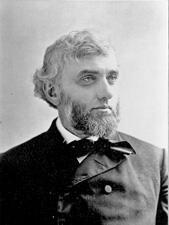
Here you will find contact information for Senator Frank Hiscock, including email address, phone number, and mailing address.
| Name | Frank Hiscock |
| Position | Senator |
| State | New York |
| Party | Republican |
| Status | Former Representative |
| Term Start | October 15, 1877 |
| Term End | March 3, 1893 |
| Terms Served | 6 |
| Born | September 6, 1834 |
| Gender | Male |
| Bioguide ID | H000643 |
About Senator Frank Hiscock
Frank Hiscock (September 6, 1834 – June 18, 1914) was an American lawyer and politician who served as both a U.S. Representative and a U.S. Senator from New York. A member of the Republican Party, he contributed to the legislative process during six terms in office and, in total, represented New York in the United States Congress from 1877 to 1893. His congressional service occurred during a significant period in American history, and he participated in the democratic process while representing the interests of his constituents at both the House and Senate levels.
Hiscock was born in Pompey, Onondaga County, New York, on September 6, 1834. He was educated at Pompey Academy, a local institution that prepared him for professional study, and afterward read law under the guidance of his elder brother, L. Harris Hiscock. He was admitted to the bar in 1855 and commenced the practice of law in Tully, Onondaga County, New York. The brothers later became founders of a Syracuse law firm that evolved into the prominent firm known in modern times as Hiscock & Barclay, establishing the family’s long-standing legal presence in central New York.
In his early political life, Hiscock was initially aligned with anti-slavery Democrats and then with the Free Soil Party, reflecting his opposition to the expansion of slavery. With the organization of the Republican Party in the 1850s, he joined its ranks and remained a Republican for the rest of his public career. He served as district attorney of Onondaga County from 1860 to 1863, gaining experience in public prosecution during the opening years of the Civil War. In 1867 he was chosen a member of the New York State constitutional convention, elected to fill the vacancy caused by the death of his brother, L. Harris Hiscock. His growing prominence in party affairs was further demonstrated when he supported Liberal Republican nominee Horace Greeley for President in 1872 and served as a delegate to the Republican National Convention in 1876.
Hiscock entered national office when he was elected as a Republican to the Forty-fifth Congress and to the four succeeding Congresses, serving as a U.S. Representative from March 4, 1877, to March 3, 1887. During his decade in the House of Representatives, he took part in debates and legislation that reflected the post–Civil War and Gilded Age concerns of industrial growth, federal finance, and reconstruction of the national economy. He attained a position of influence as chairman of the House Committee on Appropriations in the Forty-seventh Congress, where he played a key role in overseeing federal expenditures. He was reelected in 1886 for the term beginning March 4, 1887, but resigned his House seat after being chosen to the United States Senate in January 1887.
In the contest for the Senate, Hiscock was elected by the New York State Legislature, prevailing in the Republican caucus over incumbent Senator Warner Miller and former Representative and future Vice President Levi P. Morton, and then defeating Democrat Smith M. Weed in the vote of the full legislature. He served as a United States Senator from New York from March 4, 1887, to March 3, 1893. In the Senate, he continued his work on governmental organization and fiscal oversight, serving as chairman of the Committee on Organization, Conduct, and Expenditures of Executive Departments during the Fifty-first and Fifty-second Congresses. His six years in the Senate coincided with a period of intense national debate over tariffs, monetary policy, and civil service reform. He was an unsuccessful candidate for reelection in 1893, which brought his continuous congressional service of sixteen years—ten in the House and six in the Senate—to a close.
After leaving the Senate, Hiscock resumed the practice of law in Syracuse, New York, returning to the profession in which he had first established his reputation. He remained an influential figure in legal and civic circles, maintaining his association with the firm he had helped found and continuing to be identified with the Republican Party and public affairs, though he did not again hold elective office.
On November 23, 1859, Hiscock married Cornelia King (1837–1908). The couple’s children included sons Albert King Hiscock (1861–1908) and Fidelio King Hiscock (1869–1917). Following the death of his brother L. Harris Hiscock, Frank Hiscock and his wife also raised their nephew, Frank H. Hiscock, further cementing the family’s multigenerational involvement in the legal profession and public life in central New York.
Frank Hiscock died in Syracuse on June 18, 1914, of apoplexy. He was interred in Oakwood Cemetery in Syracuse, closing a career that had spanned local, state, and national service and had included sixteen consecutive years in the United States Congress from 1877 to 1893.