Representative Frank Mascara
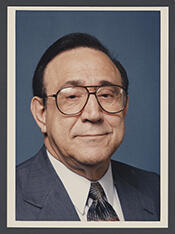
Here you will find contact information for Representative Frank Mascara, including email address, phone number, and mailing address.
| Name | Frank Mascara |
| Position | Representative |
| State | Pennsylvania |
| District | 20 |
| Party | Democratic |
| Status | Former Representative |
| Term Start | January 4, 1995 |
| Term End | January 3, 2003 |
| Terms Served | 4 |
| Born | January 19, 1930 |
| Gender | Male |
| Bioguide ID | M000212 |
About Representative Frank Mascara
Frank Robert Mascara (January 19, 1930 – July 10, 2011) was an American Democratic politician from Pennsylvania who served four terms in the United States House of Representatives from 1995 to 2003. A member of the Democratic Party, he represented a district based in the southern suburbs of Pittsburgh and contributed to the legislative process during a significant period in American political history, participating in the democratic process and representing the interests of his constituents.
Mascara was born on January 19, 1930, and grew up in Charleroi, Pennsylvania, a working-class community in the Monongahela Valley south of Pittsburgh. His upbringing in this industrial region helped shape the blue-collar, working-class image he later projected throughout his political career. After World War II, he briefly served in the United States Army, entering military service in the immediate postwar period. Following his time in the Army, he returned to western Pennsylvania, where he began building a professional life that would eventually lead him into public service.
While working and raising a family, Mascara pursued higher education later in life. He attended California University of Pennsylvania, a public university located in California, Pennsylvania, and obtained a Bachelor of Arts degree in 1972. Trained as an accountant, he worked in that profession before entering politics. His experience as an accountant, combined with his local roots and familiarity with the economic challenges of his region, provided a foundation for his subsequent roles in county and federal government, particularly in matters related to fiscal oversight and public administration.
Mascara’s formal political career began in Washington County, near Pittsburgh, where he would serve as an elected official for nearly two decades. He was elected Washington County controller in 1973, a position that placed him in charge of monitoring county finances and expenditures. In 1979 he was elected to the Washington County Commission, where he served for 15 years, many of them as chairman of the commission. During this period he became a prominent Democratic figure in southwestern Pennsylvania and developed a reputation as a political powerbroker among Democrats, known for his ability to secure funding and support for local projects and for his close ties to labor and working-class constituencies.
Mascara first sought a seat in Congress in 1992, when he launched a primary challenge to U.S. Representative Austin Murphy, a 16-year Democratic incumbent, in Pennsylvania’s 20th Congressional District, which then comprised most of the southern suburbs of Pittsburgh. In a closely contested race, Mascara lost the Democratic primary by roughly 3,000 votes. When Murphy retired two years later, Mascara again sought the seat and, in 1994, he handily won the Democratic primary to replace him. Although the 20th District was considered the most Democratic district in Pennsylvania outside the districts based in Philadelphia and Pittsburgh, Mascara faced a competitive general election and earned a narrow victory over Republican businessman Mike McCormick. He faced McCormick again in 1996 and once more prevailed by a narrow margin. The district then reverted to its traditional partisan pattern, and Mascara was unopposed in 1998. He easily won a fourth term in 2000, solidifying his position as the district’s representative.
In Congress, Mascara served from January 3, 1995, to January 3, 2003. He was generally regarded as a moderate Democrat. He opposed abortion and gun control, positions that distinguished him from many in his party, but his overall voting record was otherwise consistent with the Democratic line. He was known for his effectiveness in securing federal money for local infrastructure and economic development projects in his district, reinforcing his standing as an advocate for the Mon Valley and surrounding communities. Both in Washington and at home, Mascara cultivated a plainspoken, unpretentious persona that resonated with many of his constituents. He frequently emphasized his personal rectitude and modest lifestyle, once summarizing his approach by saying, “I don’t go to the nightclubs and big restaurants. … I don’t drink. I don’t gamble. I don’t whore around.”
Mascara’s congressional career was dramatically affected by redistricting following the 2000 Census. The Republican-controlled Pennsylvania state legislature significantly altered his district, which was renumbered from the 20th to the 18th District. The new 18th District was considerably more affluent than its predecessor and somewhat more favorable to Republicans, even though it still contained approximately 70,000 more registered Democrats than Republicans. A large portion of the territory Mascara had represented for eight years was shifted into the neighboring Johnstown-based 12th District, represented by long-serving Democrat John Murtha. The redrawn lines were widely criticized for their contorted shape and for splitting neighborhoods and communities. In some instances, one side of a street fell into the 18th District while the other side was placed in the 12th, and in other cases one side of the street was in the 18th while the opposite side was in the Pittsburgh-based 14th District. In one of the most striking examples, most of Mascara’s hometown of Charleroi—including most of his own neighborhood—was drawn into the 12th District, while a narrow tendril extending from his house toward Allegheny County remained in the 18th.
Confronted with these changes, Mascara chose not to run in the newly configured 18th District and instead entered the Democratic primary in the 12th District against John Murtha, calculating that the redrawn 12th contained more of his former constituents than Murtha’s. The 2002 primary campaign between the two veteran Democrats was contentious and marked by negative advertising and sharp personal and political attacks. When the votes were counted, Murtha defeated Mascara by a wider margin than many observers had anticipated. With Murtha retaining the 12th District seat, the reconfigured 18th District was subsequently won by Republican State Senator Tim Murphy. Mascara’s defeat in the primary effectively ended his service in Congress in January 2003, concluding four consecutive terms in the U.S. House of Representatives.
In his later years, Mascara remained a well-known figure in southwestern Pennsylvania Democratic circles and part of a broader local political family often described as a political dynasty in the region. He continued to be remembered for his advocacy on behalf of working-class communities and his role in channeling federal resources to local projects. Frank Robert Mascara died of lung cancer on July 10, 2011, at Mon Valley Hospital in Monongahela, Pennsylvania. His death marked the passing of a prominent Democratic leader whose career spanned local, county, and federal office and reflected the political and economic shifts of southwestern Pennsylvania in the late twentieth and early twenty-first centuries.