Senator Frank H. Murkowski
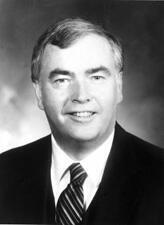
Here you will find contact information for Senator Frank H. Murkowski, including email address, phone number, and mailing address.
| Name | Frank H. Murkowski |
| Position | Senator |
| State | Alaska |
| Party | Republican |
| Status | Former Representative |
| Term Start | January 5, 1981 |
| Term End | December 19, 2002 |
| Terms Served | 11 |
| Born | March 28, 1933 |
| Gender | Male |
| Bioguide ID | M001085 |
About Senator Frank H. Murkowski
Frank Hughes Murkowski (born March 28, 1933) is an American politician who represented Alaska in the United States Senate from 1981 to 2002 and served as the eighth governor of Alaska from 2002 to 2006. A member of the Republican Party, he held federal and state office over a span of more than a quarter century, contributing to the legislative process during four terms in the Senate and one term as governor during a significant period in American and Alaskan political history.
Murkowski was born in Seattle, Washington, the son of Helen (née Hughes) and Frank M. Murkowski. His paternal grandfather was of Polish descent. During his childhood, his family developed close ties to Alaska, and he later attended Ketchikan High School in Ketchikan, Alaska, from which he graduated in 1951. He pursued higher education at Santa Clara University from 1951 to 1953, then transferred to Seattle University, where he earned a Bachelor of Science degree in economics in 1955. That same year, he joined the United States Coast Guard, serving from the summer of 1955 until 1957. During his Coast Guard service he was stationed in Sitka and Ketchikan, Alaska, and served aboard the cutters Sorrel and Thistle. His daughter Lisa, later his appointee and successor in the U.S. Senate, was born in 1957. Another daughter, Carol, later married the son of Alaska State Senator Arliss Sturgulewski, herself a former Republican gubernatorial nominee.
Following his military service, Murkowski embarked on a career in banking and economic development closely tied to Alaska’s emerging financial sector. He worked for Pacific National Bank and undertook further professional study at the Pacific Coast Banking School. In the mid-1960s he entered public service in Alaska’s state government and, at age 33, became Alaska’s youngest commissioner when he was appointed Commissioner of Economic Development. In that role he promoted investment and resource development in the young state’s economy. He later joined the Alaska National Bank of the North, where he rose to the presidency in 1971. Murkowski also served as head of the Alaska Bankers Association and, in 1977, as president of the Alaska State Chamber of Commerce, positions that enhanced his profile as a leading advocate for business and economic growth in Alaska.
Murkowski first sought federal office in 1970, when he ran as the Republican nominee for Alaska’s sole seat in the United States House of Representatives. In that election he was defeated in a landslide by Democratic state senator Nick Begich, who received 55 percent of the vote to Murkowski’s 45 percent. A decade later, in 1980, Murkowski successfully ran for the United States Senate, defeating Democratic candidate Clark Gruening with 54 percent of the vote to Gruening’s 46 percent, a victory aided in part by the national popularity of Republican presidential nominee Ronald Reagan. He was reelected to the Senate in 1986 with 54 percent of the vote against Democrat Glenn Olds, who received 44 percent; in 1992 with 53 percent against Democrat Tony Smith, who received 38 percent, and Green Party candidate Mary Jordan, who received 8 percent; and in 1998 with 75 percent of the vote against Democrat Joe Sonneman, who received 20 percent.
During his 21 years in the Senate, Murkowski served as Alaska’s junior senator and became particularly prominent on energy and natural resource issues. He was most notable as chairman of the Senate Energy and Natural Resources Committee from 1995 to 2001, a period during which he strongly advocated expanded domestic energy production. As chair, he argued vigorously and attempted, ultimately unsuccessfully, to open the Arctic National Wildlife Refuge (ANWR) to oil drilling, contending that it was vital to national energy security and Alaska’s economy. A consistent conservative on social issues, Murkowski maintained an anti-abortion voting record and opposed gun control and affirmative action. In debates over the policy then barring homosexuals from serving openly in the military, he stated on the Senate floor that homosexuals had a right to choose their lifestyle but that there was no inherent right to serve in the armed forces. His opposition to lifting the ban focused in part on the projected cost to the Veterans Administration of treating service members infected with HIV. His daughter and eventual successor in the Senate, Lisa Murkowski, would later take different positions, voting to repeal the ban on homosexuals in the armed services and becoming the third Republican senator to endorse the legalization of same-sex marriage while in office.
In 2002, Murkowski sought to transition from federal to state executive leadership by running for governor of Alaska to succeed term-limited Democratic incumbent Tony Knowles. In the general election held on November 5, 2002, he defeated Democratic Lieutenant Governor Fran Ulmer, receiving nearly 56 percent of the vote to Ulmer’s 41 percent, the highest percentage for any Republican gubernatorial nominee in Alaska history up to that time. He resigned his U.S. Senate seat upon his inauguration as governor on December 2, 2002, ending his 21-year Senate career. In a controversial move that drew widespread criticism and accusations of nepotism, he appointed his daughter, Lisa Murkowski—then the Majority Leader-designate of the Alaska House of Representatives—to fill the vacant Senate seat.
As governor, Murkowski focused on resource development, particularly efforts to commercialize North Slope natural gas through a major gas pipeline project. Toward the end of his administration, he brokered a proposed gas pipeline agreement that, in its final form, was never taken up by the Alaska Legislature. When he threatened to sign the deal without legislative approval, the legislature successfully brought a lawsuit to enjoin him from doing so, underscoring tensions between the executive and legislative branches over control of resource policy. His administration also became associated in the public mind with a controversial 2005 purchase of a Westwind II jet for $2.7 million in state funds, made despite opposition from the Alaska Legislature. The aircraft became a symbol of what critics viewed as gubernatorial excess, and his successor, Sarah Palin, campaigned in part on a promise to sell the jet once she became governor.
Murkowski sought reelection in 2006 but faced significant public dissatisfaction with his administration. In the Republican primary held on August 22, 2006, he finished third behind former Wasilla mayor Sarah Palin and businessman John Binkley. Palin won the primary with 51 percent of the vote, Binkley received 30 percent, and Murkowski, the incumbent, received 19 percent. His margin of defeat was the largest suffered by an incumbent governor in any Republican primary in United States history. By the end of his term, his job-approval rating had fallen to approximately 19 percent, making him one of the most unpopular governors in the nation. He left office in December 2006, concluding four years as governor and bringing his total public service to 27 years: two years in the armed services, 21 years as Alaska’s junior senator in Washington, D.C., and four years as governor.
In the years following his governorship, Murkowski’s name continued to surface in connection with investigations into Alaska politics, though not as a defendant. On March 4, 2008, his former chief of staff, Jim Clark, admitted that he was aware that the oil services company Veco Corp. had paid $10,000 for a political poll to gauge the popularity of then-incumbent Governor Murkowski. Clark was charged with “honest services fraud,” but before sentencing the U.S. Supreme Court narrowed the scope of the honest-services statute to cover only fraudulent schemes involving bribes or kickbacks. Because Clark’s conduct did not involve bribes or kickbacks, all charges against him were voided. Murkowski himself was not charged in the case. Remaining active in public discourse, Murkowski considered attempting a return to the governorship in the 2018 election but ultimately decided against running, closing his career as one of the most enduring and controversial figures in modern Alaskan political history.