Senator Frank Charles Partridge
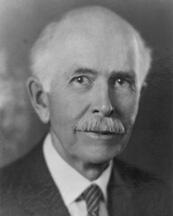
Here you will find contact information for Senator Frank Charles Partridge, including email address, phone number, and mailing address.
| Name | Frank Charles Partridge |
| Position | Senator |
| State | Vermont |
| Party | Republican |
| Status | Former Representative |
| Term Start | December 23, 1930 |
| Term End | December 31, 1931 |
| Terms Served | 1 |
| Born | May 7, 1861 |
| Gender | Male |
| Bioguide ID | P000091 |
About Senator Frank Charles Partridge
Frank Charles Partridge (May 7, 1861 – March 2, 1943) was an American attorney, diplomat, business executive, and Republican politician from Vermont who served as a United States Senator from 1930 to 1931. Appointed to the Senate to fill the vacancy caused by the death of Senator Frank L. Greene, he served one brief term, during which he participated in the legislative process and represented the interests of his Vermont constituents at a significant moment in American history. Over the course of his long career, Partridge held a wide range of local, state, national, and international posts and became recognized as a senior statesman in Vermont public life.
Partridge was born in East Middlebury, Addison County, Vermont, on May 7, 1861. He was the son of Sarah Ann Rice (1835–1919), a descendant of a long-established New England family whose lineage traced back through Luther Rice (1799–1876), Eliakim Rice (1756–1834), Zebulon Rice (1725–1799), Elisha Rice (1679–1761), Thomas Rice (1626–1681), and ultimately to Edmund Rice (1594–1663), an early Massachusetts settler. Raised in Middlebury, he received his early education there and attended Middlebury College before transferring to Amherst College in Massachusetts, from which he graduated in 1882. He then pursued legal studies at Columbia Law School in New York City, earning his law degree in 1884 and gaining admission to the bar.
After completing his legal education, Partridge returned to Vermont and began practicing law in Rutland. His legal work soon intersected with the state’s industrial and political life through his association with the Vermont Marble Company, headquartered in the company town of Proctor. Closely aligned with the company’s owners, the influential Proctor family, he became deeply involved in the firm’s management. Beginning in the mid-1880s, he advanced steadily through Vermont Marble’s corporate ranks, serving successively as treasurer, vice president, president, and ultimately chairman of the board. In addition to his leadership at Vermont Marble, he was affiliated with other Proctor family enterprises, including the Proctor Trust Company and the Clarendon and Pittsford Railroad, reinforcing his status as a prominent business figure in the state.
Partridge’s business prominence was paralleled by extensive service in local government in Proctor, Vermont. A committed Republican, he served as Proctor Town Clerk from 1887 to 1889 and as a member of the local school board from 1888 to 1889. His close relationship with Redfield Proctor, the Vermont Marble magnate who became Governor of Vermont and then U.S. Secretary of War, opened the way to national service. When Redfield Proctor served as Secretary of War from 1889 to 1890, Partridge was appointed his private secretary, gaining valuable experience in federal administration and national politics. This connection to a powerful cabinet officer who later entered the U.S. Senate helped propel Partridge into a series of diplomatic and legal posts at the national level.
In 1890 Partridge was appointed Solicitor of the Department of State, a senior legal position he held until 1893. He then entered the diplomatic corps as United States Ambassador to Venezuela, serving from 1893 to 1894, a period marked by active U.S. engagement in Latin American affairs. Later, from 1897 to 1898, he served as U.S. Consul in Tangier, Morocco, representing American commercial and political interests in North Africa. Returning to Vermont, he entered elective office as a member of the Vermont Senate, serving from 1898 to 1900. His expertise in international law and diplomacy was further recognized through his service on the executive council of the American Society of International Law from 1906 to 1923, and in 1909 he chaired the commission charged with proposing amendments to the Constitution of Vermont.
By the 1910s and 1920s, Partridge had acquired a reputation as a senior statesman and civic leader in Vermont. During World War I he served on Vermont’s Committee of Public Safety from 1917 to 1919, helping to coordinate the state’s mobilization and wartime activities. In 1923 he was a delegate to the Fifth Pan-American Conference in Santiago, Chile, reflecting his continued involvement in hemispheric diplomatic affairs. He also served as a member of the New England Council from 1925 to 1927, participating in regional economic and policy discussions. Following the devastating Great Flood of 1927, he played a key role in Vermont’s recovery as president of the Vermont Flood Credit Corporation, a public corporation organized to assist in financing reconstruction and economic stabilization.
Partridge’s long record of public and party service culminated in his brief tenure in the United States Senate. On December 23, 1930, Governor John E. Weeks appointed him to the Senate to fill the vacancy created by the death of Senator Frank L. Greene. As a Republican Senator from Vermont, he served from late 1930 into 1931, taking part in the legislative and democratic processes during the early years of the Great Depression. His appointment made him part of Vermont’s longstanding Republican delegation in Congress, and he contributed to the work of the Senate during his short term in office. Seeking to continue in the seat, he entered the Republican primary in March 1931 but lost the nomination to Warren R. Austin. In overwhelmingly Republican Vermont, Austin went on to win the general election easily over Democrat Stephen M. Driscoll, bringing Partridge’s congressional service to a close.
After leaving the Senate, Partridge remained a respected figure in Vermont public and business life. He retired from active business leadership in 1935 and continued to reside in Proctor, maintaining his association with the community that had been the center of his professional and political career. Frank Charles Partridge died in Proctor, Vermont, on March 2, 1943. He was interred at South Street Cemetery in Proctor, leaving a legacy as an attorney, diplomat, industrial leader, and public servant whose career spanned local office, international diplomacy, state legislative service, and the United States Senate.