Representative Frank Douglas Scott
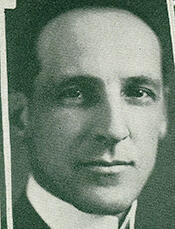
Here you will find contact information for Representative Frank Douglas Scott, including email address, phone number, and mailing address.
| Name | Frank Douglas Scott |
| Position | Representative |
| State | Michigan |
| District | 11 |
| Party | Republican |
| Status | Former Representative |
| Term Start | December 6, 1915 |
| Term End | March 4, 1927 |
| Terms Served | 6 |
| Born | August 25, 1878 |
| Gender | Male |
| Bioguide ID | S000169 |
About Representative Frank Douglas Scott
Frank Douglas Scott (August 25, 1878 – February 12, 1951) was a Republican politician and attorney from the U.S. state of Michigan who represented Michigan in the United States House of Representatives from 1915 to 1927. Over the course of six consecutive terms in Congress, he participated actively in the legislative process during a period marked by World War I, the postwar transition, and the early years of the 1920s, representing the interests of his constituents in Michigan’s 11th congressional district.
Scott was born of Scottish ancestry in Alpena, Alpena County, Michigan, where he attended the public schools. He pursued higher education at the University of Michigan in Ann Arbor, enrolling in the law department and graduating in 1901. Admitted to the bar the same year, he immediately commenced the practice of law in his hometown of Alpena, establishing himself professionally in the community at the outset of the twentieth century.
Scott’s early public career developed through local legal and municipal service. He served as city attorney of Alpena from 1903 to 1904 and subsequently as city prosecutor from 1906 to 1910. These positions gave him experience in municipal governance and public law enforcement and helped build his reputation as a capable lawyer and public servant in northeastern Michigan.
Advancing to state office, Scott was elected to the Michigan Senate from the 29th district, serving from 1911 to 1914. During his tenure in the state legislature he rose quickly in influence, serving as president pro tempore of the Michigan Senate in 1913 and 1914. In that role he helped preside over legislative proceedings and participated in shaping state policy during a period of progressive-era reforms and expanding state governmental responsibilities.
In 1914, Scott was elected as a Republican from Michigan’s 11th congressional district to the 64th Congress. He was subsequently re-elected to the five succeeding Congresses, serving in the U.S. House of Representatives from March 4, 1915, to March 3, 1927. His twelve years in Congress spanned the administrations of Woodrow Wilson, Warren G. Harding, and Calvin Coolidge, and encompassed the nation’s involvement in World War I and the onset of the Roaring Twenties. During the 69th Congress, he served as chairman of the House Committee on Merchant Marine and Fisheries, a key committee with jurisdiction over maritime commerce, shipping, and related regulatory matters, reflecting both the importance of Great Lakes shipping to Michigan and the broader national interest in commercial and naval maritime policy.
Scott’s congressional service ended following the 1926 election cycle. Seeking another term, he was an unsuccessful candidate for re-nomination in the Republican primary, losing to fellow Republican Frank P. Bohn. His defeat in the primary concluded a dozen-year tenure in the House, during which he had been a consistent participant in the legislative work of the chamber and a representative voice for his largely northern Michigan constituency.
After leaving Congress, Frank D. Scott resumed the practice of law, this time establishing himself professionally in Washington, D.C., where his experience and connections from years of federal service informed his legal work. Outside his formal public duties, he was active in fraternal and civic organizations and was a member of the Freemasons, the Benevolent and Protective Order of Elks, and the Independent Order of Odd Fellows, reflecting a pattern of engagement in community and social institutions common among public figures of his era.
Scott died at the age of seventy-two on February 12, 1951, in Palm Beach, Florida. He was returned to his native Michigan for burial and is interred at Evergreen Cemetery in Alpena, the community where he had been born, educated in the public schools, begun his legal career, and first entered public life.