Representative Frank Charles Wachter
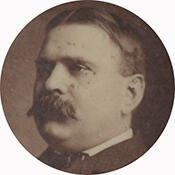
Here you will find contact information for Representative Frank Charles Wachter, including email address, phone number, and mailing address.
| Name | Frank Charles Wachter |
| Position | Representative |
| State | Maryland |
| District | 3 |
| Party | Republican |
| Status | Former Representative |
| Term Start | December 4, 1899 |
| Term End | March 3, 1907 |
| Terms Served | 4 |
| Born | September 16, 1861 |
| Gender | Male |
| Bioguide ID | W000001 |
About Representative Frank Charles Wachter
Frank Charles Wachter (September 16, 1861 – July 1, 1910) was an American politician and Congressman from Maryland. Born in Baltimore, Maryland, to German immigrant parents, he grew up in a community shaped by the city’s substantial German-American population. He attended private schools and St. Paul’s Evangelical School in Baltimore, receiving an education that combined general academic instruction with religious and moral training typical of parochial institutions of the period.
After completing his schooling, Wachter learned the trade of cloth cutting, entering a skilled craft that supported Baltimore’s growing commercial and manufacturing sectors. By 1892 he had advanced in this line of work sufficiently to engage in the cloth-shrinking business on his own account, establishing himself in the city’s business community. His experience in trade and industry helped ground his later public service in the practical concerns of working people and local enterprise.
Wachter’s involvement in public affairs began at the municipal level in Baltimore. He served as a member of the jail board of Baltimore from 1896 to 1898, participating in the oversight of local correctional administration at a time when urban governance and public institutions were undergoing reform. In 1898 he sought to expand his role in city government as a candidate for police commissioner of Baltimore, though he was unsuccessful in that bid. These early positions nonetheless marked his emergence as a Republican figure in local politics and provided him with administrative experience that would inform his subsequent legislative career.
A member of the Republican Party, Wachter was elected to the United States House of Representatives as a Republican to the Fifty-sixth Congress and was reelected to the three succeeding Congresses, serving four consecutive terms from March 4, 1899, to March 3, 1907. Representing Maryland in the House of Representatives, he contributed to the legislative process during a significant period in American history that encompassed the turn of the twentieth century, the aftermath of the Spanish-American War, and the early years of the Progressive Era. During his tenure, he participated in the democratic process and represented the interests of his Maryland constituents, aligning with Republican policies of the era while engaging in the routine work of committee service, debate, and lawmaking.
Wachter’s congressional service from 1899 to 1907 placed him in the national legislature at a time of expanding federal authority and growing attention to issues such as economic regulation, infrastructure, and America’s emerging role on the world stage. Over the course of his four terms in office, he maintained his ties to Baltimore and Maryland politics, reflecting the concerns of an urban, industrializing constituency within the broader framework of Republican leadership at the federal level. He chose not to be a candidate for renomination in 1906, thereby concluding his service in Congress at the end of the Fifty-ninth Congress.
After leaving Congress, Wachter returned to Baltimore and resumed his former business pursuits in the cloth-shrinking trade, reestablishing himself in the commercial life from which he had originally emerged. His continued engagement in public service, however, did not end with his departure from the House. In 1909 he was appointed a member of the board of managers of the Maryland Penitentiary, a position he held until his death. In that capacity he contributed to the oversight of the state’s penal system, extending his earlier experience on Baltimore’s jail board to the state level and reflecting a sustained interest in correctional administration and institutional governance.
Frank Charles Wachter died in Baltimore, Maryland, on July 1, 1910. His death brought to a close a career that combined business activity with local and national public service. He was interred in Loudon Park Cemetery in Baltimore, a resting place for many of the city’s notable figures, underscoring his lifelong connection to the community in which he was born, worked, and served.