Senator Frank Bartlett Willis
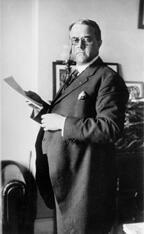
Here you will find contact information for Senator Frank Bartlett Willis, including email address, phone number, and mailing address.
| Name | Frank Bartlett Willis |
| Position | Senator |
| State | Ohio |
| Party | Republican |
| Status | Former Representative |
| Term Start | April 4, 1911 |
| Term End | March 3, 1929 |
| Terms Served | 4 |
| Born | December 28, 1871 |
| Gender | Male |
| Bioguide ID | W000561 |
About Senator Frank Bartlett Willis
Frank Bartlett Willis (December 28, 1871 – March 30, 1928) was an American politician and lawyer who served as the 47th governor of Ohio and later as a United States senator from Ohio. A member of the Republican Party, he contributed to the legislative process during a significant period in American history and represented the interests of his constituents in both the U.S. House of Representatives and the U.S. Senate. Over the course of his public career, he held office at the state and national levels from the opening years of the twentieth century until his death in 1928.
Willis was born on a farm near the hamlet of Lewis Center, Delaware County, Ohio, on December 28, 1871. He was the son of J. B. Willis, a Civil War veteran originally from Vermont, and Lavinia A. (Buell) Willis. Raised in a rural environment in central Ohio, he grew up in the post–Civil War era in a family that had direct ties to the Union war effort, an experience that helped shape his outlook and later public service. His early life on the farm and in small-town Ohio provided the backdrop for his later political identification with the interests of ordinary citizens and his long-standing connection to the state.
Willis pursued higher education at Ohio Northern University in Ada, Ohio, from which he graduated in 1894. Following his graduation, he joined the faculty of Ohio Northern, where he taught for twelve years, including at the law school. During this period he studied law, was admitted to the bar, and began practicing as an attorney while continuing his academic duties. His dual roles as educator and lawyer established his professional standing in Ohio and prepared him for a career in public office, combining legal training with experience in teaching and public speaking.
Willis entered elective office in the Ohio House of Representatives, serving from 1900 to 1904. While a state legislator, he continued to teach at the Ohio Northern University school of law, maintaining his ties to legal education. Building on his state legislative experience, he was elected as a Republican to the U.S. House of Representatives in 1910. He served in the House from 1911 to 1915, participating in the national legislative process during a period of progressive-era reforms and representing his Ohio district in the 62nd and 63rd Congresses. His service in Congress from 1911 to 1915 marked the beginning of what would become nearly two decades of involvement in federal legislative affairs.
In 1914 Willis successfully ran for governor of Ohio and was elected as the state’s 47th governor. He served one two-year term from 1915 to 1917. In that election he defeated Democrat James M. Cox, but in his bid for re-election in 1916 he was in turn defeated by Cox, who reclaimed the governorship. Willis remained an influential Republican figure in Ohio politics and again faced Cox in 1918, when Cox once more defeated him. Despite these setbacks at the state level, Willis’s prominence within the Republican Party continued to grow, and he played a notable role at the national level when he placed the name of Warren G. Harding in nomination for the presidency at the 1920 Republican National Convention.
Following Harding’s nomination and subsequent election to the presidency, Willis was elected to the United States Senate from Ohio in 1920. He succeeded Harding in the Senate, and when Harding resigned his Senate seat to assume the presidency in March 1921, Willis was able to take his Senate seat early. He served as a U.S. senator from Ohio from 1921 until his death in 1928. During his Senate tenure, he was Chairman of the Senate Committee on Territories and Insular Possessions from 1923 to 1928, a committee that had jurisdiction over U.S. territories including Alaska, Hawaii, the Philippines, and Puerto Rico. As a senator, he participated in the democratic process and contributed to legislative deliberations during the post–World War I and early 1920s period, representing Ohio in the upper chamber of Congress throughout the decade.
In his later years, Willis sought to extend his political career to the highest national office. He aspired to be Ohio’s “favorite son” candidate for the Republican presidential nomination in 1928 and was actively engaged in efforts to build support for his candidacy within the state. On March 30, 1928, while attending a Republican Party event at Gray Chapel on the campus of Ohio Wesleyan University in Delaware, Ohio, organized by the Delaware County Willis-for-President Club, he died in office. His death placed him among the members of the United States Congress who died in office between 1900 and 1949. He was buried in Oak Grove Cemetery in Delaware, Ohio.
Willis’s personal life was rooted in Ohio as well. He was married to Allie Dustin, and the couple had one daughter, Helen. His legacy in the state has been commemorated in various ways, including the naming of the Frank B. Willis Education Center (formerly Intermediate School and High School) of Delaware City Schools in his honor. His official papers were donated to the Ohio History Center, where they are open for research and provide documentation of his career as a legislator, governor, and U.S. senator.