Representative Franklin Bound
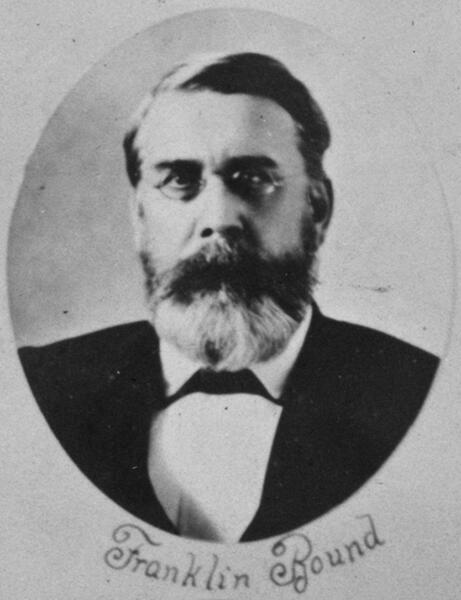
Here you will find contact information for Representative Franklin Bound, including email address, phone number, and mailing address.
| Name | Franklin Bound |
| Position | Representative |
| State | Pennsylvania |
| District | 14 |
| Party | Republican |
| Status | Former Representative |
| Term Start | December 7, 1885 |
| Term End | March 3, 1889 |
| Terms Served | 2 |
| Born | April 9, 1829 |
| Gender | Male |
| Bioguide ID | B000667 |
About Representative Franklin Bound
Franklin Bound (April 9, 1829 – August 8, 1910) was an American lawyer, businessman, and Republican politician who served in both the Pennsylvania State Senate and the United States House of Representatives. A member of the Republican Party, he represented Pennsylvania’s 14th Congressional District in the U.S. House from 1885 to 1889, serving two terms during a significant period in the post–Civil War era of American political and economic development.
Bound was born on April 9, 1829, in Milton, Northumberland County, Pennsylvania. He attended the common schools of the area and pursued further studies at Milton Academy, receiving the education typical of a mid-nineteenth-century professional. After completing his schooling, he studied law, was admitted to the bar, and commenced legal practice in Milton. In addition to his legal work, he engaged in business pursuits, including banking and manufacturing, which helped establish him as a prominent figure in his community and provided a foundation for his later political career.
During the American Civil War, Bound served with the 28th Pennsylvania Militia, Emergency of 1863, a unit raised in response to the Confederate invasion of Pennsylvania that culminated in the Gettysburg Campaign. His service in this emergency militia reflected the broader mobilization of Pennsylvania citizens in defense of the Commonwealth and the Union during one of the most critical phases of the war. This experience, combined with his growing stature in local affairs, strengthened his credentials as a public servant in the years that followed.
Bound’s formal political career began in state government. A committed Republican in the formative years of the party, he was elected to the Pennsylvania State Senate, where he participated in legislative deliberations during the Reconstruction era and the state’s rapid industrial expansion. Earlier, in 1860, he had been appointed as a delegate to the political convention at which Andrew Gregg Curtin was nominated as the Republican candidate for governor of Pennsylvania, aligning Bound with one of the state’s leading wartime political figures. After the Civil War, he further solidified his role in national party affairs as a delegate to the Republican National Convention in Chicago, Illinois, in 1868, which nominated Ulysses S. Grant for the presidency.
Building on his state-level and party experience, Bound was elected as a Republican to the U.S. House of Representatives to represent Pennsylvania’s 14th District. He served in the Forty-ninth and Fiftieth Congresses from March 4, 1885, to March 3, 1889. During his two terms in office, he contributed to the legislative process at a time when Congress was addressing issues related to industrial growth, tariffs, veterans’ affairs, and the evolving regulatory role of the federal government. As a member of the House of Representatives, Franklin Bound participated in the democratic process and represented the interests of his constituents in Pennsylvania, reflecting the priorities of a district shaped by manufacturing, transportation, and commerce. He chose not to seek renomination after his second term and returned to private life at the conclusion of his congressional service.
In his later years, Bound resumed his legal and business activities in Milton, remaining a respected figure in local civic and political circles. He lived through the transition of the United States from a largely rural republic to an increasingly urban and industrial power, having taken part in public life at both the state and national levels during that transformation. Franklin Bound died on August 8, 1910, in Milton, Pennsylvania, and was interred in the local cemetery, closing a career that spanned the Civil War, Reconstruction, and the Gilded Age in American political history.