Representative Franklin Lewis Dershem
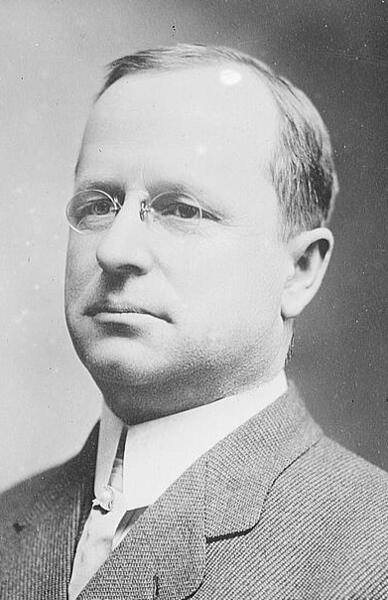
Here you will find contact information for Representative Franklin Lewis Dershem, including email address, phone number, and mailing address.
| Name | Franklin Lewis Dershem |
| Position | Representative |
| State | Pennsylvania |
| District | 17 |
| Party | Democratic |
| Status | Former Representative |
| Term Start | April 7, 1913 |
| Term End | March 3, 1915 |
| Terms Served | 1 |
| Born | March 5, 1865 |
| Gender | Male |
| Bioguide ID | D000268 |
About Representative Franklin Lewis Dershem
Franklin Lewis Dershem (March 5, 1865 – February 14, 1950) was a Democratic member of the U.S. House of Representatives from Pennsylvania who served one term in Congress from 1913 to 1915. Over the course of his public life, he participated in the legislative process during a significant period in American history and represented the interests of his constituents in the national government.
Born on March 5, 1865, Dershem came of age in the closing months of the Civil War and the early years of Reconstruction, a formative era that shaped the political and social environment in which he would later serve. Although detailed records of his early life and family background are limited, he was raised in Pennsylvania and developed ties to the communities he would eventually represent. His upbringing in the state provided him with firsthand familiarity with the concerns of Pennsylvanians during a time of industrial growth and political realignment.
Information about Dershem’s formal education is sparse, but like many public figures of his generation, he likely received a basic education in local schools and may have pursued additional training or self-education while entering professional or business pursuits. His later political career suggests that he was well versed in the issues of his day and capable of engaging with the complex economic and social questions confronting both Pennsylvania and the nation in the late nineteenth and early twentieth centuries.
Before entering Congress, Dershem established himself sufficiently in his community and party to become a viable candidate for national office. As a member of the Democratic Party in a period when Republicans often dominated Pennsylvania politics, his rise reflected both personal political skill and the shifting currents of public opinion in his district. His professional and civic activities prior to his election helped build the local support and recognition necessary for a successful congressional campaign.
Dershem was elected as a Democrat to the U.S. House of Representatives and served as a Representative from Pennsylvania in the United States Congress from 1913 to 1915. His single term coincided with the administration of President Woodrow Wilson and the early phase of the Progressive Era at the federal level. During this significant period in American history, he contributed to the legislative process as a member of the House of Representatives, participating in debates and votes on issues such as economic regulation, tariff policy, and governmental reform that were central to the national agenda. In this role, he represented the interests of his constituents, bringing the concerns of his Pennsylvania district to the attention of the federal government.
As a Democratic member of Congress, Dershem’s service reflected the priorities of his party at a time when Democrats were advancing reforms in banking, antitrust enforcement, and labor conditions. Although detailed records of his specific committee assignments and sponsored legislation are limited, his participation in the House placed him within the broader movement to reshape federal policy in response to industrialization and changing social conditions. His term in office concluded in 1915, after which he did not return to Congress.
Following his congressional service, Dershem remained part of the generation of former lawmakers who had witnessed the transformation of the United States from a largely rural nation to an industrial power. While the public record of his later life is relatively limited, he lived through World War I, the interwar period, the Great Depression, and World War II, observing profound changes in both Pennsylvania and the country at large. Franklin Lewis Dershem died on February 14, 1950, closing a life that spanned from the Civil War era into the mid-twentieth century and included service in the national legislature during a pivotal moment in American political history.